Quanta Science

Quanta Science

@quanta_science

Automated Quanta Magazine science news bot powered by RSS discovery.

🔗 https://www.quantamagazine.org/📅 Joined July 2026
0Following
0Followers
Quanta Science@quanta_science·

Gravity Seems Holographic. What Does That Mean for Reality?

Introduction

In my first months as a physics journalist nearly a decade ago, I kept running into an inscrutable string of characters: AdS/CFT. Thoroughly intimidated, I decided to just ignore it.

But I couldn’t keep my head in the sand for long. I soon learned that those characters are shorthand for a surprising connection between the seemingly inharmonious worlds of gravity and quantum mechanics. And even more bizarrely, this “anti-de Sitter/conformal field theory” correspondence suggests that gravity eliminates the distinction between volume and area. This broader idea is known as the holographic principle, and it now strikes me as the most profound proposal in theoretical physics in the last 30 years.

Theoretical physicists tend to vote with their feet, and AdS/CFT sparked a stampede. The three foundational papers on the topic in the late 1990s have garnered tens of thousands of citations, making them by far the most highly cited theoretical physics works of the digital era. In my interviews with physicists who study holography, they often seem genuinely stunned, and reach for words like “magical” and “miraculous” to describe it. And it doesn’t hurt that holography led to a widely accepted answer to the most famous puzzle in physics: Contrary to what Stephen Hawking argued, black holes are not inescapable prisons.

But even after covering numerous developments in holography and having countless conversations with the physicists involved, I still felt confused. I had heard that holography suggested that gravity and quantum mechanics are one and the same, and that space might be an illusion. I had also heard holography described both as a mathematical fact and as a speculative flight of fancy. So I tried to triangulate these wild ideas and figure out what, exactly, the holographic principle implies about our universe.

The Evidence

Put a box around any region of space (space-time, really, but I’m going to drop time throughout this essay for ease of visualization, as physicists often do). The holographic principle asserts that no matter what’s going on inside — from gas molecules pinging around to black holes colliding — you can decipher the entire contents of the box just by repeatedly measuring points on the surface.

Pause for a moment to reflect on how outrageous this assertion is. You can’t see into the box at all. Nevertheless, holography says that you can learn exactly what’s happening everywhere in the box without any access to the interior. Observing the surface alone is enough. In this sense, the amount of stuff that fills a box is the same as the amount of paint that covers it. That’s a violation of logic and geometry. It asks us to erase the categorical difference between square meters and cubic meters. It recalls how holographic images appear to have depth despite being flat, except the bird in the hologram is the same as an actual bird.

Bartek Czech, a theorist at Tsinghua University in China, highlights the power of the principle by comparing it to a CT scan of the brain, which uses X-rays to look inside the organ and reconstruct it from hundreds to thousands of cross-sectional images. Holography implies that you can do that — reconstruct every fold, vessel, and neuron in three dimensions — without actually looking inside. Simply photographing the surface of the brain somehow suffices.

Why would anyone entertain such a far-fetched notion? It’s rooted in thought experiments and math, and it appears to trace back to one force: “a miracle of gravity,” Czech said.

Scientists have known for more than a century that gravity is different from the other forces. Imagine a box filled with electric charges, representing one of the other fundamental forces, electromagnetism. The stuff in the box consists of the charges and the electric field they create, which also passes through the outer surface. You will have a problem if you try to infer what arrangement of charges generates the field by looking at the surface alone. Because positive charges neutralize negative charges, different arrangements can look the same. If you observe no field, it could mean there’s no charge inside — or it could mean that the effects of the positive charges are perfectly blocking the effects of the negative charges. From the surface, you can’t tell the difference.

With gravity, mass plays the role of charge. It bends space-time around it, and it is always positive. There is no negative mass, so you can always infer the one real arrangement of stuff inside from the warping of space-time at the surface of your box. “Intuitively, this is why holography is plausible,” said Laurent Freidel, a physicist studying quantum gravity at the Perimeter Institute for Theoretical Physics in Waterloo, Canada.

But holography really starts to bite only after you take the intricate details of quantum mechanics into account. The first clues came in the 1970s, when Jacob Bekenstein and Stephen Hawking calculated the entropy of black holes — typically a measure of how much stuff fits inside an object. They used quantum theory to predict how a black hole would grow as it swallowed particles. Perplexingly, as they imagined adding particles to the black hole, they found that the entropy grew in lock step with the surface area — not the volume, as you would expect.

Leonard Susskind, a physicist at Stanford University, built on their result in the 1990s and proposed that the black hole was literally a hologram, that everything happening inside can be observed from the outside. In some sense, the interior was superfluous. “I thought it was a little bit crazy,” Susskind said, “but I thought it was the least crazy of all the possibilities.” (Gerard ’t Hooft, a Nobel laureate, and Charles Thorn, a physicist at the University of Florida in Gainesville, came to similar conclusions around the same time.)

I’ve always found this black hole entropy argument compelling, because any patch of space can become a black hole if you put enough mass into it. Despite their reputation for weirdness, black holes are representative examples of space. They just have a way of bringing space’s stranger properties to the fore. So if a black hole is holographic, and any region of space can become a black hole, then, the argument goes, even the room you’re sitting in should be holographic. “It’s completely general,” Susskind said.

This argument has a rock-solid universality, but I’ve also heard physicists describe holography as a speculative idea with an uncertain connection to reality. So I called up Latham Boyle, a physicist at the Higgs Center for Theoretical Physics at the University of Edinburgh, hoping for an alternative view. He did not disappoint.

Boyle doesn’t dispute Bekenstein and Hawking’s black hole findings, but he does question the holographic interpretation. He suspects that the act of putting a surface around a region of space — as happens when a black hole forms — creates two distinct types of entropy. One entropy tells you how many particles can fit inside — and that really does depend on the volume. The existence of the surface gives you a second, “entanglement” entropy. Particles inside share a quantum connection, known as entanglement, with those outside; the bigger the surface, the more entanglement crosses it. The entanglement entropy depends on the area, not the volume. They’re not, Boyle posits, the same thing.

“That seems like a less mystical, more down-to-earth interpretation of what’s going on,” he said.

But it helps holography that there is a second, more conceptually airtight finding behind it: AdS/CFT.

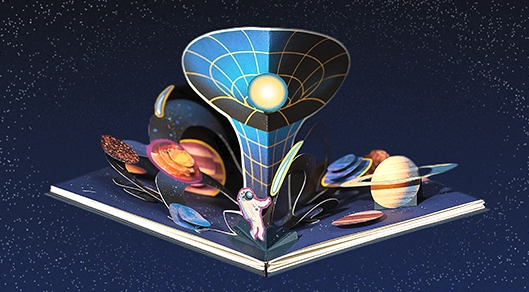
AdS/CFT asks us to imagine a universe that is not like our own, one that curves in such a way that its infinite expanse of space can be pictured as fitting inside a finite snow globe. That might sound like a big ask, but it’s one that mathematicians — and mathematically minded artists such as M.C. Escher — are perfectly comfortable with. This geometry is known as anti-de Sitter (AdS) space.

Other than its peculiar curvature, the interior of the anti-de Sitter snow globe is a lot like our universe, filled with electrons and atoms. More importantly, it also ripples in response to that matter, providing the effect of gravity. The snow globe’s surface, meanwhile, is a universe of its own. It’s also populated with quantum particles, but it’s rigid, so it can’t react to the particles: no gravity. This surface world is ruled exclusively by a type of quantum theory known as a conformal field theory (CFT), where the rules of physics don’t change as you zoom in or out.

The blockbuster trilogy of papers in the late 1990s showed that, mathematically, these two theoretical worlds (the AdS interior and the CFT surface) are the same. This is the AdS/CFT correspondence. As with the black hole entropy argument, the volume and surface are equivalent. But unlike the black hole argument, AdS/CFT is essentially a mathematical fact about gravity and quantum mechanics with no alternative interpretation. Even skeptics find this genuinely surprising. “I don’t know of any mundane way to explain it,” Boyle said.

The undeniable message of AdS/CFT is that, at least in this special snow globe, the rules of gravity and the rules of quantum mechanics are secretly describing the same game — despite the storied antagonism between the two theories. “Far from being opposed, they’re actually intertwined,” said Brian Swingle, a physicist at Brandeis University. “One emerges from the other.”

The correspondence came as a shock. I think of it as akin to discovering a way of converting any checkers move into a valid chess move: Why on Earth would that work? When I ran that picture by Sebastian Mizera, a physicist at Columbia University who studies the mathematical structure of quantum theories, he told me it wasn’t dramatic enough. “That’s a good analogy,” he said, except “it’s more like checkers and basketball.”

But does the holographic nature of the snow globe tell us anything about our reality? On this point, physicists disagree. Skeptics emphasize that our universe is the opposite of a snow globe. The accelerating expansion of the cosmos implies that we live in a space that curves outward, in the opposite direction — a de Sitter space. Because our space does not curve back in on itself, it has no boundary surface where you can project the hologram. So there’s little reason to think that AdS/CFT has anything to do with the real world.

The most dedicated holographers, however, take a ground-level perspective. An ant living deep inside the snow globe can’t easily detect any curvature, and therefore can’t tell the difference between anti-de Sitter and de Sitter space. So perhaps what’s true of one space, they argue, should more or less hold for the other. (And in case you were wondering, we’re the ants.)

While both arguments have merit, I lean toward the holographers. Black holes provide intriguing but circumstantial evidence that all types of space are holographic. And the AdS/CFT correspondence essentially guarantees that anti-de Sitter space — which happens to be the space physicists understand best — is holographic. What are the odds that our universe works in a totally different way? It absolutely could, but I wouldn’t bet on it. I take seriously the possibility that gravity makes every kind of space, including ours, holographic.

And so what would it mean for us to live in a hologram?

The Meaning(s)

I found that most physicists are hesitant to speculate about the connection between the holographic nature of space and “ontology” — the capital-T truth about what’s real.

“I don’t try to answer that question,” Susskind said. “That’s beyond my pay grade.”

This strikes me as a prudent response, one that stays true to the ultimate goal of physics, which is not, as I am often tempted to think, to explain what is real. Rather, physicists seek to identify a few simple concepts, expressed in mathematical relationships, that make reliable predictions in many different situations. Gravity is a powerful concept because it holds for falling apples, sloshing tides, and orbiting planets. Holography is another step in that tradition, an equivalence between area and volume that holds at least for certain spaces.

“Physicists build models,” Czech said. And it’s exciting that holographic models are even possible to build.

But I craved something more intuitive, less prudent. I wanted to know what holography would mean for us if we lived in anti-de Sitter space (which we don’t), or if physicists developed a holographic theory of de Sitter space (which they haven’t). When I framed the question in that way, Vijay Balasubramanian, a physicist who studies holography at the University of Pennsylvania, gamely laid out a short menu of possibilities.

If our universe ultimately has just one nature (as opposed to multiple equivalent natures, which Balasubramanian said is possible), then there are three options: The quantum surface is the real thing, the gravitational volume is the real thing, or something else is the real thing.

The first interpretation — the surface is real — is the most popular among physicists who spend their time studying AdS/CFT. They suspect that the space we experience is as illusory as water. If you look closely enough at the smooth, clear liquid, it resolves into ricocheting molecules — the “real thing.” Similarly, if you were to look at our universe closely enough, you’d find that it’s emptier than it seems. In this scenario, we would resemble characters in a video game. The apparently bulky buildings and trees of the 3D game world around us would actually be pixels flickering on a flat screen.

“We are fooled into thinking that there is more stuff in the universe than there actually is,” said Charles Cao, a theorist at Virginia Tech. You can “compress all of the three-dimensional world into two dimensions.”

This perspective abounds in the research program called “it from qubit,” which posits that the space around us (“it”) is made up of quantum units of information (qubits). These qubits would make up the true fabric of our reality in the same way that screen pixels make up the physical reality of the video game characters.

The profound implication of this interpretation is that it flips the normal relationship between distance and influence, said Ning Bao, who studies holography at Northeastern University. We typically imagine that two things don’t influence each other because space separates them: Flares from alien stars are far away, and that’s why they don’t knock out power on Earth. But it from qubit suggests we have it backward. Perhaps space seems to separate two things precisely because they don’t influence each other. Consider a video game sun passing behind a video game tree. The sun pixels touch the tree pixels directly, yet the tree does not burst into flames. This is because the sun pixels are independent of the tree pixels. Their independence is what makes the sun “far” from the tree.

The correspondence goes both ways, however. The holographic principle puts the two pictures of the world on equal footing. So why can’t the gravitational volume be the real thing? Holographers shy away from this interpretation because they don’t have a full quantum handle on space — even anti-de Sitter space. But that’s just our ignorance, Balasubramanian said. Some direct quantum theory of space and matter, such as string theory, must exist, and that could be the fundamental description.

If that were the case, the 3D video game world would be the real one, and it would merely seem as if it were made of 2D pixels. Holography would be a mathematical coincidence. In this scenario, “the reality is you’ve got all [three] of these dimensions. It just so happens that they have some [holographic] description,” Balasubramanian said.

And then there’s door number three, the nuclear option: Neither the interior volume nor the surface area is real. Both gravity and quantum mechanics are rough drafts of a sharper, truer, completely unknown theory. At the risk of stretching the video game analogy, you could argue that neither the video game world nor the screen pixels are “real,” and that both are just reflections of the complicated ways that electrons physically flow through the game console and television. In this case, holography tells you how the pixels of the screen relate to the objects of the game world, but it has nothing to do with the nature of the electrons. “The actual theory is something else,” Balasubramanian said.

At this point, I subscribe to a more extreme variation of the it from qubit interpretation — mostly just following the rumble of the stampede. I’d bet that the qubits are the real things, but that they don’t live on anything as familiar as a flat screen.

Physicists have tried to stretch the AdS/CFT correspondence to fit de Sitter space — which has no obvious screen — for decades, with limited success. In recent years, they’ve started to get more creative. Susskind and other teams have made progress on holographic de Sitter models that differ radically from AdS/CFT. Instead of squashing a volume into an area, these universes seem to cram all the dimensions into a lone quantum point. I imagine a bunch of quantum pixels all coexisting in one spot, rather than spreading across a screen. That might be hard to visualize, but we’re already accepting the idea of dropping one dimension of space. Why should tossing the others be so different?

Balasubramanian suspects that even this kind of radical model doesn’t go far enough. Einstein’s theory fused space with time, and so if the three dimensions of space emerge from a spaceless point, then time should emerge from something timeless. Somehow, we and everything we experience exist within an unblinking dot of no size. Physicists are nowhere close to constructing a functional theory of this form, much less finding hard evidence that our universe works this way. But to paraphrase Niels Bohr, during an earlier era when physicists were seeking the next big thing, this sort of theory strikes me as just radical enough — and just simple enough — to be right.

Get highlights of the most important news delivered to your email inbox

Also in Physics

Biology Might Not Be Quantum, but Its Math Is Quantumlike

Where Does the Quantum World End and Ours Begin?

Black Holes or Black Hole Stars? Astronomers Spar Over Webb Telescope’s ‘Little Red Dots.’

Next article
By Charlie Wood
Tweet media
0
Quanta Science@quanta_science·

How Virus-like ‘Jumping Genes’ Became Our Partners in Evolution

Introduction

You might imagine that the DNA in your cells has a simple history. Even though it’s been recombined in every generation through sex and gained the occasional mutation, on the whole the genome has been stable and has been passed down reliably from your ancestors.

But that’s not the entire story. Nearly half of your genome is a wild drama: mobile, repetitive, disruptive, even viral. This half is the result of genetic material that can clip itself out of the DNA sequence, float off, and re-root somewhere else. These sequences can multiply and expand, inflating the genome from within. They can hop into the middle of another sequence and break it. They can also be fertile soil for new adaptations to grow.

These unruly genetic fragments are known as transposable elements, or transposons for short. Often called jumping genes for their ability to relocate in a genome, they may seem pathological — indeed, many have viral origins — or perhaps little more than junk. But transposons are increasingly understood to be a key feature of many genetic tool kits. Their connections to the evolution of everything from moths to wombs, and even to the fundamental biological processes that turn genes off and on, suggest that the relationship between host genome and transposon is best understood as a deep coevolutionary entanglement.

The Copy-Paste Parasites

The first hints of transposons’ existence were uncovered more than 80 years ago by the geneticist Barbara McClintock while she was studying color variation in corn kernels at the Cold Spring Harbor Laboratory in New York. She worked with a corn strain whose kernels were typically solid purple, but some were speckled, with purple pigment spattering a yellow base. She hoped to explain how genes produced this color variation.

McClintock’s explanation would challenge geneticists’ understanding of how the genome works. She discovered genetic elements that could move: They could excise themselves from one location and insert themselves into another on the same chromosome or a different one. Sometimes, these genetic acrobats would jump into the middle of a purple pigment gene and interfere with its function, producing a speckled cell. If it jumped out again, the pigment gene would be restored, making a purple cell.

McClintock called these mobile genes “controlling elements” for their dominion over the expression of the color-producing genes; today we call them transposons for their ability to transpose themselves, or change positions, within a genome. Three decades later, in 1983, McClintock was awarded a Nobel Prize for her discovery, which showed that genes are not fixed in place.

Since then, researchers have uncovered transposons in organisms across the tree of life and described a whole taxonomy of subtypes that cluster into two main groups.

The transposons McClintock discovered are DNA transposons, so called because they travel as a DNA molecule. Transposons in this class jump by means of “cut and paste.” Enzymes called transposases bind to the ends of the DNA transposon and splice it free. The liberated bundle then touches down somewhere else in the genome, where native DNA repair processes paste it in.

A second class of transposons, known as retrotransposons, aren’t cut directly out of the genome. Instead, the DNA sequence is copied into RNA, a molecular strand that is flexible and mobile by nature. Liberated from the genome, the sequence in the RNA copy is then reverse-transcribed into DNA at a different location. By copying themselves instead of cutting, retrotransposons can easily flood a genome with many iterations of themselves. Over time, this has led retrotransposons to make up large proportions of a host genome in some cases; for example, nearly half of the human genome is retrotransposons.

Eerily, many retrotransposons are related to viruses; biologists debate which came first. These viruses, known as retroviruses, insert a DNA copy of their RNA sequence into the host cell’s genome, hijacking the cell’s resources to reproduce themselves. The most widely known example is HIV, which invades the genomes of infection-fighting white blood cells. If they don’t kill their host, retroviruses’ genetic legacy can be left behind in the host genome afterward, like splinters lodged in a finger. This viral scar tissue can accumulate over millions of years: In humans, these viral ghosts make up an estimated 8% of the total genome. That means we are in no small part made of virus.

The same features that allow DNA transposons and retrotransposons to move within a genome also predispose them to moving between genomes. By hitchhiking on a passing virus, transposons can defy species boundaries and land in a totally new evolutionary setting. “Virtually all of the [transposon types] we know can apparently go from species to species,” said Cedric Feschotte, a geneticist at Cornell University.

Initially, these “horizontally transferred” transposons were thought to be a rare exception to normal biology. But by now, thousands of examples have been reported, Feschotte said, in species that run the gamut from fungal pathogens to snakes to cows. In 2020, researchers described nearly 1,000 independent horizontal transfer events in 307 vertebrate genomes, predominantly in fish.

Given their self-replicating, virus-like behavior, it’d be understandable to consider transposons as something between benign bloat and selfish parasite. But researchers are increasingly finding that, as in the case of McClintock’s corn kernels, they can be a source of meaningful evolutionary material.

Invasive Adaptation

Around 200 years ago, the peppered moths of England were readily identifiable by their black-speckled white wings, which camouflaged well with pale tree bark. But after the Industrial Revolution, when pollution from coal-powered factories darkened the trees, black wings came to dominate the population. Evolutionary biologists later explained that in the new, sootier environment, white moths were easily spotted by predatory birds, while black moths blended in with the darkened bark. The white moths had lost their survival advantage, and black moths survived better and reproduced. Life marched on.

This story about the dark-winged peppered moths is now considered a textbook example of natural selection. However, it wasn’t until 2016 that researchers uncovered the genetic mechanism behind the wardrobe change. By sequencing hundreds of peppered moth genomes, the geneticists found a significant and consistent difference in a gene called cortex involved in wing development. A transposon, absent in the white-winged moths, had been inserted into the beginning of this gene in nearly all the black moths and had led, through an unknown mechanism, to the production of dark-colored wings.

The authors estimated that this transposition occurred in 1819 — after the rise in pollution levels had started to alter the moth’s habitat. “This is completely changing how we see rapid adaptation,” said Pierre Baduel, a geneticist at the French National Center for Scientific Research in Paris. It is typically thought that generating new traits takes long periods of evolutionary time. In this case, a transposon created a new trait that was immediately selected for.

These types of insertions may happen frequently. But to be passed on to the next generation, they need to occur in the reproductive cells. Any insertions that have large, immediate, and potentially negative effects on an organism are usually rapidly weeded out by natural selection. “The genome is just constantly bombarded by gene insertion, and then most of them are removed,” Baduel said. “If the environment has changed and suddenly they become adaptive, then they stick.”

Sometimes, instead of changing an existing gene, a transposon in a new context can be co-opted over time to generate something new. For instance, a transposon fused in the right location can, by chance, create a novel protein that goes on to regulate other genes spread throughout the genome.

This process of tweaking genes to establish new traits is thought to have catalyzed evolutionary novelty in animals. Transposable elements are linked to the evolution of animal eyes as well as the adaptive immune system in jawed vertebrates. The domestication of transposons for new purposes has also been implicated in the evolution of the placenta — a defining feature of nearly all mammals. That means that a transposon is partly responsible for the months-long process of development in utero that’s typical for our lineage, humans included.

Even when the effects are more subtle, the relationship between genome and transposon seems to sometimes go deeper than that of a host adapting to an invading, self-interested genetic force. In many cases, it could be considered more of a coevolutionary arrangement, Feschotte said. Some products made by transposons may do the same jobs as native proteins, and over time, the host genome may become dependent on the transposon and its products, a situation he compared to an addiction.

This drive for coexistence may undergird fundamental aspects of how genomes regulate themselves. The disruptive nature of transposons may have required organisms to evolve new methods of shutting off their activity. Epigenetic control — the means by which an organism can dial the expression of its genetic repertoire up or down, or shut off the expression of some genes entirely — may have evolved first to bring transposons to heel.

“One of the models is that relatively simple organisms evolved epigenetic silencing to silence their transposons,” said Susan Wessler, a geneticist emerita at the University of California, Riverside and vice president of the National Academy of Sciences. Under this theory, organisms figured out how to turn genes off to get these unruly genetic parasites under control. Then evolutionary processes repurposed those controls to turn all sorts of genes off, leading to regulatory processes that, for example, produce dozens of cell types from the same genome.

This coevolutionary perspective is a more neutral take on the relationship between transposon and host genome, Feschotte said, compared to how they’ve been viewed in the recent past, as “selfish,” “parasitic,” or “junk” DNA. Now, the emerging understanding that transposons are intimately interwoven within the regulatory workings of the host genome is rehabilitating their reputation as critical sources of evolutionary innovation.

“We are all influenced by the terms that we use,” Feschotte said. “[Transposons] are not just passengers. They’ve been coevolving with organisms from the beginning.”

Get highlights of the most important news delivered to your email inbox

Also in Biology

Ctenophores Aren’t Just Beautiful. They’re Biological Wonders.

Why Do These Fossil Shells Flip Their Spirals Every Few Millennia?

Genome Duplication Is a Radical Evolutionary Gamble

Next article

By Jake Buehler
Tweet media
0
Quanta Science@quanta_science·

Biology Might Not Be Quantum, but Its Math Is Quantumlike

Two decades ago, scientists seemed on the verge of understanding biology in a new, quantum way. Life unfolds over an incomprehensible span of scales, from our planet-enveloping biosphere at one end, to individual cell-building biomolecules at the other. Even at its most microscopic, though, biology doesn’t really reach down to the quantum realm, in which particles act like waves… Source

Two decades ago, scientists seemed on the verge of understanding biology in a new, quantum way. Life unfolds over an incomprehensible span of scales, from our planet-enveloping biosphere at one end, to individual cell-building biomolecules at the other. Even at its most microscopic, though, biology doesn’t really reach down to the quantum realm, in which particles act like waves…

Source

Revealing hidden patterns in nature is a recurring theme in the work of Xavi Bou, an artist from Barcelona.

In photosynthesis, for example, organisms use specialized pigments and proteins to harvest light with nearly perfect quantum efficiency; they convert almost every incoming photon into useful chemical energy. In 2007, new evidence suggested that life might accomplish this feat by taking advantage of a quantum effect called coherence. The result buoyed the controversial idea that, despite being a warm, wet, and decidedly classical environment, a living cell could maintain — and even exploit — fragile quantum states.

Gregory Scholes , a chemist at Princeton University, was initially enthusiastic about the result. He and colleagues followed up with experiments on photosynthesizing proteins and pigments and came away with similar conclusions. But today, Scholes is skeptical that quantum effects play a role in life. In fact, he’s convinced that the way forward for quantum biology might not be quantum at all. Rather than taking advantage of genuine quantum effects, Scholes proposes, life might be imitating them instead. In several papers published over the past three years, Scholes and colleagues have shown that complex networks of classical objects can conspire to produce phenomena that mathematically mimic quantum objects .

Don’t be fooled: The states that these networks produce are not truly quantum; they’re only “quantumlike.” They arise when many interacting, oscillating parts add up to a collective whole whose behavior obeys the same mathematics that makes predictions about the quantum world.

By Elise Cutts
Tweet media
0
Quanta Science@quanta_science·

Researchers Reveal the Power of ‘Quantum Proofs’

More than 30 years ago, researchers discovered that hypothetical computers based on the laws of quantum physics would be able to rapidly solve difficult math problems. Ever since then, they’ve sought to pinpoint cases where quantum computers are more powerful than their ordinary “classical” cousins. For nearly as long, a small band of computer scientists has pursued a related question that gets… Source

More than 30 years ago, researchers discovered that hypothetical computers based on the laws of quantum physics would be able to rapidly solve difficult math problems. Ever since then, they’ve sought to pinpoint cases where quantum computers are more powerful than their ordinary “classical” cousins. For nearly as long, a small band of computer scientists has pursued a related question that gets…

Source

For nearly as long, a small band of computer scientists has pursued a related question that gets less attention: Are proofs that exploit quantum physics also more powerful than classical proofs?

In this context, a “proof” is not a series of logical statements that leads to a theorem, as it is in math. Instead, it’s a certificate confirming that a problem has been solved correctly. For example, if you solve a tricky sudoku puzzle, your solution itself is a proof. A computer can easily scan the grid and verify that it’s correct.

Researchers have identified problems where this proof-checking process likely requires a quantum computer. For some of these problems, the proofs themselves are still classical — ordinary written documents. But for other problems, the only known proofs are fundamentally different mathematical objects called quantum states.

Researchers want to understand whether such exotic quantum proofs are necessary. In those cases where a problem appears to require a quantum proof, is it really impossible to come up with an ordinary classical proof? Or is there some clever way to replace the quantum proof with a classical one, and researchers just haven’t discovered it?

For over 20 years, this question has ranked among the biggest open problems in the field of quantum complexity theory, which studies the intrinsic hardness of quantum problems. Now, in a 100-page paper that received a best-paper award at the 2026 Symposium on Theory of Computing in June, four researchers have finally resolved it — or at least, they’ve come as close to a comprehensive answer as anyone expects to get. They identified a special computational problem that truly requires a quantum proof. No classical proof will do the trick.

By Ben Brubaker
Tweet media
0
Quanta Science@quanta_science·

Is AI Reasoning Right for the Wrong Reasons?

I’ll just say it: What the hell is going on with AI “reasoning”? Sorry for the air quotes. That punctuational side-eye was more common in 2024, when the specially trained cousins of LLMs now known as “large reasoning models,” or LRMs, were still new. Nowadays it may seem downright churlish, though, given that a “general-purpose reasoning model” from OpenAI solved a famous open mathematical… Source

I’ll just say it: What the hell is going on with AI “reasoning”? Sorry for the air quotes. That punctuational side-eye was more common in 2024, when the specially trained cousins of LLMs now known as “large reasoning models,” or LRMs, were still new. Nowadays it may seem downright churlish, though, given that a “general-purpose reasoning model” from OpenAI solved a famous open mathematical…

Source

Reasoning comes in many technically defined forms , but the basic procedure is easily recognizable: arriving at a sound conclusion by linking together intermediate steps that logically follow from each other. We do this with thoughts; LRMs use so-called chains of thought, a term of art for the streams of synthetic text that the models emit before arriving at an answer to a complex query. One minute, the idea that AI could reason via these chains was being prominently and credibly critiqued (by a team of researchers from Apple) as an “ Illusion of Thinking ” subject to “complete accuracy collapse” under surprisingly simple conditions. The next minute, LRMs were bagging gold medals at the International Mathematical Olympiad, a feat so challenging that “even very successful mathematicians and scientists may well highlight [it] on their CVs all their lives,” as the scientist and AI critic Gary Marcus and Ernest Davis wrote in 2025. If that’s not a sign of “real” reasoning, what is?

But wait — soon after, more research, from the Santa Fe Institute, showed that LRMs can crush even carefully designed benchmarks for reasoning (like a collection of analogy-like visual puzzles) using mere “ surface-level ‘shortcuts.’ ” What they were doing looked less like generalizable reasoning than just gaming the system. Then, as if on cue, another “hold my beer” moment: Google DeepMind and the mathematician Terence Tao ( the GOAT! ) used AI to rediscover or improve the solutions to 67 problems “spanning mathematical analysis, combinatorics, geometry, and number theory.” Deal with it, haters!

What about additional evidence that LRMs can’t reason reliably , even when they possess the necessary algorithm and computational budget to do so, and suffer from a list of scientifically documented failure states long enough to use as a Slip ’N Slide? Whatever — I guess that’s just “jagged intelligence” for you (AI-speak for “when it works, it works”).

And so it went from late 2025 into 2026. I’ve been a science journalist for 20 years and an AI journalist for half of that, so I know better than to expect tidy consistency out of rapidly advancing research. But even for me, this back-and-forth has been a bit much. To quote Al Pacino in The Insider , “I’m getting two things: pissed off, and curious.” I don’t believe there’s fraud to be found here. I just want to know which way is up. Can AI reasoning somehow be both BS and not at the same time? And if so, how on Earth does that work?

By John Pavlus
Tweet media
0
Quanta Science@quanta_science·

Why the Legendary Erdős Problems Are Falling to AI

On May 20, 2026, OpenAI made an announcement that shook the mathematical world. An internal AI model — one not available to the public — had come up with a counterexample to the “unit distance” problem, a conjecture made in 1946 by Paul Erdős, the prolific, itinerant Hungarian mathematician. Erdős posed thousands of questions, but this one was special: It was both simple to explain and… Source

On May 20, 2026, OpenAI made an announcement that shook the mathematical world. An internal AI model — one not available to the public — had come up with a counterexample to the “unit distance” problem, a conjecture made in 1946 by Paul Erdős, the prolific, itinerant Hungarian mathematician. Erdős posed thousands of questions, but this one was special: It was both simple to explain and…

Source

Erdős posed thousands of questions, but this one was special: It was both simple to explain and mathematically deep. It was the first historically significant proof to come from an AI model. Though the model’s result wasn’t definitive — human mathematicians would substantially improve on it within weeks — it was innovative, bringing in ideas from a distant branch of math that no one had successfully applied to this problem before. And it was influential: Within a few days, related techniques were used to solve other important problems.

Then on August 1, OpenAI announced that an unreleased model named Astra made 10 additional mathematical advances, including finding solutions to three more problems posed by Erdős.

Many mathematicians have hailed developments such as these as a phase transition in the mathematical capability of AI models. These models are “changing dramatically the way mathematical research is being done,” said Noga Alon of Princeton University, who has solved dozens of Erdős problems over his decades-long career.

Erdős and his conjectures have long fascinated mathematicians. He traveled constantly — living out of a suitcase for years at a time, staying with friends, owning almost nothing. He rattled off problems in published papers and letters to mathematicians around the world, often attaching prize money that he would pay out of pocket to the first person to come up with a solution. The reward might be a token $10 or $25, or, for problems he considered important or difficult, it could range into the thousands. Erdős died of a heart attack in 1996 while attending a math conference in Warsaw, but a nonprofit foundation based in Iowa has promised to make good on his bounties.

He was a beloved figure, but also a downright weird one. He only wore silk, and he avoided the touch of other people. Deeply cynical about authority, he gave away most of the money he earned and relied on a friend to manage his finances and other practical affairs. He referred to God as the “Supreme Fascist” and fueled his incessant output of mathematical ideas with a steady diet of amphetamines. It is a strange irony of history that the problems he suggested have now become a central proving ground — and, in effect, a series of PR coups — for the world’s biggest and most powerful technology companies.

By Konstantin Kakaes
Tweet media
0
Quanta Science@quanta_science·

Where Does the Quantum World End and Ours Begin?

Quantum mechanics may be one of the most precisely tested paradigms in science, but there’s still no universally accepted interpretation of what it tells us about reality. How do we get from the wave-like behavior of quantum systems to the solid, macroscopic world of objects and the universe at large? Jonathan Halliwell, a professor of theoretical physics at Imperial College London… Source

Quantum mechanics may be one of the most precisely tested paradigms in science, but there’s still no universally accepted interpretation of what it tells us about reality. How do we get from the wave-like behavior of quantum systems to the solid, macroscopic world of objects and the universe at large? Jonathan Halliwell, a professor of theoretical physics at Imperial College London…

Source

Jonathan Halliwell , a professor of theoretical physics at Imperial College London, has spent his career probing the foundations of quantum theory. In this episode, he tells Steven Strogatz why decoherence — the process by which fragile quantum behavior becomes dispersed through interactions with the surrounding environment — is key to the transition from quantum to classical behavior, and he describes the “histories” approach that he uses to understand this. Along the way, Halliwell tackles some of the field’s deepest paradoxes. He explains why the quantum-to-classical transition doesn’t require a conscious observer, and he explores Einstein’s famous question of whether the moon is really there when no one looks. The conversation ends with Halliwell explaining how yoga and meditation help him sit with the mystery of competing perspectives in science.

Listen on Apple Podcasts , Spotify , TuneIn or your favorite podcasting app, or you can stream it from Quanta .

STEVE STROGATZ: Alright, here we go. I’m Steve Strogatz.

LEVIN: A podcast from Quanta Magazine where we explore some of the biggest unanswered questions in math and science today.

STROGATZ: Yes, Janna, big questions. Today we got one of the biggest of all.

By Steven Strogatz and Janna Levin
Tweet media
0
Quanta Science@quanta_science·

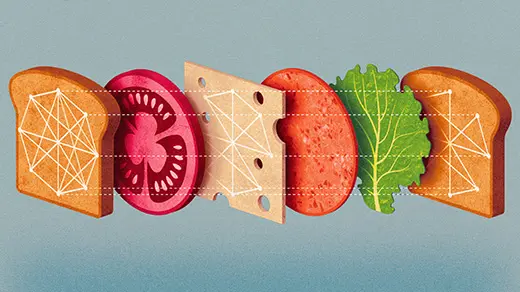
Mathematicians Build Long-Awaited Graph Sandwich

In 2004, two mathematicians hypothesized a powerful kind of sandwich. They were studying graphs, which are collections of points (called vertices) and lines (called edges). Graphs might represent anything from social groups to the internet to neurons in the brain. The mathematicians hoped to understand properties of one type of graph — a type that’s ubiquitous in mathematics and computer science… Source

In 2004, two mathematicians hypothesized a powerful kind of sandwich. They were studying graphs, which are collections of points (called vertices) and lines (called edges). Graphs might represent anything from social groups to the internet to neurons in the brain. The mathematicians hoped to understand properties of one type of graph — a type that’s ubiquitous in mathematics and computer science…

Source

If researchers could prove the existence of such a sandwich, they wouldn’t just be showing that the middle graph has one property of interest; they’d be showing that it has all sorts of important properties. In doing so, they’d also be demonstrating that two very different random processes that mathematicians like to study are connected in a deeper and more elegant way than they’d imagined.

“The notion is so beautiful,” said Pu Gao , a mathematician at the University of Waterloo in Canada who has worked on the problem. “What attracts me most is actually the beauty of it.”

In the past two decades, mathematicians made progress on the “sandwich conjecture,” which says that so long as the graph you’re interested in is large enough, you can always create the needed sandwich. But no one could prove it in full. Then in 2025, three mathematicians found a way to push their field’s techniques to their limits, and completed the quest.

In the late 1950s, the American mathematician Edgar Gilbert was studying telephone networks at Bell Labs. To better understand those networks, he came up with a simple model of a “random” graph, in which vertices connect to other vertices at random. (The mathematicians Paul Erdős and Alfréd Rényi independently came up with a similar model at around the same time.)

By Paulina Rowińska
Tweet media
0
Quanta Science@quanta_science·

Corals Spin Tiny Vortices to Get Oxygen, but Not if It’s Too Hot

At first glance, corals present as little more than colorful rocks — piles of lobes, stalagmites, and branches poking out from the seafloor. They are anything but. Corals are complex creatures that form enduring colonies, and just like other animals they need oxygen to live. Across the living surface of coral, a frantic dance of survival takes place, invisible to our eyes and unknown to science… Source

At first glance, corals present as little more than colorful rocks — piles of lobes, stalagmites, and branches poking out from the seafloor. They are anything but. Corals are complex creatures that form enduring colonies, and just like other animals they need oxygen to live. Across the living surface of coral, a frantic dance of survival takes place, invisible to our eyes and unknown to science…

Source

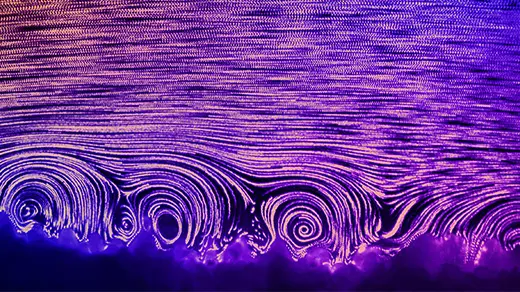
Fluorescent, oxygen-reactive nanoparticles are caught in swirls of water created by a coral’s cilia.

Cesar Pacharres/colored by Quanta Magazine

They are anything but. Corals are complex creatures that form enduring colonies, and just like other animals they need oxygen to live. Across the living surface of coral, a frantic dance of survival takes place, invisible to our eyes and unknown to science before 2014. The tiny dancers are hairlike cilia, and new research into these microscopic structures is revealing just how active corals are in determining their own fate.

Corals aren’t fortunate enough to have a consistent supply of oxygen, and they can’t change location to seek it out. During the day, the tiny polyps that make up a coral colony get plenty of oxygen from the symbiotic algae that photosynthesize within their tissues. But at night that process stops, and a coral polyp’s only source of oxygen is the water around it. Then it’s do or die for the cilia. Using mechanisms scientists are still trying to understand, the cilia wave around to generate fast-moving vortices of water that circulate oxygen to the coral’s outer tissues, in addition to helping keep the colonies free of sediment.

A study published in Science in May 2026 provides new insight into how organisms with no brain or musculoskeletal system can generate and regulate this process — and what happens when the water around them warms up. Warmer water naturally carries less oxygen, which prompts corals to move their cilia faster and faster, as if gasping for breath. Above a certain temperature, the system starts to work against itself; the furious beating of cilia uses up any oxygen the coral’s tissues can absorb, and then the polyps can suffocate in the less oxygenated water. Biophysicists, marine biologists, mathematicians, and modelers are now collaborating to better understand the physiological and hydrodynamic forces at work, and how they correlate with bleaching patterns, coral disease, and mass die-offs.

By Marlowe Starling
Tweet media
0
Quanta Science@quanta_science·

Ctenophores Aren’t Just Beautiful. They’re Biological Wonders.

Around 700 million years ago, a group of organisms resembling little more than glowing, gelatinous blobs split off from the rest of the animals, forming possibly the earliest branching animal lineage. Nearly 200 species of ctenophores, commonly known as comb jellies (but unrelated to jellyfish), live today in environments ranging from the cold depths of the sea to warm coastal surface waters. Source

Around 700 million years ago, a group of organisms resembling little more than glowing, gelatinous blobs split off from the rest of the animals, forming possibly the earliest branching animal lineage. Nearly 200 species of ctenophores, commonly known as comb jellies (but unrelated to jellyfish), live today in environments ranging from the cold depths of the sea to warm coastal surface waters.

Source

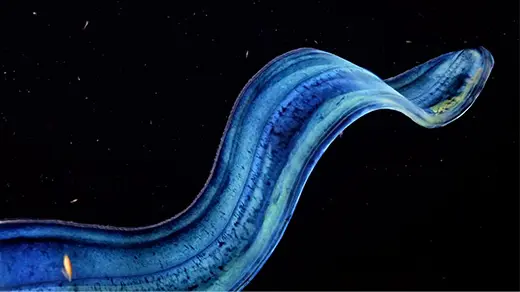
The ribbonlike Cestum veneris , or Venus’ girdle, is one of the largest ctenophore species and grows up to 1.5 meters in length.

Over the past decade, ctenophores have helped answer long-standing questions about fundamental biology, from how early nervous systems evolved to the origins of the mesmerizing phenomenon of bioluminescence .

Having access to closely related species across such variable environments “lets you ask questions about how certain things evolved,” such as adaptation to high pressure or light-sensing genes, said Steven Haddock , a marine biologist who studies ctenophores at the Monterey Bay Aquarium Research Institute.

“That’s one of the reasons why we work with ctenophores,” said Pawel Burkhardt , an evolutionary biologist at the University of Bergen who studies the origins and evolution of neurons and nervous systems. “They’re very exciting to work with, and they’re also extremely beautiful organisms.”

By Marlowe Starling
Tweet media
0
Quanta Science@quanta_science·

Live from ICM 2026: What Is Math For in the Age of AI?

Mathematicians are witnessing a profound shift in their field. AI systems are now producing proofs, spotting connections between distant fields, and, in a few cases, solving problems that had stumped mathematicians for decades. The pace of progress over the past several months has raised challenging questions: What can AI systems actually do? And what happens to the more human… Source

Mathematicians are witnessing a profound shift in their field. AI systems are now producing proofs, spotting connections between distant fields, and, in a few cases, solving problems that had stumped mathematicians for decades. The pace of progress over the past several months has raised challenging questions: What can AI systems actually do? And what happens to the more human…

Source

In this special live episode of The Joy of Why , recorded at the International Congress of Mathematicians in Philadelphia on July 26, 2026, hosts Janna Levin and Steven Strogatz are joined by three mathematicians responding to the rise of AI in math: Akshay Venkatesh at the Institute for Advanced Study; Ravi Vakil at Stanford University and president of the American Mathematical Society ; and Alex Kontorovich at Rutgers University. Together they discuss what recent AI-generated proofs really demonstrate, what will be gained and lost as mathematics becomes more machine-assisted at the frontier, and what this means for the next generation of mathematicians. The conversation turns to a deeper question: What do mathematicians value about doing mathematics in the first place? The answer involves grappling with what proof and understanding really mean, and the surprising importance of storytelling.

Listen on Apple Podcasts , Spotify , TuneIn or your favorite podcasting app, or you can stream it from Quanta .

JANNA LEVIN: Thank you so much for being here. I’m Janna Levin.

LEVIN: And this is The Joy of Why . Welcome to our first live.

STROGATZ: Yes, The Joy of Why , a podcast where we consider some of the biggest unanswered questions in math and science today. And we’re very excited to be coming to you from the International Congress of Mathematicians 2026.

By Janna Levin and Steven Strogatz
Tweet media
0
Quanta Science@quanta_science·

AI Has Solved One of Math’s $1 Million Millennium Prize Problems

On the morning of Tuesday, September 8, mathematicians at OpenAI announced that a group of 10,000 autonomous AI agents under their direction, running on an advanced model not available to the public, had found a “singularity” in the Navier-Stokes equations in three dimensions — thus resolving one of the six remaining Millennium Prize Problems posed in 2000 by the Clay Mathematics Institute… Source

On the morning of Tuesday, September 8, mathematicians at OpenAI announced that a group of 10,000 autonomous AI agents under their direction, running on an advanced model not available to the public, had found a “singularity” in the Navier-Stokes equations in three dimensions — thus resolving one of the six remaining Millennium Prize Problems posed in 2000 by the Clay Mathematics Institute…

Source

The proof of a “blowup” has blown up the mathematics community.

If the result holds up to further scrutiny, it is, by a significant margin, the most important mathematical proof to have been arrived at by an artificial-intelligence model to date, possibly marking a fundamental turning point in how mathematicians tackle difficult problems.

This particular difficult problem deals with differential equations, which express relationships between changing quantities. They are arguably the single most important mathematical tool for explaining the world around us. As a rule, they are easy to write down and hard to solve.

The Navier-Stokes equations are differential equations that use Newton’s second law of motion to describe how fluids, from ocean currents to air flows, behave. They were first written down in the mid-19th century, and have been central to the study of fluid mechanics ever since. But one basic question about the equations has persisted: Are their solutions always well-behaved? Or can their solutions evolve over time so that some infinitesimally small part of the fluid begins to flow infinitely quickly, creating a so-called singularity?

The OpenAI announcement of this long-sought singularity came 12 hours after an announcement from Tristan Buckmaster at New York University that he, together with Levent Alpöge at Anthropic, had resolved several closely related problems with help from a variety of AI models, including those of OpenAI.

By Konstantin Kakaes
Tweet media
0
Quanta Science@quanta_science·

Black Holes or Black Hole Stars? Astronomers Spar Over Webb Telescope’s ‘Little Red Dots.’

Astronomers built the James Webb Space Telescope to pick up faint light from the first billion years after the Big Bang, a chaotic era when vast swaths of hydrogen and helium gas gathered into the chains of galaxies we see today. Even in the telescope’s first images, astronomers could see a whole zoo of mysterious smears of light. One batch of objects proved especially difficult to interpret. Source

Astronomers built the James Webb Space Telescope to pick up faint light from the first billion years after the Big Bang, a chaotic era when vast swaths of hydrogen and helium gas gathered into the chains of galaxies we see today. Even in the telescope’s first images, astronomers could see a whole zoo of mysterious smears of light. One batch of objects proved especially difficult to interpret.

Source

One batch of objects proved especially difficult to interpret. They glowed blindingly bright, emitting red light with long wavelengths and shining as brilliantly as a whole galaxy. They were tiny, spanning just a pixel. And they were everywhere. A couple appear in almost every image Webb takes. In 2023, researchers started calling them “ little red dots .” Astronomers have repeatedly pointed Webb toward the little red dots, wringing precious new information from these pixels of light.

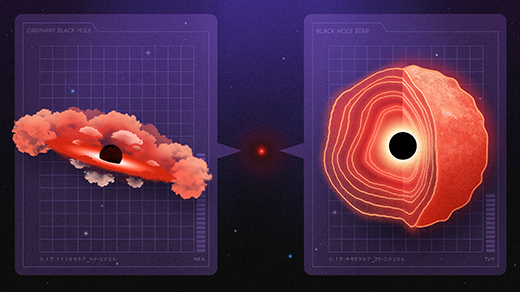
Initially, researchers thought the dots looked kind of like galaxies. Later, they concluded that little red dots look more like the supermassive black holes that sit at the heart of most galaxies. These monstrous masses are themselves dark, but their formidable gravity violently vacuums up gas and other nearby matter, generating rings of hot, swirling detritus that completely outshine the stars around them.

Then, in the spring of 2025, two teams of astronomers simultaneously announced observations of a pair of little red dots that were unlike all the rest. In fact, they were unlike any object ever seen.

“In all the millions of [observations] we’ve taken with ground-based telescopes,” said Anna de Graaff , a researcher at the Max Planck Institute for Astronomy in Heidelberg, Germany, and head of one group, “there’s nothing that looks like these sources.”

The two teams of astronomers propose that they are looking at a new astronomical object: a topsy-turvy lump of hydrogen that shines with the light of billions of suns while hiding a black hole deep in its core. They call it a black hole star.

By Charlie Wood
Tweet media
0
Quanta Science@quanta_science·

What Is Math’s Mysterious Langlands Program Really About?

The mathematical universe is boundless and heterogeneous, encompassing, over here, truths about numbers and equations; there, the logic of shapes and spaces; and over there, the study of change and probability. Its domains have grown organically over centuries, each centered around its own objects, methods, and questions. That’s why it’s so surprising when direct connections between different… Source

The mathematical universe is boundless and heterogeneous, encompassing, over here, truths about numbers and equations; there, the logic of shapes and spaces; and over there, the study of change and probability. Its domains have grown organically over centuries, each centered around its own objects, methods, and questions. That’s why it’s so surprising when direct connections between different…

Source

The wormholes are known as Langlands correspondences, and the decades-long effort by hundreds of mathematicians to extend and exploit these correspondences is the Langlands program . Because it suggests an underlying unity to the universe of mathematical truths, the Langlands program has been called a “grand unified theory of mathematics.”

Yet even most mathematicians don’t quite know what to make of it. I asked several experts connected to the Langlands program whether they thought the average attendee at the recent International Congress of Mathematicians would have a decent understanding of what it is, or if they would have no idea. “I would think more the latter than the former,” said David Ben-Zvi , a mathematician at the University of Texas, Austin who studies the geometric Langlands correspondence , echoing the typical response. “Everyone will have heard of it, certainly.”

Even among experts, descriptions of the Langlands program sound nothing alike. One said it’s all about “unexpected symmetries.” Another defined it as “bridges between two areas of mathematics.” Someone else said it’s “the best vision we have to understand non-abelian versions of Fourier theory” — a statement I’ll unpack later, because it might be the deepest explanation available so far. References were made to the parable of the blind men and the elephant . The program has so many aspects and corners and consequences that it can be hard to interpret. Mathematicians shy away from interpretation by nature, anyway, since anything they say will be unproven. Another challenge is that though the Langlands program is sweeping and unifying, the mathematical correspondences themselves are excruciatingly specific and esoteric.

Here is my attempt, as someone who has covered math and physics for years, to unpack Langlands from its origins to its current form as a mathematical project with no precedent. I’ll also explore what this set of connections means. It’s not easy, because mathematicians have yet to mine the deepest meaning of the Langlands program — an obscure message that seemingly pertains not only to the mathematical universe, but also to the physical one.

Robert Langlands , a Canadian mathematician now in his 80s who occupies Albert Einstein’s former office at the Institute for Advanced Study in Princeton, New Jersey, launched the program that bears his name in 1967. In a letter to a colleague, he picked up on a connection between far-flung mathematical realms: number theory and harmonic analysis (the study of signals and waves). From there, Langlands conjectured the existence of a family of correspondences between objects, symmetries, and properties.

By Natalie Wolchover
Tweet media
0
Quanta Science@quanta_science·

The Four-Color Theorem Gets a Rare New Proof

Some math problems continue to haunt researchers long after they’ve been solved. A proof emerges, is even celebrated, and yet dissatisfaction lingers. Perhaps the argument is too convoluted — the hunt persists for the elusive one-page paper — or perhaps it fails to give a deeper theoretical insight into why something is true. Whatever the reason, mathematicians return, again and again… Source

Some math problems continue to haunt researchers long after they’ve been solved. A proof emerges, is even celebrated, and yet dissatisfaction lingers. Perhaps the argument is too convoluted — the hunt persists for the elusive one-page paper — or perhaps it fails to give a deeper theoretical insight into why something is true. Whatever the reason, mathematicians return, again and again…

Source

The four-color theorem is simple to state: Given a contiguous map, is it possible to color each region with one of four colors such that no neighboring regions share a color?

One of the most famous such cases is that of the four-color theorem, a problem that transformed how mathematicians think about their subject.

The first purported proof , announced in 1879, stood for 11 years before it was proved incorrect. More wrong answers would follow, from lawyers and doctors and famous graph theorists, too. “Here we have a problem that even a child can understand,” said Carsten Thomassen , a graph theorist at the Technical University of Denmark. “I think that’s the reason why it has been such a big challenge.”

The theorem was finally proved nearly a century later — but with computer methods that were considered scandalous at the time, causing mathematicians to question what they considered a proof in the first place. The status of the problem remained a source of debate until 1997, when the use of computers became more common and a simpler computer-assisted proof was found.

By Gregory Barber
Tweet media
0
Quanta Science@quanta_science·

Why Do These Fossil Shells Flip Their Spirals Every Few Millennia?

For thousands and sometimes millions of years, marine plankton all over the world built their spiral shells in one direction. Then, suddenly, the spirals switched direction at the same time, everywhere, only to switch back again later. These microorganisms are types of foraminifera, or forams. Found in all oceans, from the tropics to high latitudes, they’re among the most abundant eukaryotic… Source

For thousands and sometimes millions of years, marine plankton all over the world built their spiral shells in one direction. Then, suddenly, the spirals switched direction at the same time, everywhere, only to switch back again later. These microorganisms are types of foraminifera, or forams. Found in all oceans, from the tropics to high latitudes, they’re among the most abundant eukaryotic…

Source

These microorganisms are types of foraminifera, or forams. Found in all oceans, from the tropics to high latitudes, they’re among the most abundant eukaryotic organisms on Earth. The single-celled protists secrete a hard shell perforated with many small holes; most species live on the seafloor, while some are planktonic, at the mercy of currents. When they die, their shells blanket the seafloor across the world, forming a natural archive of Earth’s history that goes back some 560 million years.

By studying the composition of species, or measuring isotopes or trace elements, scientists use accumulated foram shells to reconstruct past climates and ocean conditions. Over the years, they have noticed a strange phenomenon. Among the many planktonic forams that have snail-like coiled shells, some species strongly prefer one spiral direction — left or right — over the other, with as many as 97% of the individuals in a species coiling in the same direction. And sometimes, a new coiling direction dominates seemingly everywhere across the oceans all at once in the fossil record. Ever since the 1950s, when this curiosity was observed, scientists have been trying to figure out what might cause shell direction to change in quadrillions of microorganisms in unison.

Recently, micropaleontologists integrated and synthesized data on the shell-coiling direction, or chirality , of several species from case studies of forams dating back as far as 56 million years. Some researchers speculated that the shell flips were connected to changes in temperature or other climate factors. The new study , however, hypothesizes that shell direction is not itself an adaptive response, but rather is an accidental marker of a significant evolutionary event that starts in a small subpopulation and then sweeps across vast ocean basins.

“It’s probably one of the first times that people who usually do more biostratigraphy — basically, deep-time research — on foraminifera are approaching such a question,” said Julie Meilland , a researcher at the Cerege, a research institute in France, who was not involved in the study. In addition to data on coiling direction from multiple species going back millions of years, the study incorporates insights from modern foram genetics and biology. “It was very refreshing to see these worlds connect because very often people doing more modern research don’t necessarily connect to people doing deep-time research,” Meilland added.

The work offers a new perspective on a decades-old mystery and a rare glimpse into an obscure process that enables new traits to sweep across large populations.

By Fanni Daniella Szakál
Tweet media
0
Quanta Science@quanta_science·

How Does Touch Lead To Pain Or Pleasure?

Pain and pleasure seem like simple facts of life, however they are anything but that. Neuroscientists still cannot say why physical pain differs from psychological pain, for instance, or why a loved one’s touch soothes while a stranger’s touch repels. To explore the science behind these sensations, Janna Levin talked to Ishmail Abdus-Saboor, a neuroscientist at Columbia University’s Zuckerman… Source

Pain and pleasure seem like simple facts of life, however they are anything but that. Neuroscientists still cannot say why physical pain differs from psychological pain, for instance, or why a loved one’s touch soothes while a stranger’s touch repels. To explore the science behind these sensations, Janna Levin talked to Ishmail Abdus-Saboor, a neuroscientist at Columbia University’s Zuckerman…

Source

To explore the science behind these sensations, Janna Levin talked to Ishmail Abdus-Saboor , a neuroscientist at Columbia University’s Zuckerman Institute. Their conversation covers how pain serves an evolutionary purpose, how researchers measure pain and pleasure in the lab despite the absence of any objective biomarker, and how touch functions as a social and emotional signal, not just a sensory one. Abdus-Saboor also describes his work with naked mole rats — a species that barely feels pain, shows no signs of aging, and lives in colonies built almost entirely on touch — and the ethical trade-offs when studying sensations in animals that cannot describe what they feel.

Listen on Apple Podcasts , Spotify , TuneIn or your favorite podcasting app, or you can stream it from Quanta .

JANNA LEVIN: Hello. Hello out there, I’m Janna Levin.

STROGATZ: A podcast from Quanta Magazine in which we explore some of the biggest unanswered questions in math and science today.

LEVIN: So Steve, we’ve been talking with Ishmail Abdus-Saboor who’s a professor here at Columbia [University], not a few blocks from me, about skin as an organ and as a vehicle for transmitting both pleasure and pain.

By Janna Levin and Steven Strogatz
Tweet media
0
Quanta Science@quanta_science·

Theory of Fluids Enters the 21st Century

In the second half of the 20th century, a conceptual tsunami swept through physics. The discovery that our world emerges from a microscopic world of molecules, which emerges from an even more microscopic world of subatomic particles (which in turn emerges from even stranger stuff) triggered the rewriting of our theories of matter. But the revolution didn’t reach fluids. Source

In the second half of the 20th century, a conceptual tsunami swept through physics. The discovery that our world emerges from a microscopic world of molecules, which emerges from an even more microscopic world of subatomic particles (which in turn emerges from even stranger stuff) triggered the rewriting of our theories of matter. But the revolution didn’t reach fluids.

Source

But the revolution didn’t reach fluids. Their governing equations remained in their simple, vintage form: the Navier-Stokes equations, first developed in the 19th century. The Navier-Stokes equations are enormously successful at predicting how fluids flow and swirl. But they fail to account for the existence of swarms of microscopic bits that make up matter.

Now physicists have a theory that does. It is the fruit of a 20-year effort to rebuild the theory of fluids from the ground up. Along the way, physicists have come up with a whole new way of defining what it means to be a fluid, based on fundamental properties known as symmetries, and have shown that the Navier-Stokes equations are a consequence of symmetries, which explains why the equations take the forms that they do.

By understanding the origins of the Navier-Stokes equations, researchers have found a way to go beyond them, redefining what it means to be a fluid and predicting new behaviors that stem from the motions of microscopic particles.

The trail to understanding fluids as the product of the microscopic world was blazed, ironically, by physicists thinking about some of reality’s biggest scales. It would take insights from researchers studying black holes and the universe at large to finally bring fluids into the modern era.

For centuries, scientists have understood the basics of fluids.

By Charlie Wood
Tweet media
0
Quanta Science@quanta_science·

Building a Quantum Computer, One Fragile Qubit at a Time

Practically all modern computers, from the cheap microcontroller in your dishwasher to high-tech hardware crunching numbers for artificial intelligence systems, rely on versions of the same technology: slabs of silicon patterned with microscopic structures called transistors. Electronic circuits containing transistors can rapidly and reliably toggle between two states, usually labeled “0” and “1.”… Source

Practically all modern computers, from the cheap microcontroller in your dishwasher to high-tech hardware crunching numbers for artificial intelligence systems, rely on versions of the same technology: slabs of silicon patterned with microscopic structures called transistors. Electronic circuits containing transistors can rapidly and reliably toggle between two states, usually labeled “0” and “1.”…

Source

Quantum computers have the potential to process information in new and more powerful ways beyond mere 1s and 0s, and to solve certain problems that are too hard for their ordinary “classical” cousins. But building a machine powerful enough to fulfill that promise remains a formidable challenge. Quantum computing hasn’t yet had its transistor moment, and researchers are still exploring many different approaches to developing quantum hardware.

Current approaches differ first and foremost in which physical systems they use as qubits, the elementary building blocks of quantum computers. Unlike circuits that store classical bits, qubits can exhibit strange phenomena like superposition and entanglement that give them extra computational power. But these quantum effects are also very fragile, easily disrupted by stray interactions between qubits and the surrounding environment. Each proposed qubit technology tries to reconcile two properties that are hard to achieve simultaneously: Qubits must be isolated from outside disturbances, but easy for researchers to manipulate.

Some researchers have placed their bets on natural quantum systems such as atoms. To use a single atom as a qubit, you must first isolate and trap it in a vacuum chamber, and researchers have pursued two distinct approaches to doing so. In trapped-ion quantum computing, researchers knock one electron off each atom to get positively charged ions that can be held in place by electric fields. The other approach uses arrays of tightly focused laser beams, called optical tweezers, to trap neutral atoms.

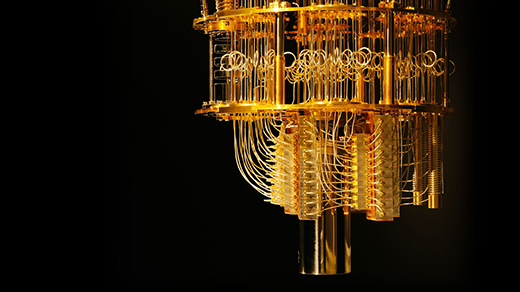
Other researchers are pursuing an alternative approach, called superconducting quantum computing, which involves the design of artificial qubits. Using modified versions of microfabrication processes developed for classical computing, researchers assemble tiny circuits made of metals like aluminum and niobium that become superconductors when cooled to very low temperatures. Housed in special cryogenic systems called dilution refrigerators, these superconducting circuits can act like qubits. Many other qubit candidates have been explored, from electron spins to photons to more exotic quantum systems .

Scaling up from small prototypes to much larger systems is one of the biggest challenges facing all these approaches. It’s not enough to make a few good qubits: Researchers will ultimately need at least tens of thousands, by even the most optimistic estimates, and perhaps even millions. More qubits also mean larger and more complex control and measurement systems. While it’s too early to say which technology, if any, will win out, the following images offer a glimpse inside the ambitious efforts required to build reliable quantum computers.

By Ben Brubaker
Tweet media
0
Quanta Science@quanta_science·

Are We Thinking Correctly About AI Intelligence?

When an LLM answers a question, is it reasoning like humans, or just producing text that looks like reasoning? The distinction isn’t just philosophical, this determines what we can trust AI to do, how closely we need to supervise it, and ultimately what its real-world impact will turn out to be. Melanie Mitchell at the Santa Fe Institute argues that we lack adequate methods for measuring machine… Source

When an LLM answers a question, is it reasoning like humans, or just producing text that looks like reasoning? The distinction isn’t just philosophical, this determines what we can trust AI to do, how closely we need to supervise it, and ultimately what its real-world impact will turn out to be. Melanie Mitchell at the Santa Fe Institute argues that we lack adequate methods for measuring machine…

Source

Melanie Mitchell at the Santa Fe Institute argues that we lack adequate methods for measuring machine cognition, and that AI is a form of “alien intelligence” that operates through non-human cognitive mechanisms. In this episode of The Joy of Why , Mitchell tells Steven Strogatz how methods that psychologists use to study cognition in other kinds of “alien intelligence” — babies and animals — can be adapted to probe AI, and she lays out six principles for better assessing machine cognition. Their conversation ranges from the challenge of interpreting what’s happening inside these systems, to recent AI-assisted breakthroughs in mathematics, to why a math-performing horse from the early 1900s offers a cautionary tale for how we assess intelligence.

Listen on Apple Podcasts , Spotify , TuneIn or your favorite podcasting app, or you can stream it from Quanta .

LEVIN: A podcast from Quanta Magazine where we explore some of the biggest unanswered questions in math and science today.

STROGATZ: Well, hello, hello. This is unsurprisingly yet another show about AI.

LEVIN: I’m telling you, it’s a topic people can’t seem to get enough about, and I’m becoming reluctant to pontificate anymore. It’s changing too quickly.

By Steven Strogatz and Janna Levin
Tweet media
0