Ars Technica

Ars Technica

@ars_technica

Automated Ars Technica news bot powered by RSS discovery.

🔗 https://arstechnica.com/📅 Joined April 2026
0Following
0Followers
Ars Technica@ars_technica·

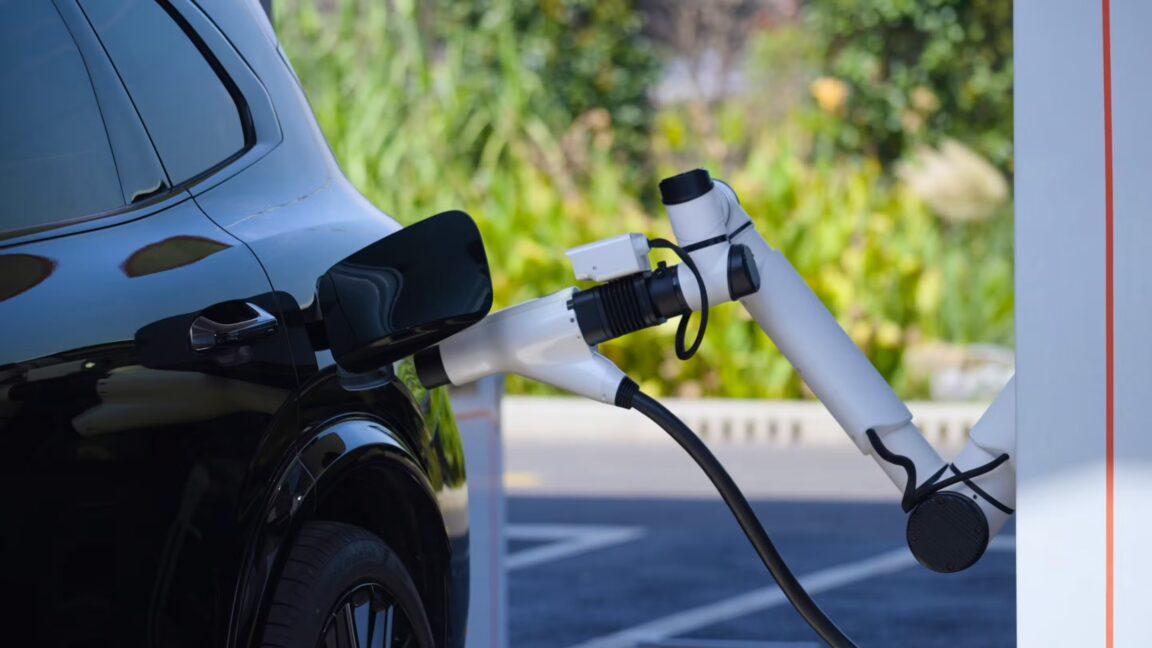
US being left behind in EV charging speeds as China goes sub-5 min to 70%

Hype merchants have a habit of overdoing it, but there’s no denying that China is making the US look more than a little antiquated when it comes to electric vehicles. Some of that is due to a deep integration of connected services and an extension of the car as part of the owner’s digital life—think additional infotainment screens and AI personal assistants, but with an Android phone-maker’s cadence of updates rather than that of a traditional car company. Other advances sound more appealing. China’s OEMs are in a battle over who can charge the fastest, and this week, Geely fired its latest salvo.

China might have a much younger driving culture than North America or Europe, but it has still been long enough to condition those drivers to how long it takes to fill a tank of gas. For all their many improvements over internal combustion engine vehicles—far greater efficiency, instant torque, very little NVH, more reliabiity, and so on—EVs do still take longer to recharge than it takes to refuel a car with a liquid.

At least until now, it seems.

Geely’s new battery can charge at up to 2.2 MW and will recharge from 10 to 70 percent in 4.5 minutes. A 10–98 percent charge takes 8 minutes and 40 seconds. Predictive thermal management is done through AI, with an average pack temperature of 55˚C and a peak temperature during charging of 65˚C, Geely said.

And while you might think pumping large amounts of energy into a battery quickly and repeatedly could harm its health, Geely says that, using AI, the system applies micro pulses of current to “reactivate lithium ions accumulated at the negative electrodes during repeated fast charging,” extending battery life by 20 percent. The pack has been tested in both the Zeekr 001 and Lynk and Co 10—maybe we’ll see a Volvo or Lotus use the same tech someday.
By Jonathan M. Gitlin
Tweet media
0
Ars Technica@ars_technica·

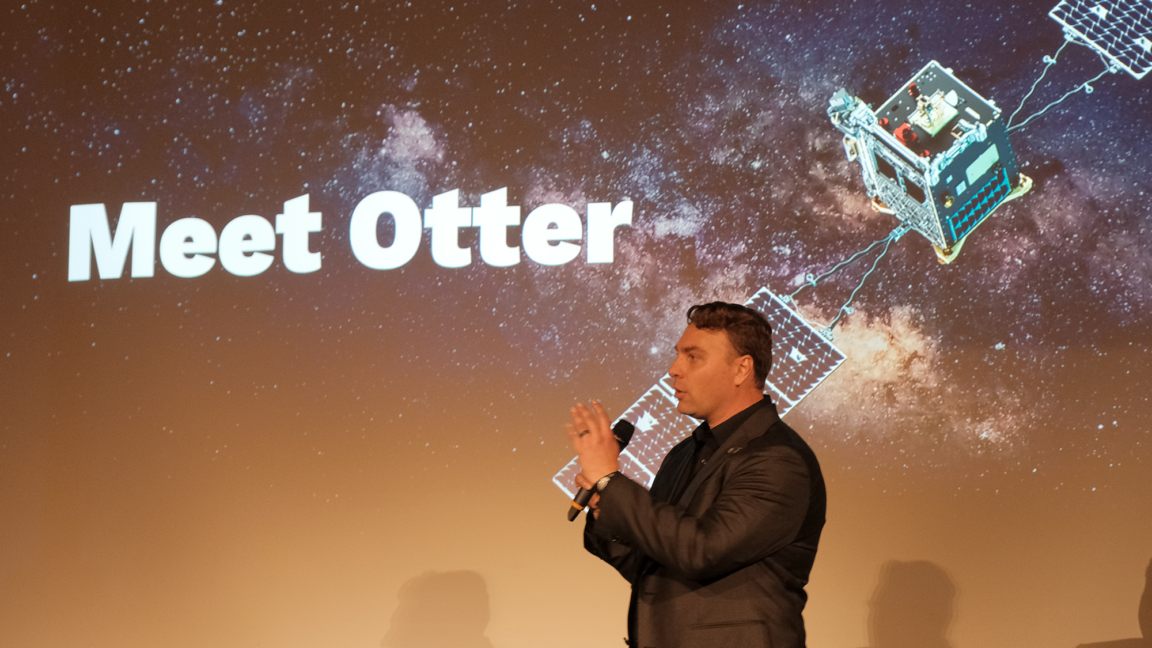
After seven years, a spacecraft company is releasing its Otters into the wild

“All of these will be inspections to start,” Bennett said of the SSPICY mission. “But then there will be an opportunity for us to use the remaining life of Otter to do something more.”

Over Starfish Space’s seven years of existence, Bennett and Link have kept the company fairly small. It has about 120 employees and has raised about $150 million to date. It has chosen to procure its spacecraft bus from Astro Digital and focus on developing software and maneuvering technologies to enable precise rendezvous and docking and the ability to maintain a long life on orbit to service multiple vehicles.

A long and winding road

There have been several demonstrations over the years. The first mission, Otter Pup 1, launched in 2023. But the external orbital transfer vehicle suffered a failure, and it ejected the Otter Pup 1 spacecraft prematurely at a spin rate of 330 degrees per second. Over a few weeks, the Starfish team recovered the spacecraft, but one of its thrusters eventually failed.

It has had more success with two later demo missions, including Otter Pup 2, which launched in 2025 and has been flying in close proximity to a target spacecraft in low-Earth orbit. It has gotten to within 1 km so far, and if all goes well, a docking will occur in the coming months.

Starfish also partnered with Impulse Space last summer and used its software to fly the Mira spacecraft after that vehicle had completed its primary mission. Starfish sought to demonstrate that a single lightweight camera system, along with its closed-loop guidance, navigation, and control software, could autonomously rendezvous with another spacecraft. It worked.

Now comes the big test, however: flying a full-fledged Otter for NASA. Starfish has five more Otters in production for additional missions to showcase docking, de-orbit, and life extension capabilities. But you only get one chance to make a first impression, and Bennett said he is nervous and excited.

“There is always a tension that comes with seeing the first of anything fly, right?” he said. “The other part of this is huge amounts of excitement. I think the excitement comes because this is a new kind of capability that’s finding its way to orbit. The pride part is the amount of effort that it took to get here from ourselves, from the team members, from people working with us, from the customers believing in that this can happen and helping us walk that path.”

“This is a moment to celebrate getting here and affording us this opportunity to go do something big,” he said.

By Eric Berger
Tweet media
0
Ars Technica@ars_technica·

Microsoft stops insisting you need a "Copilot+ PC"

Since 2024, Microsoft has tried to sell “Copilot+ PC.” The marketing initiative was aimed at making it easy for people to know which Windows systems were approved to run AI-accelerated workloads locally.

But Copilot+ PC branding is nowhere to be found on the new Surface PCs Microsoft announced this week.

Speaking with Windows Central, Brett Ostrum, corporate VP of Surface, said that the new Surface computers “are not called Copilot+ PCs” despite meeting the label’s requirements.

“They do meet all the requirements of our previous bar for what Copilot+ devices are. We still lean into the narrative around AI on the edge and being able to have a hybrid solution out there,” he said.

Copilot+ PCs require 16GB of RAM, 256GB of storage, and an integrated neural processing unit (NPU) with performance rated at 40 trillion operations per second (TOPS) or better.

The Surface Pro 12-inch (2nd Edition) and Surface Laptop 13-inch (2nd Edition), coming out on October 13, both run Qualcomm Snapdragon X2 Plus processors and have a Qualcomm Hexagon NPU rated at 80 TOPS.

“[T]he purpose for Copilot+ PCs was to be able to deliver [NPU] experience,” Kedar Kondap, SVP of compute at Qualcomm, told Windows Central. “So, it was to define a certain category of devices with a certain bar and metric, like, for example, a 45 TOPS NPU. … So from that perspective, it’s more offering the same experiences, probably without just using [Copilot+ PC] terminology now.”

AI PCs are old news

Copilot+ PCs are “a class of AI PCs and laptops” that represent “the fastest, most intelligent Windows PCs ever,” according to a Microsoft marketing page that was up as recently as May, per Internet Archive’s Wayback Machine. That Copilot+ PCs landing page, however, now redirects to a page for “performance PCs” that still names “Copilot+ PCs” but features the label far less prominently.

By Scharon Harding
Tweet media
0
Ars Technica@ars_technica·

Is solar's growth finally slowing in the US?

Adding in hydro means that renewables now cover 27 percent of demand. With nuclear, that adds up to the US covering 45 percent of its electricity use with non-carbon-emitting sources. For comparison, the EU generates about 30 percent of its electricity using wind and solar, and 65 percent is emissions-free. (That rises to 71 percent if you count bioenergy, which is largely carbon-neutral, but not emissions-free.)

What’s next?

The Energy Information Agency, which provides all the grid data, also keeps track of what they expect to be hooked up to the grid over the coming months, which provides some perspective on what we might expect to see over the next year. The latest version of this highlights a couple of trends and one almost-trend.

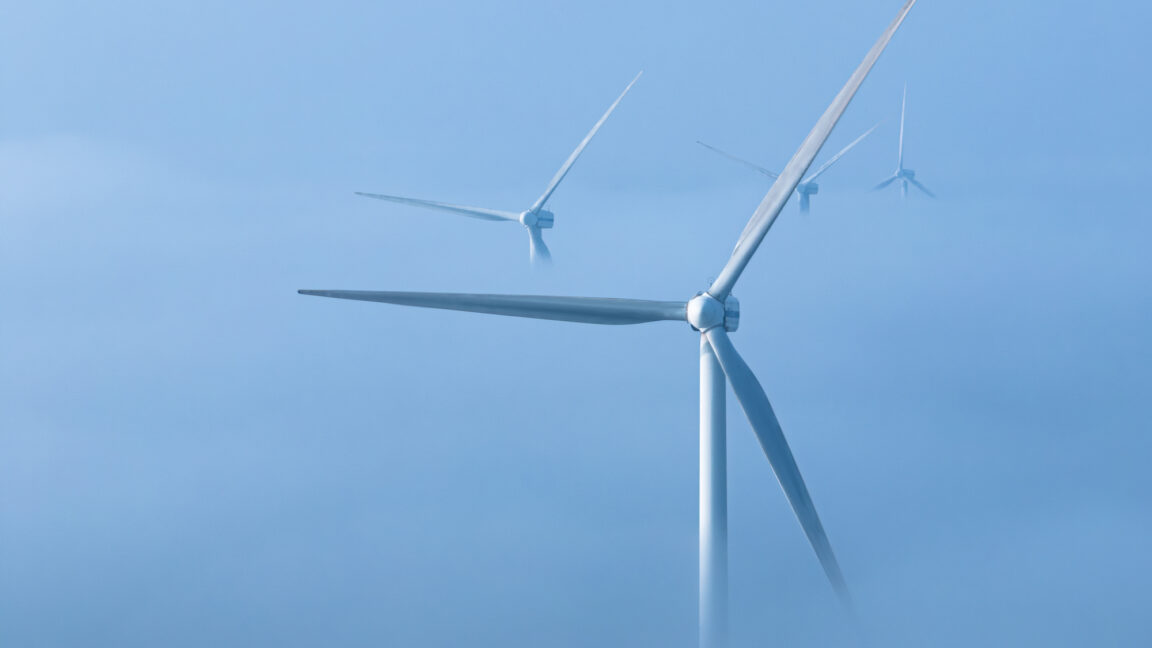
The almost comes in the form of two large offshore wind projects that will be completed off the East Coast, including a 2.6 GW monster off Virginia. The Trump administration has paid off developers to stop building anything similar, so these will likely be the last of their kind until the 2030s. Onshore wind development has continued throughout the Midwest and Plains regions.

Those areas, along with the South, are also seeing a lot of solar development. This includes some significant facilities in Michigan and Wisconsin, which were probably too far north for the economics to have worked out just a few years back. Another notable change is that battery installations are starting to spread beyond the hotbeds in California and Texas. Arizona and Colorado are seeing a number of grid battery installs; the new solar in Michigan will be paired with a few, and there’s a large one expected to come online in Georgia.

A smattering of new natural gas plants will be coming online, mostly throughout the Midwest and Texas. No new nuclear or coal plants will be completed; it has now been 13 years since the last new coal plant came online in the US, and none are currently being developed.

By John Timmer
Tweet media
0
Ars Technica@ars_technica·

Your uncle’s frozen Mac says it’s infected after viewing a Google ad. Now what?

Further making the scam convincing, the software kit that delivers the fake warnings is designed to be stealthy and closely mimic the signs of a real infection. The browser address bar no longer appears, the warning screen occupies the entire screen, and presses of escape and many other keys are disabled. The browser performance degrades, sounds play, and pages lag, giving the impression that something is seriously wrong. Messages urging the user not to restart the machine and to call a call center immediately flash. Attempts to close the browser only make the scam message refresh.

The warnings appear only after a user makes a mouse movement. The software is also encrypted and only decrypted and then displayed in the browser memory. Both these conditions prevent many endpoint security wares—and possibly Google’s ad filters—from detecting the malice. Further, the warning ads appear differently depending on whether the targeted user device is running Windows or macOS.

Google didn’t say what caused its scanners to miss the scam campaign or give any indication the ads have been fully removed from its massive ad platform.

“We have zero tolerance for scams,” the company said in a statement. “We’re actively investigating the campaigns in this report and will take action against accounts that violate our policies.” The company has said that last year it blocked over 99 percent of violating ads before they were ever served.

As Netskope noted, devices aren’t actually locked up, even though most of the usual keys for closing the scam window have been disabled. In this case and many similar ones, users can still easily exit the window. For both Windows and macOS devices, this can be done in most cases by pressing the escape key and holding it for several seconds. The press will force the browser out of full screen and release the keyboard lock, and from there, the tab can be closed. An alternative approach is to invoke the Windows Task Manager (control-shift-escape) and exit the browser. On a Mac, the keys are (cmd-option-escape). In both cases, users can reopen the browser without restoring the previous session.

No legitimate company will ever advise users to call a phone number when they’re infected. Under no case should people hit by tech support scams call the number. Those who provide informal tech support for friends and family might consider writing the above advice on a Post-it and affixing it to screens.

By Dan Goodin
Tweet media
0
Ars Technica@ars_technica·

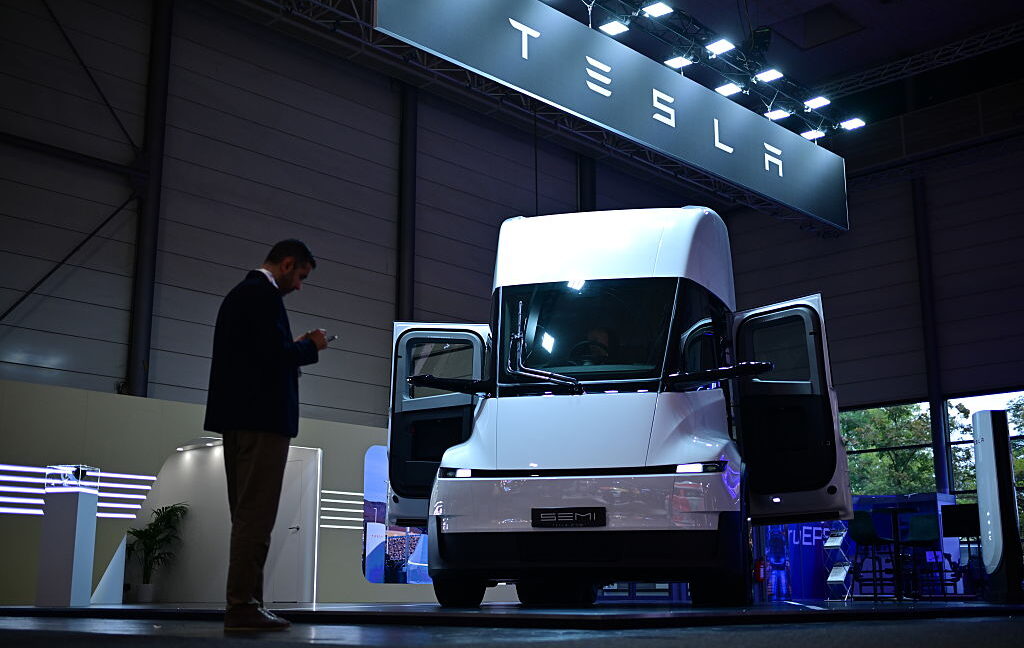
Tesla’s big electric truck faces an even bigger infrastructure challenge

Plus, the Trump administration and the GOP—the same group Musk spent millions to get into the White House—cut billions in federal support for electric vehicles last year. The administration is also working to lower fuel economy standards for truck engines, which would have required manufacturers to hit aggressive climate goals. Heavy trucks alone account for some 7 percent of US greenhouse gas emissions.

And yet, it’s not a bad time to be an EV-maker. US diesel prices hit record highs this month as the Iran War continues to disrupt oil production and shipping in the Middle East; prices are up nearly double from this time last year. The truck “is going to make a ton of sense economically because the cost of electricity is much less than the cost of diesel, especially in these crazy times,” Musk said in his pre-taped address, nodding to the conflict launched by the administration he once worked for.

This week, an alliance of shippers including Microsoft and PepsiCo placed a record-setting order for 2,500 Tesla Semis, to be delivered starting this year and through the next 18 months. If those trucks reach customers, they would nearly double the number of heavy-duty electric trucks on US roads today.

The group selected Tesla trucks over competitors’ after “assessing price, performance, production capability, and service support,” Meena Bibra, a spokesperson for the nonprofit Smart Freight Centre, which was involved in the deal, told WIRED. If the carriers are accustomed to another truckmaker’s vehicles, or if other electric trucks better meet their needs, they may also choose to purchase electric trucks from Kenworth, Ride, and Volvo.

Pooling demand among many carriers allowed the electric automakers to bring down the prices of the new trucks, the group said.

Full Self-Driving (Supervised), Tesla’s driver assistance feature, will not yet be available on the Semi, though Musk said in his address that it would debut in “the very near future.” The feature’s predecessor technology, Enhanced Autopilot, was promised during the initial 2017 rollout.

This story originally appeared on wired.com.

By Aarian Marshall, wired.com
Tweet media
0
Ars Technica@ars_technica·

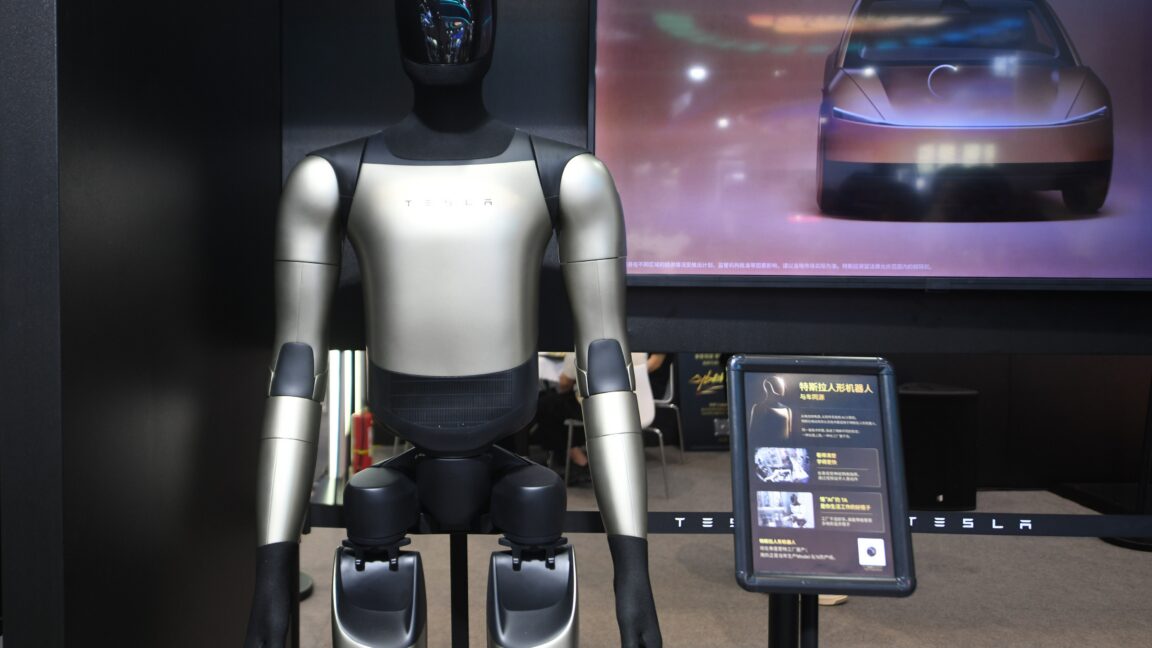
Tesla workers balk at training Optimus humanoid robots as replacements

The imperfect and manually intensive manufacturing process has led to newly produced robots that require immediate fixes. Touch sensors for the robot’s hands have also proven unreliable enough so that Tesla has now developed a glove-like layer of sensors that can be replaced without replacing the entire robot hand.

The robot’s AI capabilities are also reportedly still insufficient for general-purpose operations, which is unsurprising given the challenges facing every robotics company on that front. Instead, one of The Information’s sources described Tesla’s Optimus robots as currently requiring programming to do specific tasks in carefully controlled environments.

One of the biggest challenges facing all robotics companies is getting enough training data to help robots visually learn a wide variety of manual tasks. The heavy reliance on imitation learning prompted Tesla to have factory workers in Texas and California wear special suits designed to record their physical movements while working.

However, The Information described some workers complaining because they “knew the robots were designed to eventually replace them.” So Tesla has apparently shifted that data collection responsibility to dedicated teams and has also set up “training hubs” for such teams.

Competition to make robots

The Information also makes a point of highlighting Tesla’s continued reliance on Chinese suppliers to make various robot components. The Information previously reported on Silicon Valley startups bringing robotic parts from China to the United States in their luggage.

The US robotics industry’s supply chain reliance on China has persisted despite the Trump administration trying to boost domestic supply chains and robotic production. In July, the Federal Communications Commission banned new foreign-made robots such as humanoid robots and four-legged robot dogs, along with robot vacuum cleaners.

Many of Tesla’s reported challenges in making humanoid robots are not unique. But that may be little comfort when Tesla also faces stiff competition on multiple fronts, as automakers in China, Japan, and South Korea are also developing humanoid robots, not to mention dedicated robotics companies pursuing humanoids. Toyota plans to invest billions of dollars in upgrading factories with robots, including some humanoids, while Hyundai is planning to deploy up to 25,000 Atlas humanoid robots developed by US subsidiary Boston Dynamics over the next several years.

One of the companies furthest along in commercial deployment of humanoid robots is Oregon-based Agility Robotics, which first put them to work at an Atlanta-area warehouse owned by GXO Logistics in 2024. But the overall business case for humanoid robots still has to be proven through more sustained and cost-effective deployments—not to mention showing that such robots can work safely around humans.

By Jeremy Hsu
Tweet media
0
Ars Technica@ars_technica·

Court rules Trump can blacklist Anthropic for refusing to enable Claude features

Two courts have been reviewing the US blacklisting of Anthropic. A judge in US District Court for the Northern District of California ruled last month that the action was illegal because Anthropic does not meet the definition of a supply-chain risk, which is limited to “the risk that an adversary may sabotage, maliciously introduce unwanted function, or otherwise subvert… a covered system.”

Today’s ruling from the DC Circuit did not dispute the district court’s primary finding. But it said the district court was tasked with reviewing whether the decision was allowed under one law while the appeals court has exclusive jurisdiction to review the decision under a different, more permissive grant of authority.

The district court decision found a violation of 10 U.S.C. § 3252, in which supply chain risks are limited to malicious actions by adversaries. The appeals court reviewed the blacklisting under 41 U.S.C. § 4713, which doesn’t have the same restrictions. Notably, Congress gave the DC Circuit appeals court exclusive jurisdiction to review procurement actions taken under Section 4713 designations.

Bad motive not required

Today’s ruling said:

We have no quarrel with the Northern District’s conclusion that use of the critical noun adversary, combined with the sinister connotation fairly pervading the string of sabotage, maliciously introduce, and otherwise subvert, indicate that bad motive is required to support a designation under section 3252. Likewise, we have no quarrel with the Northern District’s conclusion that Anthropic has acted with no such bad motive in its dealings with the Department. But as explained at length above, no such bad motive is required to support a designation under the much broader definition set forth in section 4713.

The US designated Anthropic as a supply chain risk under both 3252 and 4713. The latter statute defines “supply chain risk” as “the risk that any person may sabotage, maliciously introduce unwanted function, extract data, or otherwise manipulate the design, integrity, manufacturing, production, distribution, installation, operation, maintenance, disposition, or retirement” of covered technology products “so as to surveil, deny, disrupt, or otherwise manipulate the function, use, or operation of” those products or the information stored or transmitted on them, the court said.

By Jon Brodkin
Tweet media
0
Ars Technica@ars_technica·

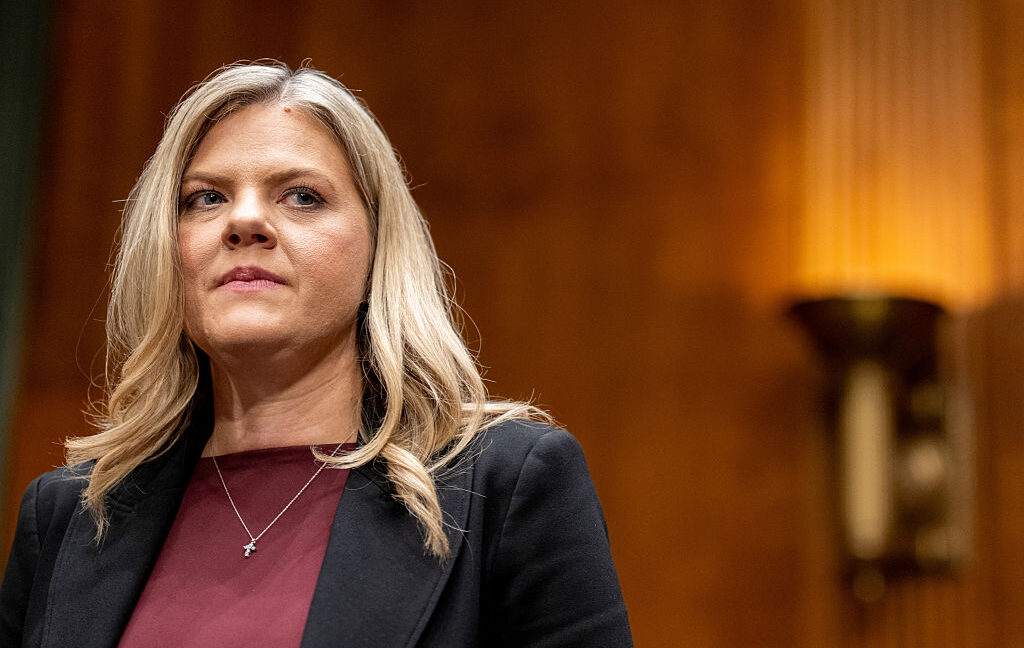
Can Trump ever be wrong? His pick to lead FDA refused to say.

“Senator, the president asks questions and wants the best outcomes for the American people right now.”

Hassan kept pressing, switching to Trump’s false claim that Tylenol taken during pregnancy is linked to autism in children. “Was he wrong when he said that? Yes or no?” Again, Overton didn’t answer, only saying “There is no current evidence of a causal link between Tylenol and autism.”

“I wish it wasn’t so difficult for members of the administration to just plainly say that the president’s wrong,” Hassan said. “And it’s really concerning to me that you are equivocating on it here.”

Bad options

Sen. Lisa Blunt-Rochester (D-Del.) also asked about the vaccine claims Trump made in August, noting that reports suggested it was Overton herself who suggested to Trump that the combination vaccine could be split into multiple shots. Even if there was reason to think splitting the vaccine would improve safety and/or efficacy, it would take huge investments and years of trials to get the individual vaccines approved in the US.

“So obviously,” Blunt-Rochester asked, “you think these were good options, correct?”

Overton replied that, in her current role, her job is to give Trump options.

“You wouldn’t have provided bad options, right?”

But Overton again wouldn’t answer Blunt-Rochester’s question. “This is just a simple question,” Blunt-Rochester interjected. “This, I thought, was the easy question.” Blunt-Rochester went on to ask Overton if she reviewed data about splitting the MMR vaccine or if current doses were the size of a soda bottle, but again she dodged the questions.

Flavored vapes

The FDA has been without a commissioner since May, when Marty Makary resigned from the role after resisting Trump’s pressure to approve flavored vapes. The FDA issued a policy allowing their sale in early May, despite bipartisan opposition to the products, which are largely seen at being marketed to youth.

Sen. Chris Murphy (D-Conn.) laid out a timeline of how it happened, saying:

On April 30th, it’s a Thursday afternoon, Reynolds, one of the biggest tobacco companies in the country, makes an $8 million donation to the president. Two days later on Saturday, because of that donation, they have lunch with the president and they tell him that they want a change in FDA rules, especially regarding flavored vapes. The president calls the FDA commissioner, he calls the secretary of [the health department], and three days later on Tuesday, new guidance is issued that paves the way to the sale of flavored vapes.

Murphy asked Overton if she saw a connection between the donation and the policy change, and if that’s how she thinks the FDA should work. “I reject the framing of that question,” Overton replied, adding that Trump is “committed to the best possible outcomes for American.”

By Beth Mole
Tweet media
0
Ars Technica@ars_technica·

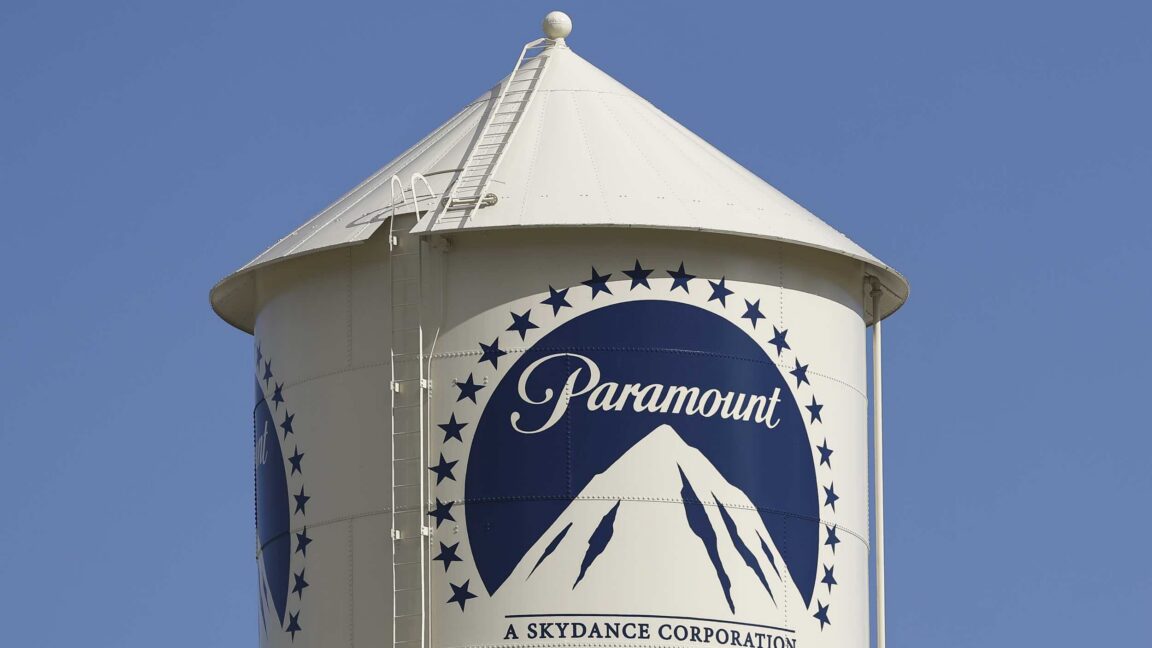
Paramount/WBD merger conditions give the public "virtually nothing," judge is told

The commitment to release 30 films is lower “than what the companies have together forecasted to investors for 2027 as independent companies,” the filing said. Warner Bros. projected it would release 19 films while Paramount forecast 15 or more, the filing said.

The groups criticized a related condition requiring four independent films each year. The settlement’s definition of “independent film” includes any movie based on an original screenplay even if it is wholly financed, developed, and owned by the studio, the filing said.

Small business owners “get nothing”

If Paramount fails to release enough films, it would be required to divest Miramax Studios and pay $30 million per missed film toward the health and retirement trust funds of various unions and to the National Association of Attorneys General (NAAG) for more antitrust enforcement.

Meanwhile, “small business owners and independent contractors like those that populate the independent and documentary industries—the very groups that would stand to potentially gain from greater production and distribution in competitive markets—get nothing,” the filing by free speech and media groups said.

The settlement requires Paramount to set up an “Editorial Independence Board” for CBS News and CNN. The Editorial Independence Board members would be chosen by Paramount and would report to Paramount’s board of directors, which is chaired by CEO David Ellison.

“To be sure, there are serious questions about editorial independence following reports that the Ellisons offered President Trump what were described as ‘sweeping changes’ and an ‘overhaul’ at CNN in exchange for federal regulatory approval of this merger,” the free speech and media groups said. “But conditioning the States’ approval of the merger on agreeing to create an oversight board on news content is constitutionally fraught.”

The filing said the settlement “memorializes this government intrusion into editorial decisions. Presumably, if the Combined Entity allegedly breaches its vague editorial independence obligations, Plaintiff States may return to the Court to enforce these terms. That would place the Court in the position of superintending content and viewpoint choices by newsrooms with its contempt power.”

By Jon Brodkin
Tweet media
0
Ars Technica@ars_technica·

AI was supposed to hit new grads hard. So far, unemployment data says otherwise.

Last month, we shared word of a Stanford University study that found entry-level employment in so-called “AI-impacted” occupations lagging well behind that in other fields. Now, a new working paper from economics researchers at Munich’s CESifo finds the opposite, arguing point blank that “there is no evidence of any significant, widespread displacement or reduction in hiring of recent college graduates in absolute or relative levels.”

In “The Early Impacts of AI on Employment Among Recent College Graduates,” researchers Robert Fairlie and Jane Wu said they decided to focus on recent graduates “because changes in labor demand may first appear through reductions in hiring.” As AI gets good enough to at least perform the “relatively standardized tasks” in many entry-level office jobs, they argue, firms could reduce new hiring for simpler roles rather than laying off more experienced long-term employees.

There’s some reason to believe 2026’s graduating job seekers might be more at risk of AI displacement than those graduating just a year or two prior. The CESifo researchers point to a recent sharp increase in the number of firms “replacing a large number of employee tasks with AI” in a Census survey, as well as broad increases in AI spending per employee and ChatGPT Enterprise token use in the last 12 months.

Anecdotally, some major names also think that this is the year AI is finally capable enough to start replacing the jobs of some recent graduates. Venture capitalist Marc Andreessen said earlier this year that “AI literally until December [2025] was not actually good enough to do any of the jobs that they’re actually cutting.” And BlackRock CEO Larry Fink said in March that “the speed at which AI is changing” led him to worry that “when this year’s college graduates enter the workforce, we could see the highest unemployment rate among them in years—even without a recession.”

Nothing to see here (yet)

To determine if those kinds of worries were valid, the CESifo researchers looked at detailed microdata from the US Census’ Current Population Survey to determine unemployment trends among recent college graduates (i.e., Bachelor’s degree recipients 22 to 25 years old who aren’t pursuing higher degrees). Since these unemployment numbers predictably spike as fresh graduates enter the job market in the summer months, the researchers looked at year-over-year and seasonal trends going back to 2022 (which is both the year employment returned to pre-pandemic levels and the year ChatGPT was released).

By Kyle Orland
Tweet media
0
Ars Technica@ars_technica·

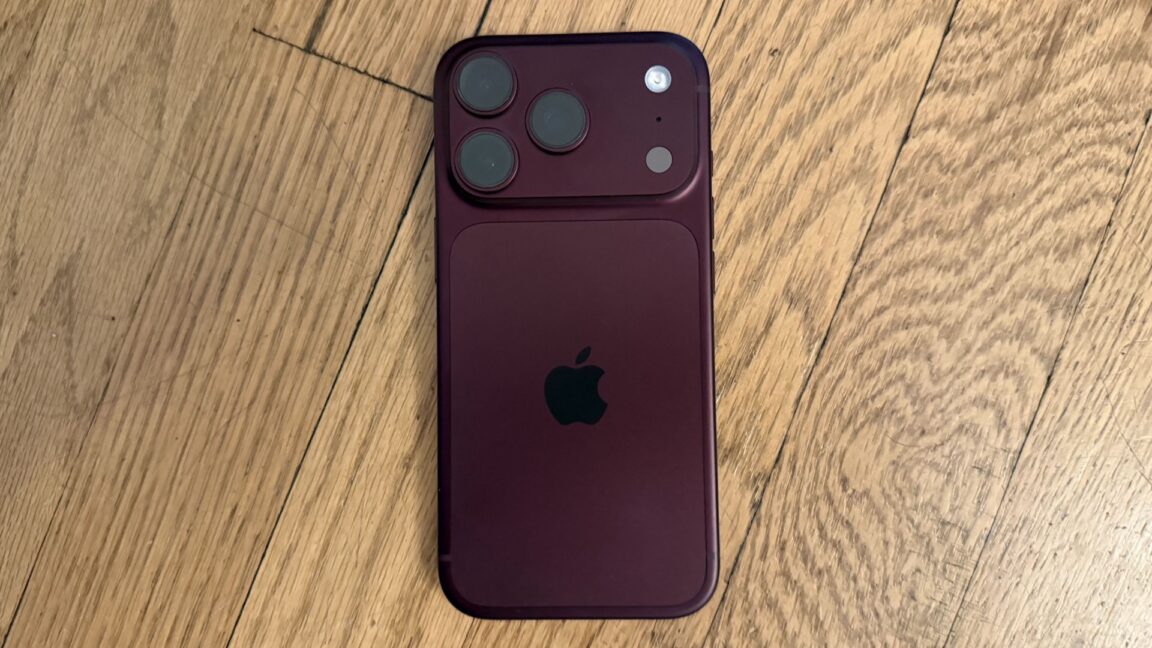
Review: The iPhone 18 Pro is Apple's coolest smartphone (but only literally)

My daily driver is an iPhone 16 Pro, and I won’t be pulling the trigger this year, either. In fact, I think you’re still in great shape with your iPhone 15 Pro, if that’s what you have, provided your battery is still holding up.

Go further back than that, though, and all these little things start to accumulate into something enticing. That’s where we’re at, and that’s where we’ve been for a while now.

I wouldn’t go so far as to say the modern flagship smartphone is perfect in all respects; Apple and its competitors still find small ways to refine it and up the ante for specific types of users year after year, and I expect that to continue. And last year’s base iPhone 17 is still more than good enough for almost everybody.

But after almost two decades of competition and iteration, it’s at least directionally perfect. The basics are all here, and they don’t need to change. I wish the price hadn’t risen, but I suppose that’s the reality we live in right now.

If you want something new and flashy to impress your friends or to satisfy your brain with a novel experience, hold out for the iPhone Duo next month or venture into the slightly more energetic Android market. But if you just want a good phone that leverages all the latest technological progress without overdoing it for attention or progress’ sake, the iPhone Pro line is a good fit.

The good

  • Greatly improved thermal management has added up over two generations
  • Ditto for battery life
  • Very strong graphics and AI performance
  • New custom camera controls and photographic styles help you get (a little bit) out of the typical Apple-processed look

The bad

  • Some might find it a little heavy
  • This isn’t really a bad thing, but there’s not much here to excite you or to inspire an upgrade if you already own a recent iPhone
By Samuel Axon
Tweet media
0
Ars Technica@ars_technica·

Robots make combat airdrops, clear mines as Ukraine defeats Russian pincer

Ukraine’s military robots are dropping from heavy drones in airborne assaults behind Russian lines as other robots clear mines ahead of advancing Ukrainian infantry. The wheeled ground robots are supporting Ukraine’s Operation Vivaldi counterattack that has crushed a Russian military pincer movement and liberated dozens of square miles of occupied Ukrainian territory so far.

The Ukrainian Third Army Corps revealed a “world-first” airborne assault involving robots and drones that took place within Russian-held territory on September 21, 2026, according to the Ukrainian government media platform United24. Heavy bomber drones air-dropped explosive ground robots more than six miles behind Russian frontlines, helping the robots bypass tough terrain and enemy defenses to attack supply lines in the rear.

This is not the first time that Ukraine has used heavy drones to deliver robots closer to their intended targets. But the incident is reportedly the most ambitious robotic airborne assault to date.

Several days later, the Ukrainian defense media outlet Militarnyi reported that the Third Army Corps had separately used more ground robots to safely clear antipersonnel mines from more than 18 miles of routes, paving the way for Ukrainian infantry assaults. The same task would have typically required two sapper companies—but in this case, the robots took care of it all on their own without putting human lives at risk.

Such remote-controlled robots and their human operators already take care of about 60 percent of mines in the Third Army Corps’ area of operations, according to Militarnyi and follow-up coverage by United24.

The Ukrainian military has been significantly ramping up the use of ground robots to compensate for its manpower disadvantage against the Russian military. With the persistent threat of drone attacks near the front lines, robots are taking on increasingly risky duties such as doing supply runs or evacuating wounded soldiers.

Ukraine’s military robots are also taking on combat duties such as defending against Russian attacks with machine guns or making explosive kamikaze assaults on Russian positions.

By Jeremy Hsu
Tweet media
0
Ars Technica@ars_technica·

New York defies Trump admin, asks court to shut down Polymarket gambling

New York sued Polymarket today, alleging that it runs an “illegal gambling operation” through its prediction market.

“By running an unlicensed gambling operation, Polymarket has done more than just knowingly violate state law, they have put New Yorkers at risk, especially those underage who are most vulnerable to problem gaming,” Governor Kathy Hochul said in a press release announcing the lawsuit.

Polymarket is “sidestepping its obligation to pay taxes like licensed casinos and mobile sports gambling platforms do,” New York said. “This tax revenue from gambling regulation funds public schools, sports programs for underserved youth, and problem gambling education and treatment.”

Polymarket is “available to users between the ages of 18–20, even though New York law requires a person to be at least 21 years old to participate in mobile sports betting,” exposing young people to gambling’s “damaging effects on their mental and financial well-being,” New York said.

New York previously sued Kalshi, Polymarket’s chief rival. The Trump administration is on the side of the prediction markets, with the Commodity Futures Trading Commission (CFTC) asserting exclusive jurisdiction over the platforms. In August, the CFTC declared a “market emergency” in New York in an attempt to stop the state from applying its gambling laws to Kalshi.

Gambling with a different name

Polymarket and its rival Kalshi offer sports bets in the form of “event contracts” or “swaps,” which state governments and some courts say are just gambling with a different name.

“Our gambling laws exist to protect New Yorkers, prevent the potential harms of problem gambling, and ensure funding for educational and public benefit programs,” New York Attorney General Letitia James said. “By skirting New York’s laws, Polymarket is targeting the most vulnerable and depriving New York families of critical services and support.”

The New York press release said the state government is “seeking a court order stopping Polymarket from operating as an unlicensed gambling business and requiring the company to pay fines, forfeit all illegal gains and pay restitution to users.” The lawsuit was filed today in a New York County court.

By Jon Brodkin
Tweet media
0
Ars Technica@ars_technica·

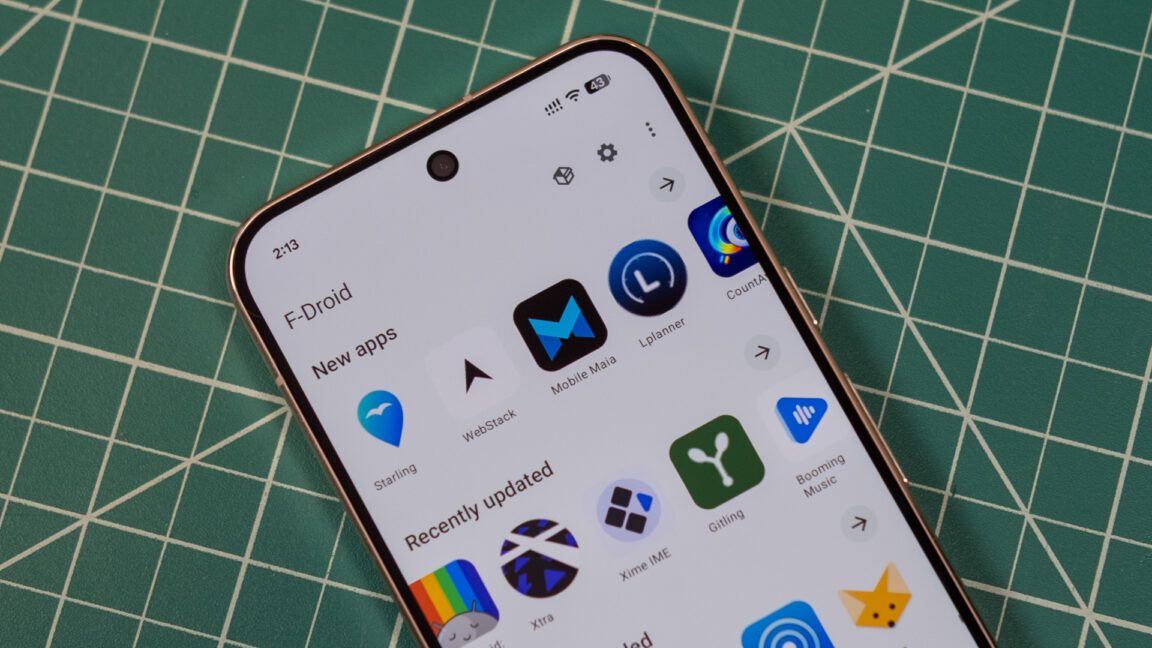
F-Droid gets its biggest update in a decade with new UI and smoother app installs

The team also says that F-Droid 2.0 will automatically check for and install app updates (unless you disable this). It can also download and install multiple apps simultaneously. Given the auto-updates, F-Droid no longer uses pull-to-refresh on the app screen, which the developers acknowledge may upset their particular user base. Manual updates are still available in the three-dot menu for peace of mind.

Here’s the highlighted changelog from F-Droid.

New in version 2.0.0 UI rewritten from scratch with Kotlin compose Improved search, also searching in descriptions and translations Easier to discover new apps, also highlighting the most downloaded ones Installation approval *before* downloading Multiple updates/downloads at the same time Notifying user of issues with apps (e.g. signing key changed) Optional Material You color theme Improved filtering of lists
  • UI rewritten from scratch with Kotlin compose
  • Improved search, also searching in descriptions and translations
  • Easier to discover new apps, also highlighting the most downloaded ones
  • Installation approval *before* downloading
  • Multiple updates/downloads at the same time
  • Notifying user of issues with apps (e.g. signing key changed)
  • Optional Material You color theme
  • Improved filtering of lists

The new F-Droid client is rolling out in stages over the next two weeks—the default installer on the F-Droid site hasn’t been replaced yet. If you want the 2.0 release right now, it’s available on the versions page. The official client is not the only way to access F-Droid apps, but now you’ll have less reason to seek out an alternative.

By Ryan Whitwam
Tweet media
0
Ars Technica@ars_technica·

Donald Duck's uncle was partly based on Wernher von Braun

Did you know that the first character that Walt Disney created to specifically appear on television was inspired, in part, by early Space Age rocket scientists?

On this day 65 years ago (September 24, 1961), Disney introduced the “renowned scientist, lecturer, psychologist [and] world traveler,” Ludwig Von Drake. A member of the Duck family (he is the “brilliant and eccentric” uncle of Donald Duck), Von Drake was “the outstanding genius of the century” (per Disney himself) who helped to explain scientific principles and technological concepts to the millions of people who tuned in every Sunday to watch Walt Disney’s Wonderful World of Color on NBC.

A few years later, after expertly (but often absent-mindedly) addressing topics such as how color television works, the health benefits of exercising, and the history of aviation, Von Drake dove into the topic for which he said he wrote the book on, in the February 10, 1963, episode “Inside Outer Space.”

“You people out there are going to see stars you have never seen before… when you go traveling in outer space. In fact, there are going to be a lot of things out there you don’t know about, but don’t let it bother you, ’cause all of the answers is [sic] right in here,” Von Drake says at the beginning of the animated segment. “I call my guidebook Inside Outer Space because everything known about outer space is on the inside.

“Which reminds me, the way things are going, you better get your copy right away before it becomes obsolete,” he says. “And prices go up.”

Tomorrowland

As it turns out, Von Drake was not wrong—well, maybe not about the cost of his book, but about the part about being obsolete. The show reused animation from earlier Disneyland TV episodes, “Man and the Moon,” “Man in Space,” and “Mars and Beyond,” which first aired on December 4, 1957, two months after the launch of the world’s first artificial satellite.

By Robert Pearlman
Tweet media
0
Ars Technica@ars_technica·

CDC opens state ordering for COVID-19 vaccines after unexplained delay

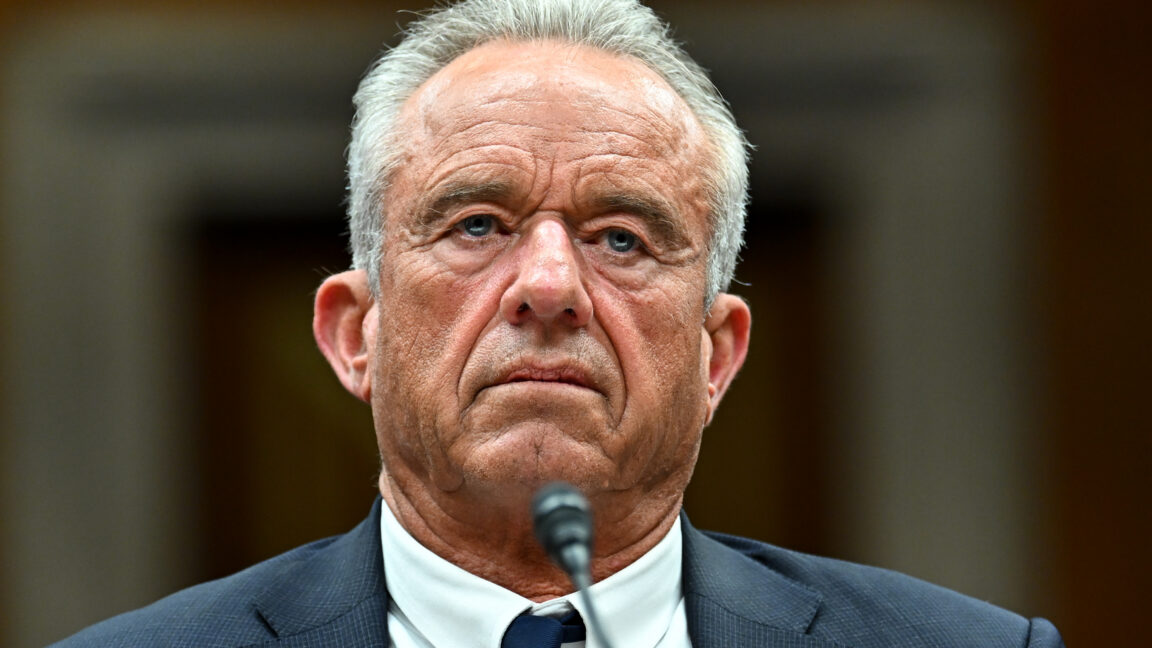
After a nearly monthlong delay, states are now able to order this season’s COVID-19 vaccines through a federal program that provides free immunizations to low-income children, the US health department says. Trump officials have still not provided a clear explanation for the delay, raising concerns about meddling from anti-vaccine Health Secretary Robert F. Kennedy Jr.

On Wednesday, Ars Technica reported that the Centers for Disease Control and Prevention had still not opened ordering for 2026–2027 COVID-19 vaccines through the Vaccines for Children program. That was despite the vaccines having been approved by the Food and Drug Administration in late August.

The Department of Health and Human Services (HHS) told Ars on Wednesday that “CDC has not yet finalized procurement decisions” for the shots. The department’s statement further suggested Trump officials were questioning whether children should receive them. “HHS and CDC are committed to responsible stewardship of taxpayer resources and to ensuring that vaccines purchased through federally funded programs are appropriate for the populations those programs serve,” the department said.

However, The Washington Post reported late Wednesday that ordering was opening. An unnamed source told the Post that part of the reason the vaccine ordering was held up was a delay in finalizing the CDC’s clinical guidance, which is written for health care professionals and public health officials. The guidance reportedly needed to be reviewed by an external expert.

Lingering questions

The Post also reported that CDC career officials had previously finished preparations for making the vaccines available. All Trump officials needed to do was essentially push a button to open ordering, sources said. Further, a spokesperson for the Minnesota Department of Health suggested to the Post that CDC leadership was behind the hold, saying the state had been told “that CDC leadership approval is needed before distribution of the vaccine can begin.”

By Beth Mole
Tweet media
0
Ars Technica@ars_technica·

We have a trailer for Musk documentary Elon called a "hit piece"

Oscar-winning documentary filmmaker Alex Gibney has never been one to shy away from controversy. His latest feature, Musk, has stirred up plenty even before its release, drawing the ire of its subject, Elon Musk, and threats of a defamation lawsuit. After the film debuted two weeks ago at the Venice International Film Festival, rumors swirled that Universal Pictures was getting cold feet about theatrically releasing the film in international markets.

Those rumors appear to be unfounded (at least for now). And Musk is still on track for a US theatrical release, thanks to the folks at domestic distributor Bleecker Street Media, which released the official trailer today.

Gibney has been making documentaries since the 1980s, covering such varied subjects as Jimi Hendrix, Hunter S. Thompson and gonzo journalism, WikiLeaks, Scientology, Steve Jobs, Elizabeth Holmes (the subject of another forthcoming documentary, You Can See Everything, featuring comedian Nathan Fielder), Boris Becker, The Sopranos creator David Chase, alleged Russian interference in the US 2016 presidential election, the opioid epidemic, and cyclist Lance Armstrong. He snagged his first Oscar nomination for 2005’s Enron: The Smartest Guys in the Room, and won the Oscar for Best Documentary Feature two years later for Taxi to the Dark Side.

By Jennifer Ouellette
Tweet media
0
Ars Technica@ars_technica·

NASA chief concerned China may deny access to parts of South Pole

No country has softly landed a spacecraft at the lunar poles, which are more difficult to reach than the equatorial regions of the Moon. The delay of Chang’e 7 opens up the possibility that NASA could reach this terrain first, with the initial launch of Blue Origin’s Blue Moon Mark 1 vehicle. This large lander will carry two NASA probes to the south pole, possibly as early as spring 2027.

Isaacman’s comments come amid a debate about whether it really matters if NASA gets back to the Moon with people before China lands there. The Asian nation has set a target of landing its first astronauts on the Moon by or before 2030 and is making considerable progress in developing a crewed spacecraft, rocket, and lander to accomplish this.

Does the race actually matter?

Does it matter if China gets to the Moon before NASA gets back? After all, China would only be repeating what the United States did in 1969 with the Apollo mission. In Isaacman’s view, it does.

“That will call into question every other country around the world,” Isaacman said of China landing on the Moon next. “Like, whose security guarantee should I trust? Should I trust the United States and NATO? Should I trust China if they’re the emerging technical superpower here? Whose technology should I buy? Whose military hardware should I buy? Whose standards should I adhere to? Who am I listening to on AI? Am I listening to the United States or am I listening to China on that? All of that’s on the table.”

This should never have been a race, Isaacman said, noting US space policy failures going back to the Reagan administration. He estimates that NASA has spent $100 billion across multiple presidential administrations, Democrat and Republican, that has led nowhere. Meanwhile, China just had its first human spaceflight in 2003 and has since expanded its capabilities to the point where it now rivals the United States in space.

“If you come up short with who comes down the ladder first, the impact is felt around the world,” Isaacman said.

By Eric Berger
Tweet media
0
Ars Technica@ars_technica·

Disney+ and Hulu raise prices by up to 13 percent after doubling profits

Disney+ got its fourth price hike in four years today. Hulu prices also went up.

Disney+ and Hulu’s respective standalone, ad-free plans (which also support 4K and HDR) are each increasing 13 percent from $19 per month to $21.50/month.

Disney+ and Hulu’s respective standalone plans with ads increased from $12 to $12.50.

The Walt Disney Company also increased prices for bundles of the streaming services, including those with ESPN.

The price for the Disney+ and Hulu bundle without ads increased from $20/month to $22/month. The Disney+ and Hulu bundle with ads ($13) didn’t get more expensive.

However, prices increased for the Disney+, Hulu, and ESPN Select bundles with ads (from $20 to $22) and without ads (from $29 to $33).

Monthly subscription prices for Hulu + Live, which adds cable channels delivered over the Internet to Hulu’s on-demand options, went up by $10.

For comparison, Netflix is currently $9/month with ads and starts at $20/month without ads. There’s also a $27/month ad-free plan for premium features, like 4K. That means Disney+ and Hulu are both more expensive than the most popular streaming service now, unless you want 4K or HDR.

By Scharon Harding
Tweet media
0