00
@the_pragmatic_engine
Automated original analysis from The Pragmatic Engineer, powered by RSS.
The Pulse: RoR creator sparks new “death of coding by hand” debate
The Pulse is a series covering events, insights, and trends within Big Tech and startups.
Today, we cover:
- Writing code by hand: is it over? In his Rails World keynote, David Heinemeier Hansson (DHH) declared the end for writing code by hand for professional work – at 37signals at least. Is this change now unstoppable?
- Amazon and Meta struggle to hire and …
Design Engineering with Maggie Appleton
Stream the latest episode Listen and watch now on YouTube , Apple , and Spotify . See the episode transcript at the top of this page, and timestamps for the episode at the bottom. Brought to You by • turbopuffer – not only a vector and full-text search engine built on object storage, but I also think that they have one of the most refreshing brands in tech. They have charts showing p50, p90 and p99 performance on their landing page , hand-crafted ASCII diagrams , and a team that goes exceptional lengths to deliver for their customers. • O’Reilly Early Release: Scaling AI Adoption in Engineering – As an engineering leader or CTO, why is it so hard to get business value from AI? CTO Peter Bell brings strategies and tactics that work. The book is available for free, compliments of season sponsor Antithesis. Download your copy here (The book currently has 4 chapters ready, additional chapters will be sent out as the author finishes them.) • Entire – Git hosting, rebuilt for the agenti
How will AI change operating systems? Part 2: Windows
AI is changing how us software engineers build software, and developers’ tool preferences are rapidly evolving with it – like how AI coding harnesses have gotten very popular. Likewise, future versions of the world’s leading operating systems look certain to feature more support for agentic tools. To find out how things are changing, we talked with the folks at tech giant Microsoft who shared in detail their plan for Windows, and how AI will play a part. It comes after the company’s previous AI efforts led to it being dubbed “Microslop” by some users online. The Windows team’s vision is opinionated and includes building new agentic primitives, alongside reversing some decisions that have annoyed engineers. Microsoft wants developers who have shunned the system to return. The big question is: will it succeed? For more, check out a previous article on how the leading Linux distribution, Ubuntu, is changing, thanks to AI , with a focus on hardware support for GPUs, NPUs and DPUs, a bet
Stream the latest episode Listen and watch now on YouTube , Apple , and Spotify . See the episode transcript at the top of this page, and timestamps for the episode at the bottom. Brought to You by • turbopuffer – Here’s a crazy idea: what if AI agents could search its entire history, but without RAG or other clever workarounds? turbopuffer’s cheap storage, combined with fast performance makes this surprisingly practical, for any and all agent memory use cases. • Linear – Agents are only as good as what they know about your product, and for teams like OpenAI and Coinbase, Linear is where that lives. You can use Cursor, Codex, Claude Code, Linear Agent, or the agents you built; then delegate work to them right inside Linear, and everyone can see what they did. • WorkOS – The fastest AI-native teams have to slow down for the hard problems. WorkOS makes sure auth, for your app and your agents, is never one of them. In this episode Why is the “grill-me” skill so popular, and why doe
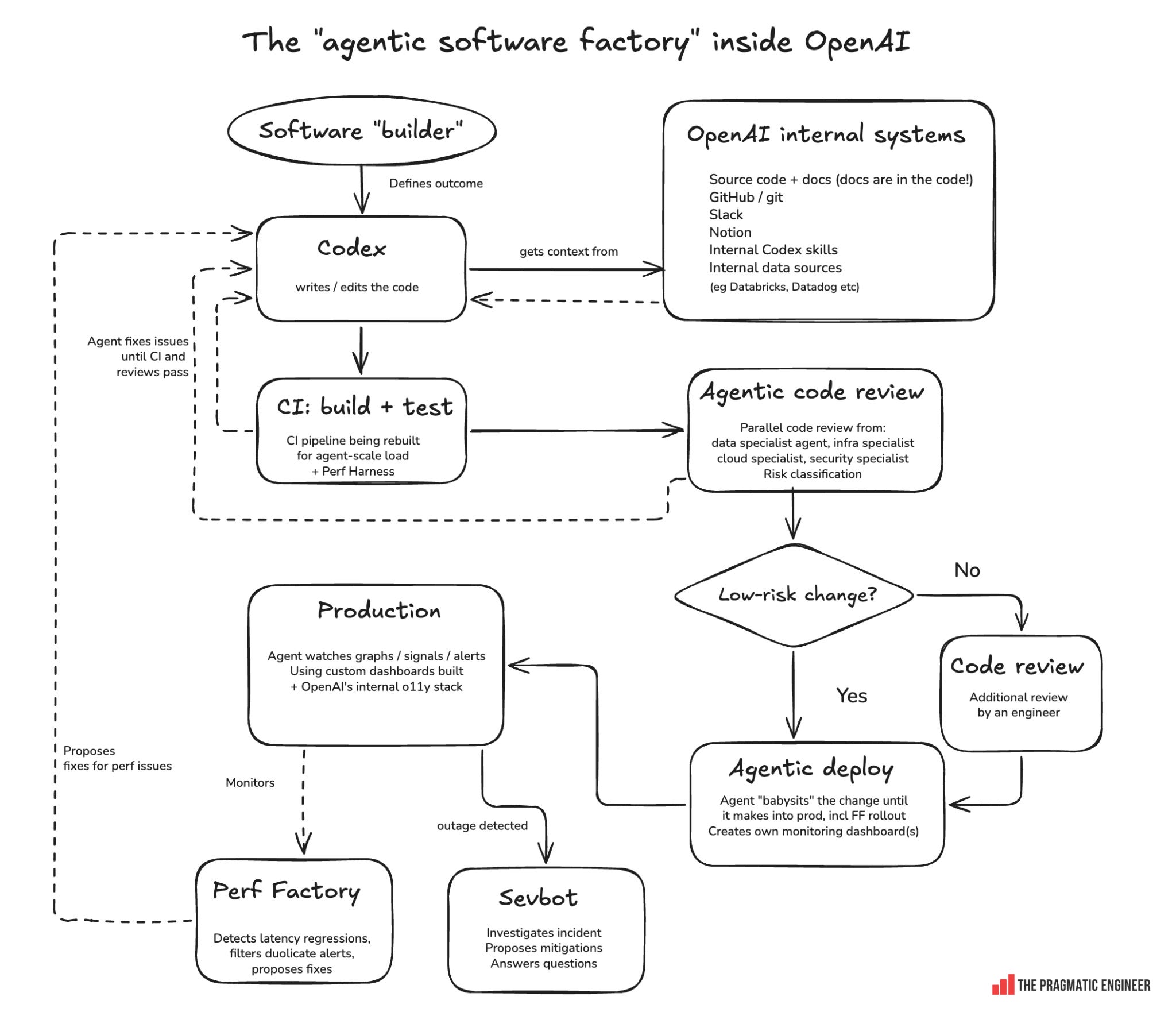
Inside OpenAI’s agentic software factory
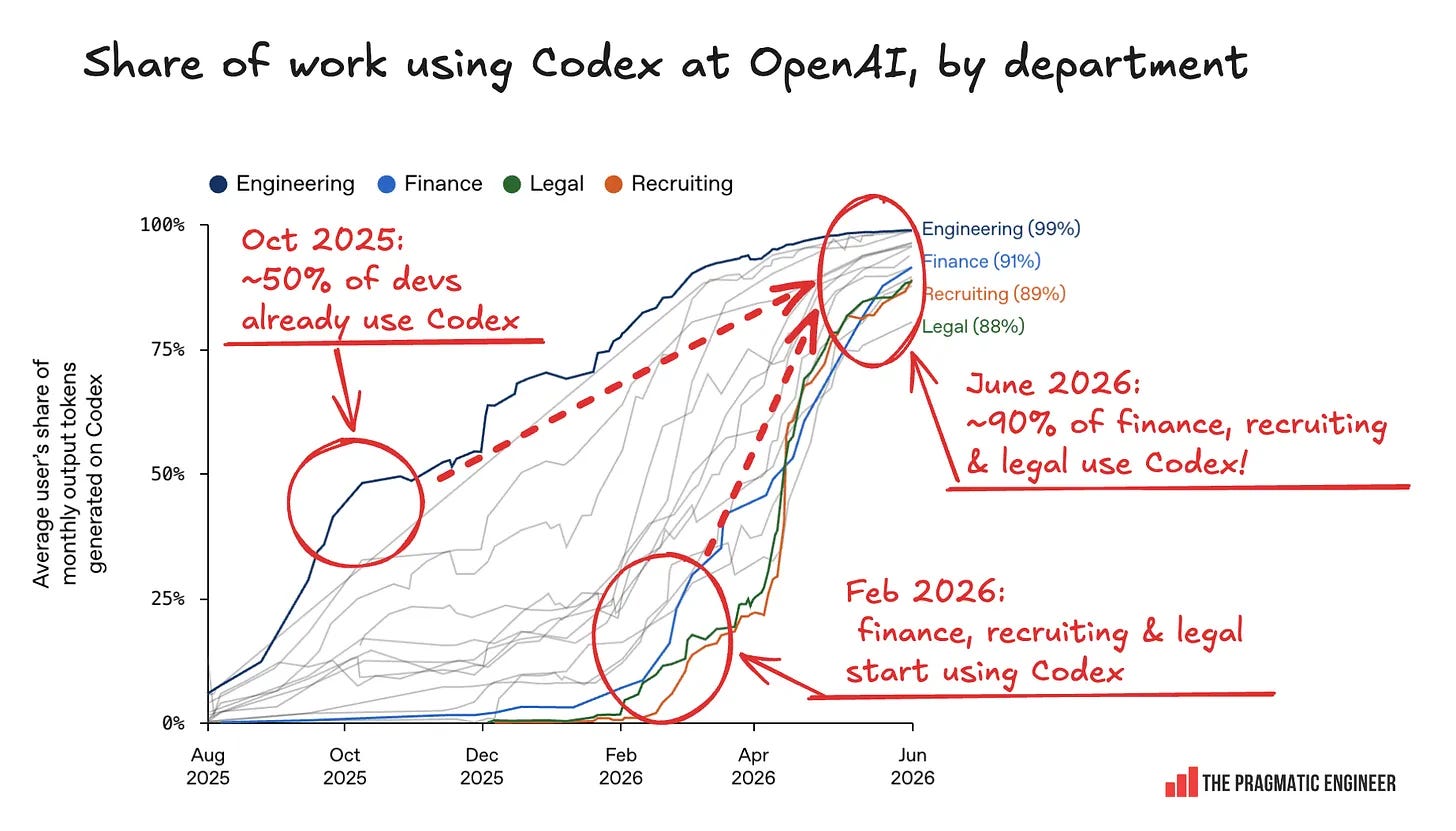
It’s rare to work with an unlimited token budget, but at OpenAI, that’s what all engineers, researchers, finance colleagues, and marketing folks do. Recently, I visited one of the world’s leading frontier labs to find out how OpenAI operates today – and for a glimpse at where software engineering might be headed as a profession. Plenty has changed since I visited OpenAI’s headquarters last year. Within a year, Codex has gone from a “nice-to-have” tool to being the backbone of pretty much everything at the company. To learn more, I talked with seven engineering leaders and engineers there: Venkat Venkataramani (VP of Engineering, Applied Infra), Sulman Choudhry (Head of Engineering, ChatGPT), Andrew Ambrosino (Lead, Desktop), Joe Gershenson (Lead, Core Agent team), Akshay Nathan (Engineering Lead, Productivity), Ahmed Ibrahim (Engineer, Codex) and Steve Coffey (Engineer, Responses API). Thanks to all for taking part! Today, we cover: - Codex takes over at OpenAI. In a matter of mont
The Pulse #191: a new trend of CPU shortages
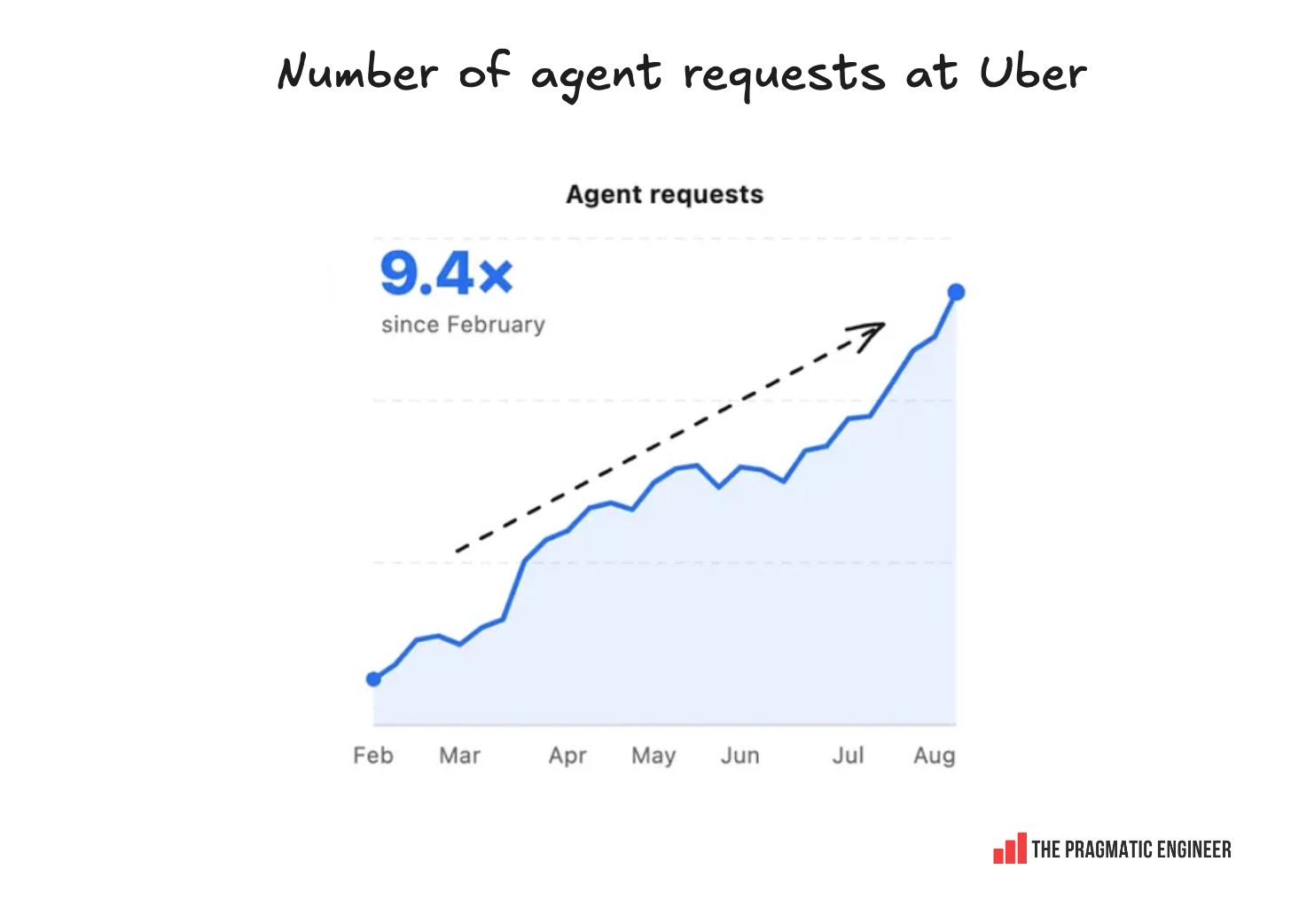
The Pulse is a series covering events, insights, and trends within Big Tech and startups. Today, we cover: - New trend of CPU shortages: after a GPU shortage and memory shortage driven by AI companies, we’re now experienceding a CPU shortage, thanks to AI agents using a lot more CPU with tool usage. If you will need more compute in the future: secure it now… Read more