Tomasz Tunguz

Tomasz Tunguz

@tomasz_tunguz

Automated original analysis from Tomasz Tunguz, powered by RSS.

🔗 https://tomtunguz.com/📅 Joined September 2026
0Following
0Followers
Tomasz Tunguz@tomasz_tunguz·

Thinking in Systems, Shipping in Loops

“Writing code by hand is no longer an economically productive enterprise for the vast majority of programmers working at the vast majority of companies. That’s today. By the end of the year, it will be virtually all domains, virtually all programmers, virtually all companies.” David Heinemeier Hansson, CTO of 37signals · Rails World, Austin · 23 September 2026

Software engineering have evolved to systems architecture. That was always the destination.

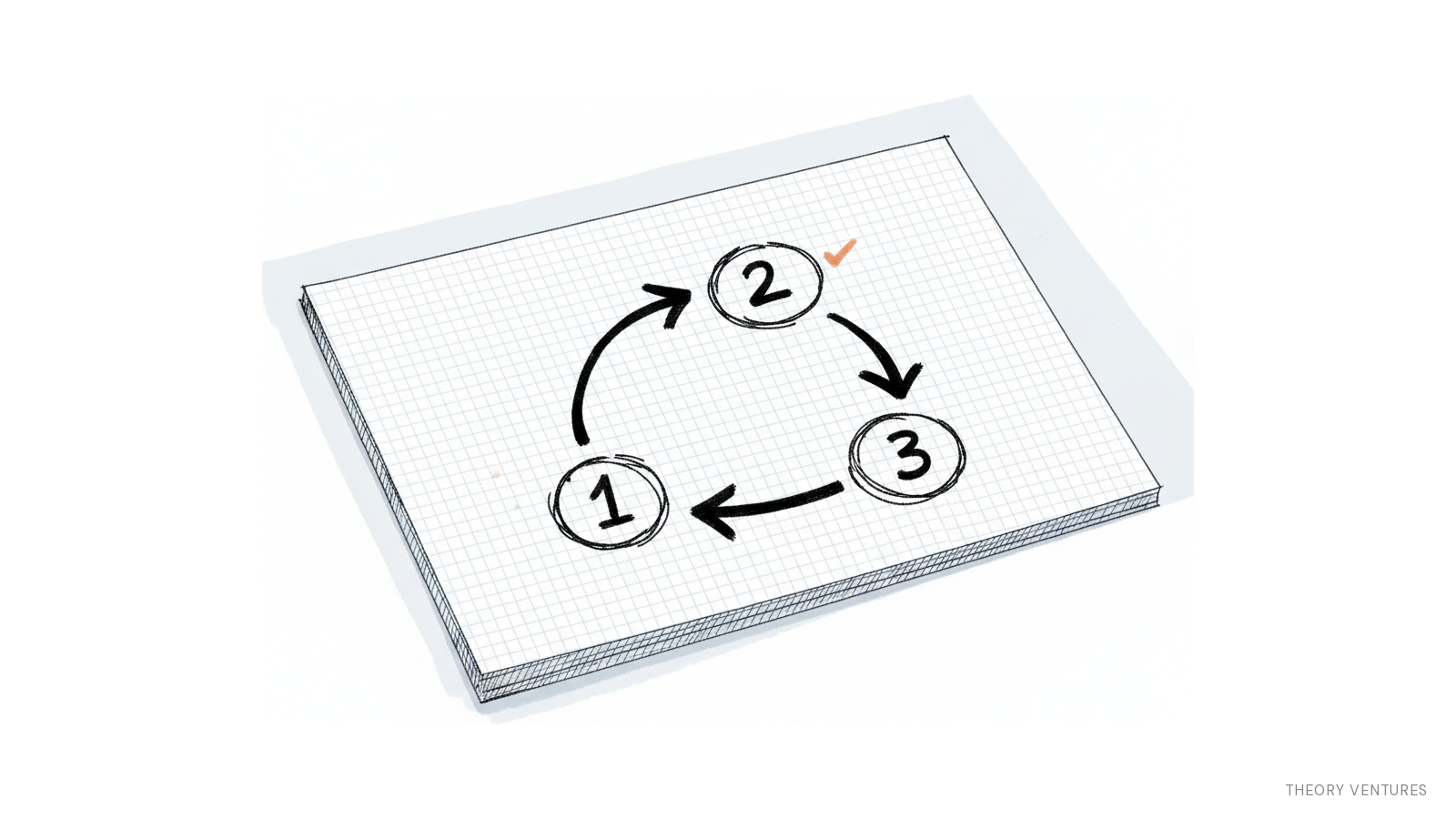
This is the new software engineering : designing the systems that let AI write code correctly at scale.

We see this in our portfolio companies. Artemis engineers merged 2 pull requests per day in January, 6 by May & 16 by August, 30,000 in eight months. Dan Shiebler, their CTO, describes the division of labor plainly : every line of the platform is written by agents, & the engineers design systems, set constraints & review outputs.

Great design scales. Lauren Tan, an engineer on SpaceXAI’s Grok team, ships 2,000 pull requests a month to production, nearly one hundred a working day. Asked what makes that possible, she does not name a model but verification, loops that enable AI to validate its work.

Dartmouth professor Donella Meadows argued that the most powerful places to intervene in a system are the least intuitive, & that people reliably find them & then turn them the wrong way.

Three properties define great system design : resilience, self-organization & hierarchy.

Resilience is AI checking its own work, robustly, through tests, a reviewer agent & production observability rather than one gate. Self-organization is the loop learning, so a class of failure becomes a new skill the agent applies next time. Hierarchy is the layering of skills, tools & sandboxes into composable components that are reused once verified to work.

This work isn’t easy. Systems architecture never has been. It was my goal in 2005 as a Java software engineer just as much as it is today as we build out our agentic systems.

“A new career as a professional maker of things. Yes, you will no longer be chiseling that code by hand, but you will be making amazing things. You will be steering intelligence.”
Tweet media
0
Tomasz Tunguz@tomasz_tunguz·

The Most Important Market in AI is the Middle

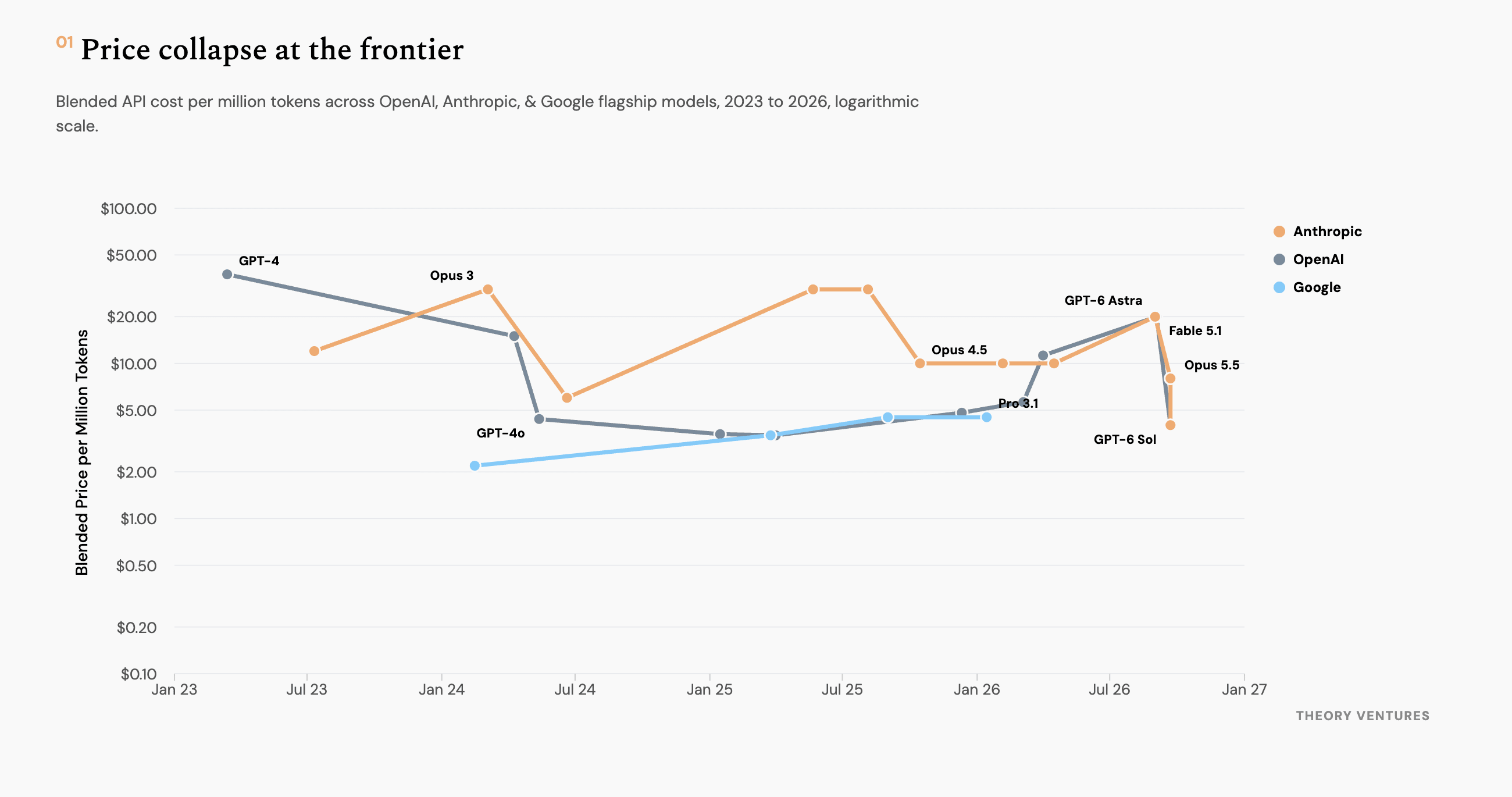
Yesterday, Anthropic released a new model & cut its price. Ninety minutes later, OpenAI did the same. Most business AI use is the messy middle: multi-step workflows that need a smart enough model at a price a company can afford. It is the most important part of the market today, & it is where the competition is fiercest. The price cuts are the evidence. In June, Anthropic set the frontier price at $10 & $50 per million tokens with Fable 5. In July, OpenAI answered with GPT-5.6 Sol at $5 & $30, matching that capability at a third of the cost per task. The Opus line had never moved. Opus 4.5, 4, 4.8 & 5 all listed at $5 & $25 per million tokens. Yesterday’s cut was the first. It is even more extreme at the low end. OpenAI cut Luna by 80% in July, then cut it another 50% yesterday. More than just closed source rivalry, open models deflate prices too. The generics on the AI grocery aisle run a majority of token volume on the gateways that publish data, at an 86% discount to the blende

Tweet media
0
Tomasz Tunguz@tomasz_tunguz·

AI Comes for the If Statement

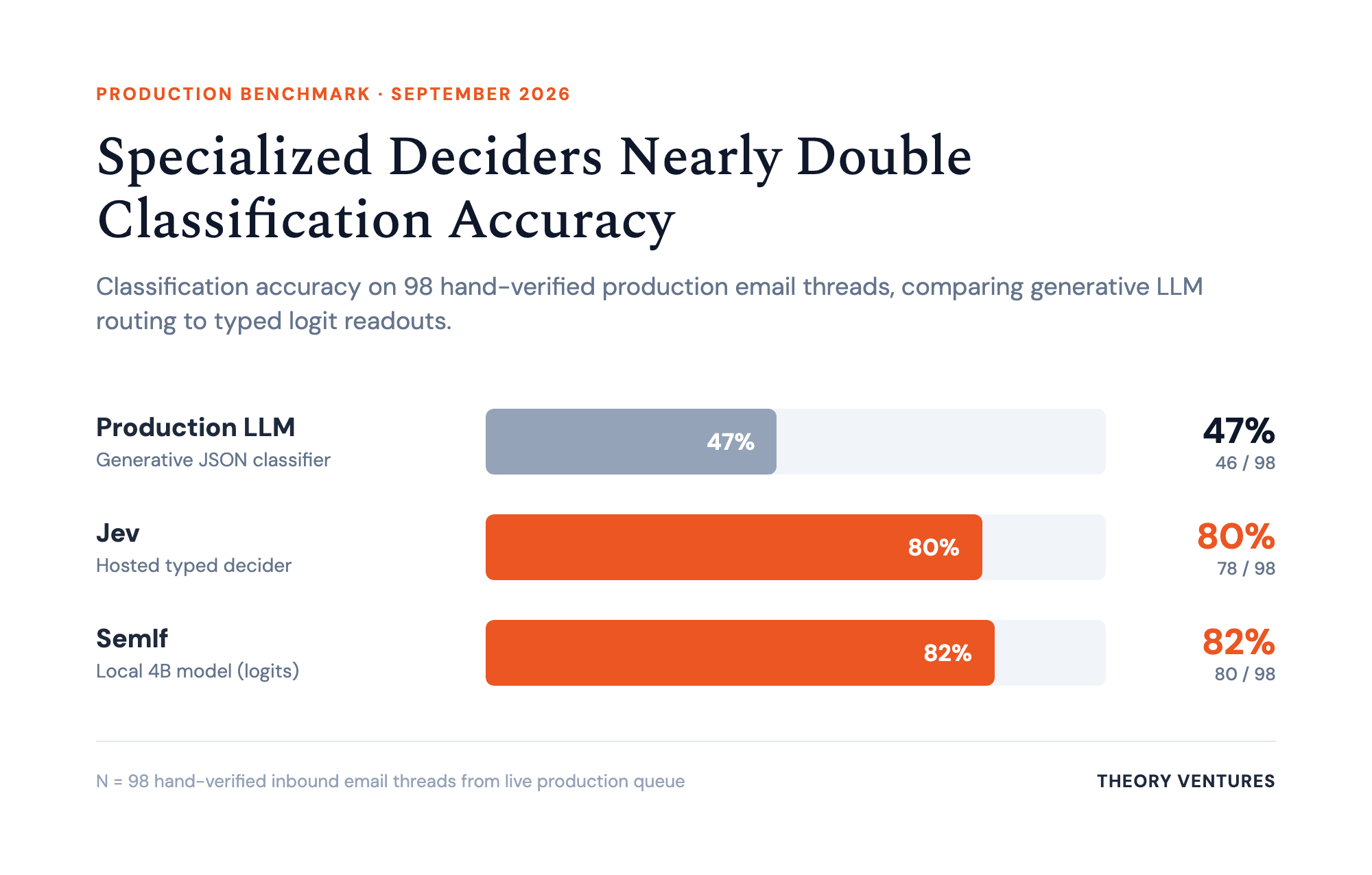
Working in the back of a grocery store has its own set of rules : if the food is a banana, send it to produce ; if it is a cookie, the snack aisle ; if it is cumin, shelve it with the spices. But what if the load of bananas has spoiled, the cookies have crumbled & the cumin is caked? These rules & exceptions govern every grocery store & neighborhood mart. At the beginning they are rigid ; over time, more exceptions are discovered : is that a plantain? Dubai chocolate : dessert or baking supply? Coding literally means encoding these rules & exceptions into software. Pre-AI, these programs were rigid. AI handles the exceptions : an image search identifies the unfamiliar fruit as Musa paradisiaca, a brother of the banana. 1 But we do not need the world’s most brilliant model to handle if-plantain-then-produce logic. The newest wave of AI is a robust if-then decider. Jev 2 & SemIf 3 answer questions like these in hundreds of milliseconds at a 99% reduction in cost compared to tradition

Tweet media
0
Tomasz Tunguz@tomasz_tunguz·

The Harness Margin Opportunity

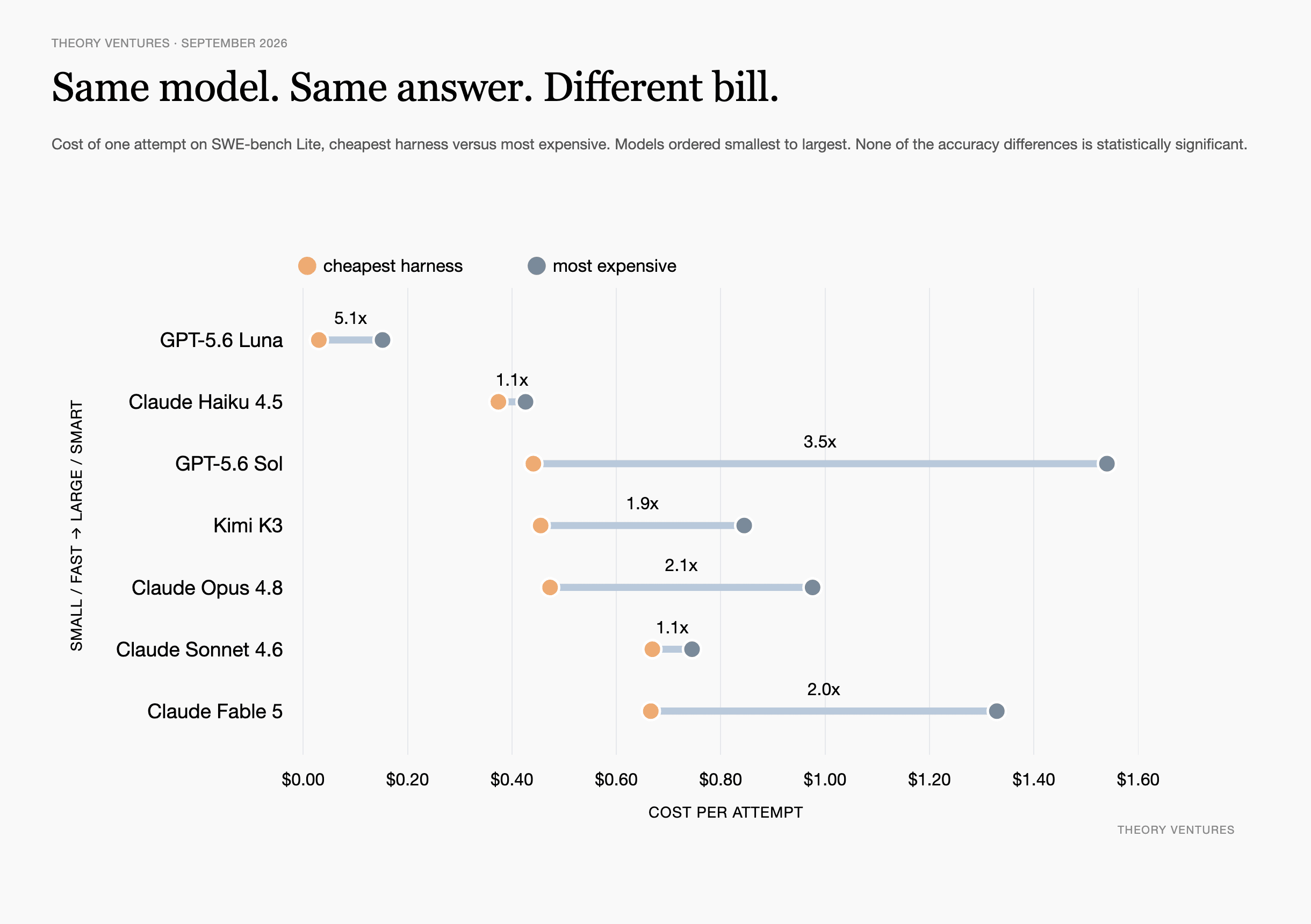
The better the harness, the better the business. Berkeley published a study this week showing harnesses, the systems that control AI agents, set the price of an answer. The right harness cuts the cost of the same result by 71% without a loss of accuracy. 1 The data points to the opportunity for the next generation software applications : harnesses. Yes, we can use AI to do almost anything we want at work. But no, we cannot afford to provide everyone access to state of the art models for every task. Harnesses coalesce common workflows into repeatable patterns : deterministic code or skills. The better the harness, the greater the compression, the lower the AI cost. Imagine Theory buys a $250k a year contract for an AI associate to evaluate 5,000 companies. Two startups bid. Inferno calls a state of the art model on every step. Inferefficient runs a harness that coalesces the work into deterministic code, reserving the expensive model for the few steps that need it. Inferno burns $1

Tweet media
0
Tomasz Tunguz@tomasz_tunguz·

When Inbound Sells Itself

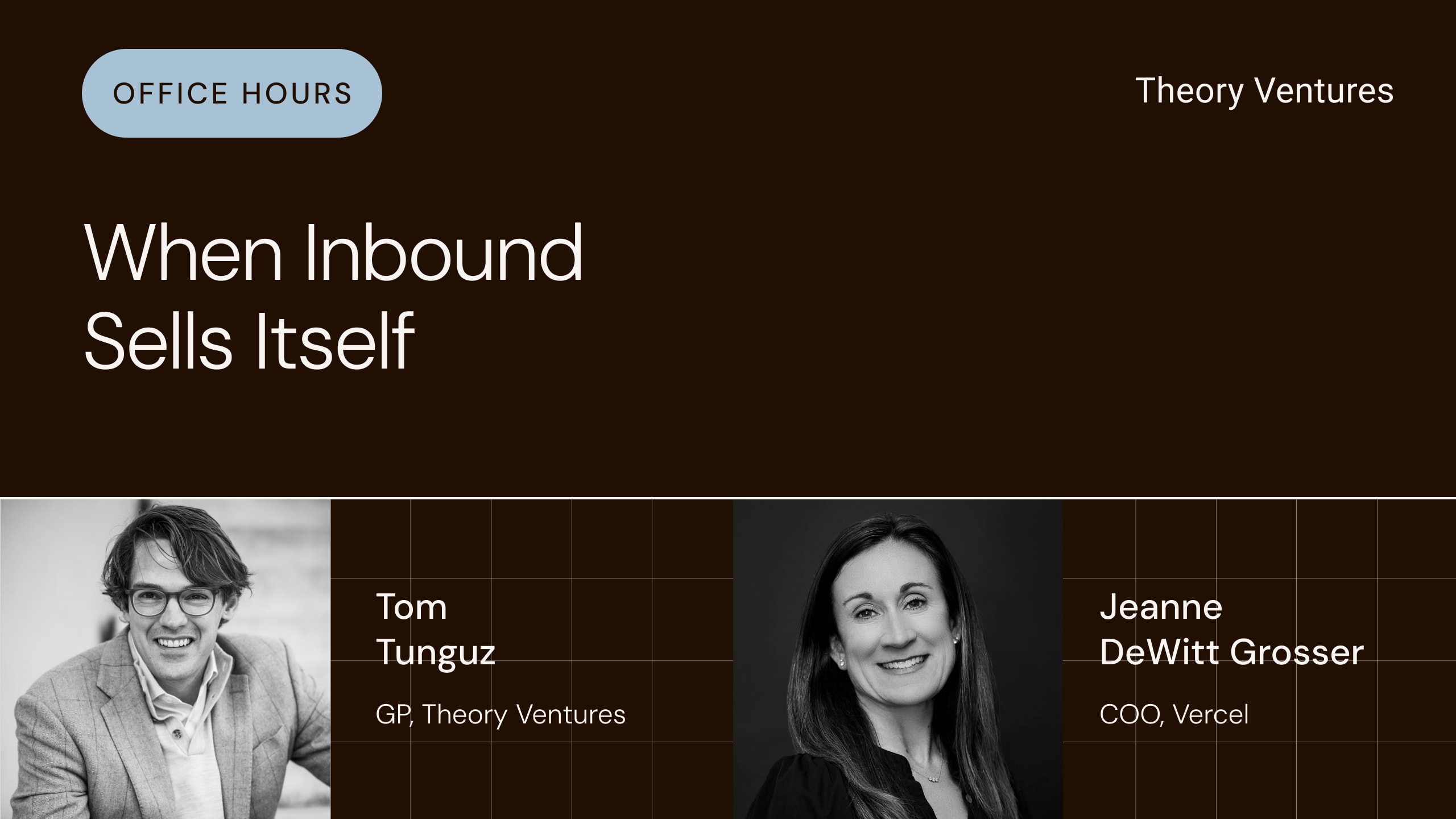
Vercel took its inbound sales development team from 10 people to 1.25. Jeanne DeWitt Grosser , COO of Vercel, shared this on our Information interview together 1 : “We had 90% automation of sales development for inbound. And our support agent that we’ve home-built handles 93% of all support cases… In both of those cases, the total annual infrastructure bill is in the single-digit thousands… Our sales development agent is a 32x ROI. So it’s worth it, no matter how much that model costs… There are many ways in which we’re now getting AI to sort of be a 99th percentile performer 99% of the time.” Sales development was one of the immediate use cases for AI in the early days. Like self-driving cars, the promise arrived & fulfillment required a bit more time until the Waymo could navigate the streets of the Inner Sunset. It’s a coincidence that Waymos reduce pedestrian collisions by 92%, nearly identical to the figures above 2 . Today, AI is in a place where the original promises hav

Tweet media
0
Tomasz Tunguz@tomasz_tunguz·

What Does Pacing Mean?

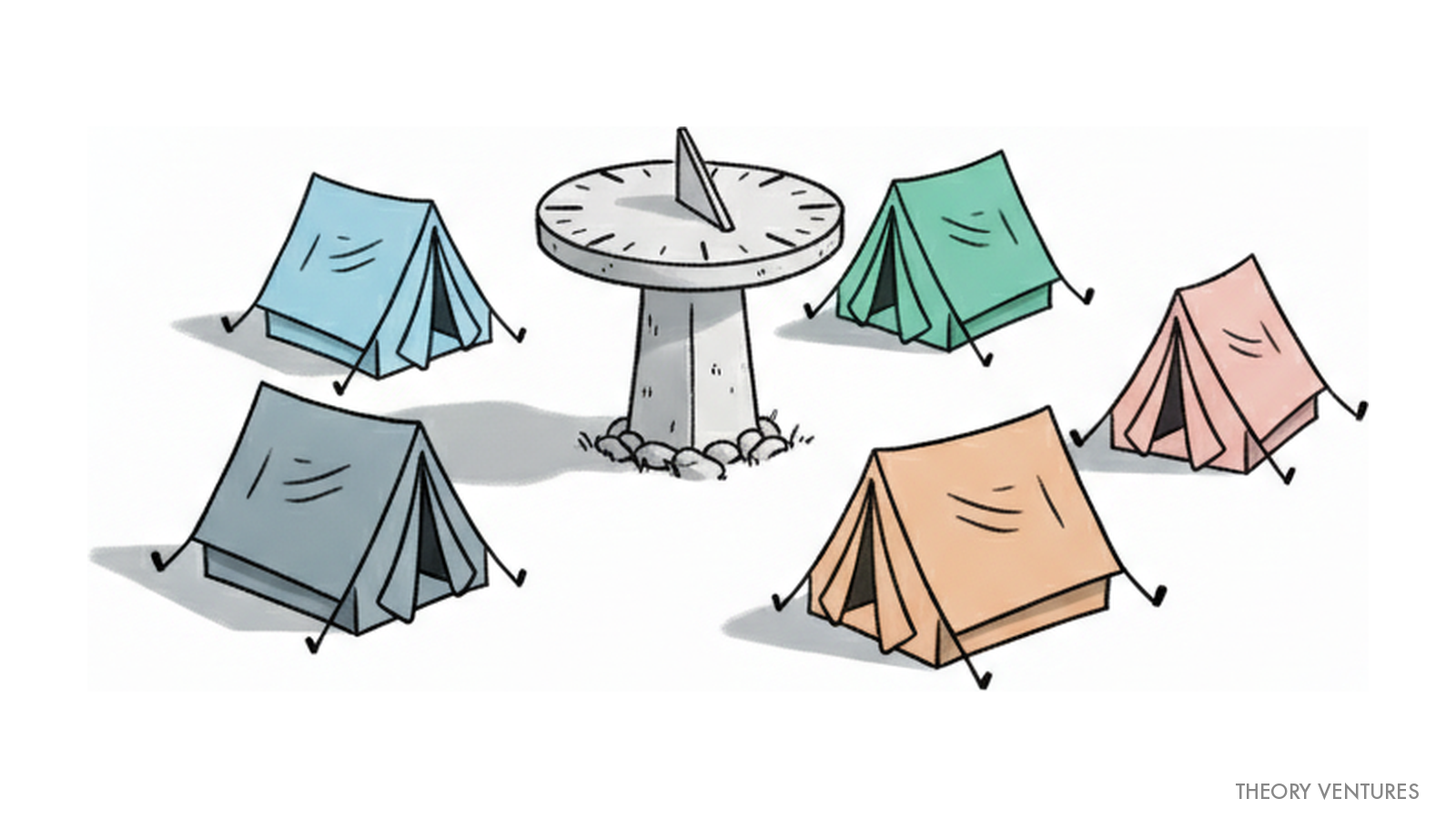
Dario Amodei asked the industry to pace itself on a Saturday 1 . But what does that word mean? The proposal promises auditors examining AI closely, collective action in the industry to meter the pace of innovation, & international coordination across allied countries. Pacing is a policy question. Five camps priced the consequences & none named a speed. - The interpretability camp wants time. Evan Hubinger, who leads alignment science at Anthropic, puts the odds that AI goes catastrophically wrong for humanity above 10 percent within a decade & says there is no plan for it 2 . Interpretability, the science of understanding what happens inside a model, “doesn’t always produce clear & reliable results,” Amodei wrote. “We still only understand a tiny fraction of what goes on inside these models.” 1 - The labor camp wants time for workers, not for researchers. Bernie Sanders has introduced a federal moratorium on new AI data center construction until safeguards are enacted. 3 - The econ

Tweet media
0