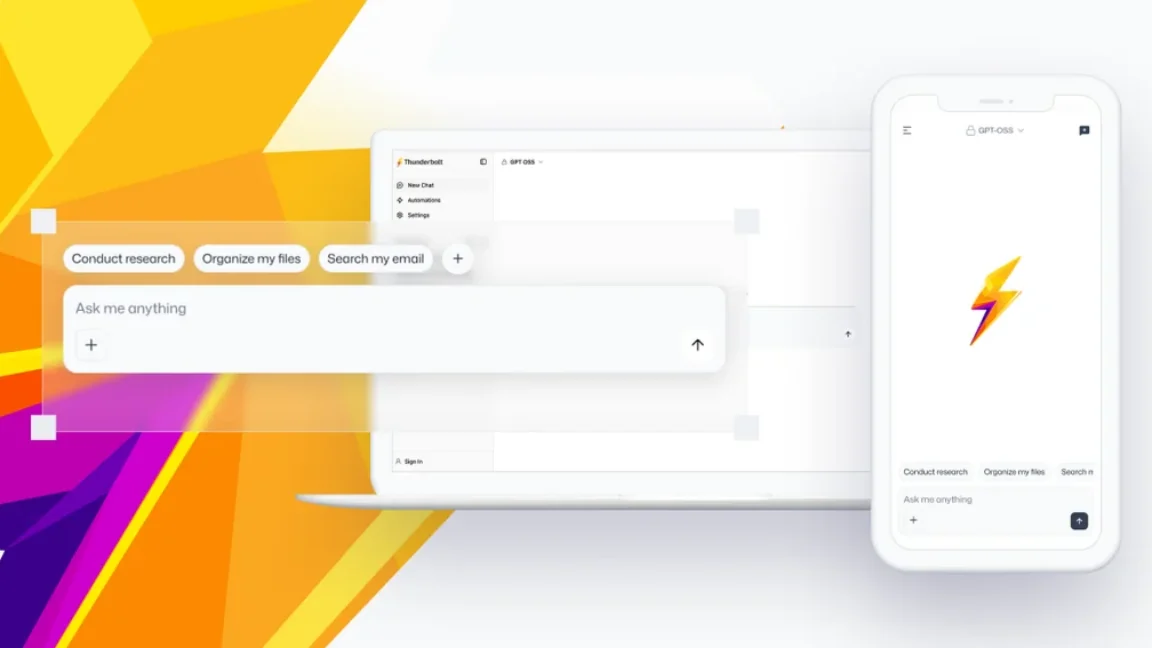
Mozilla launches Thunderbolt AI client with focus on self-hosted infrastructure
Mozilla is the latest legacy tech brand to make a play for the enterprise AI market. But the company behind Firefox and Thunderbird isn’t releasing its own standalone AI model or agentic browser. Instead, the newly announced Thunderbolt is being sold as a front-end client for users and businesses who want to run their own self-hosted AI infrastructure without relying on cloud-based third-party services. Thunderbolt is built on top of Haystack , an existing open source AI framework that lets users build custom, modular AI pipelines from user-chosen components. Thunderbolt acts as what Mozilla calls a “sovereign AI client” on top of that underlying infrastructure. The combo promises to let users easily plug into any ACP-compatible agent or OpenAI-compatible API (including Claude, Codex, OpenClaw, DeepSeek, and OpenCode). The system can also integrate with locally stored enterprise data through open protocols and use an offline SQLite database as a local “source of truth” for the model to reference. In conjunction with a locally run model that promises to let users control the entire stack of AI services, which could be an important consideration for businesses concerned about leaking their data to outside providers. Mozilla says Thunderbolt also offers "optional end-to-end encryption, and device-level access controls” for additional security. Read full article Comments
New tool builds on deepset’s Haystack toward a “decentralized open source AI ecosystem.”
Mozilla says the Thunderbolt client supports many of the now-familiar AI interfaces and use cases, including “chat, search, research, automation, and cross-device workflows.” Native apps for Windows, Mac, Linux, iOS, Android, and the web are available for direct download or can be built from React source code via a GitHub repository .
Mozilla is already encouraging potential enterprise clients to reach out to coordinate paid licensing and on-site deployments, even as the GitHub page warns that Thunderbolt is “under active development, currently undergoing a security audit, and preparing for enterprise production readiness.”