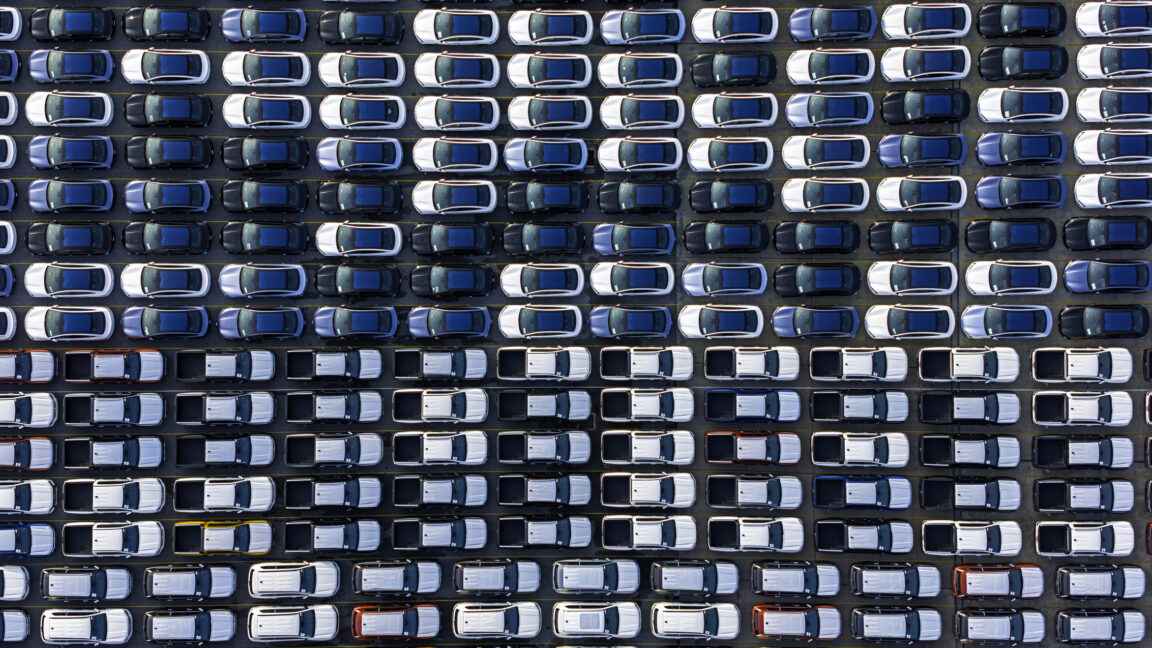
China could supply EV manufacturing boom with recycled EVs
While recycling is a mathematically obvious response to the finite, non-renewable nature of many resources, the economic math is often challenging. For many materials, it can be hard to compete with virgin materials on a cost basis. Fast-moving technologies like electric vehicles throw in an added complication: By the time a car is scrapped, the industry may have moved on to a different battery chemistry. That reduces the value of recycling the car’s battery back into the production chain. Still, a study led by Xin Xiong at Nanjing University finds that in China, recycling could become the dominant source of many key materials needed to manufacture EV components over the coming decades. Modeling manufacturing needs The researchers set out to model how the supply of recycled materials compares to manufacturing demand in China between 2010 and 2050. It covers materials relevant to batteries across hybrid, battery-electric, and even fuel-cell vehicles (lithium, cobalt, nickel, manganese, phosphorus, sodium, sulfur, and graphite), as well as several critical elements used in electric motors (copper, neodymium, dysprosium, samarium, and cerium). Read full article Comments
Look at chemistry of batteries and motors shows big opportunity for recycling.
The researchers considered four scenarios for technological progression. Some see battery and motor chemistry slowly transition to technologies like solid-state lithium, sodium batteries, or motors with reduced rare-earth content. Other scenarios transition more quickly. The model calculates the “circularity potential” of each element over time—how much of manufacturing demand can be supplied by the flow of recycled material in that same year.
It also factors in recent Chinese policies, which aim to increase recycling rates of certain battery elements from the current 40 percent to a new standard of at least 98 percent, and to increase the share of EVs in new sales from 45 percent to 60 percent by 2030.