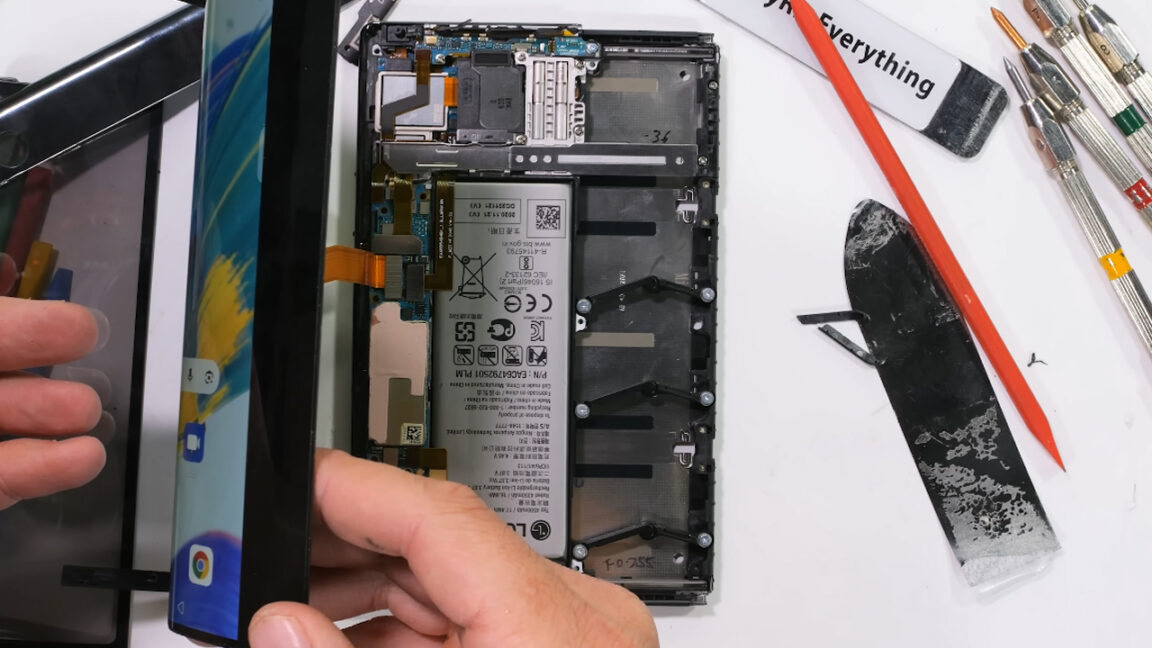
Teardown of unreleased LG Rollable shows why rollable phones aren't a thing
LG was once a heavyweight in the smartphone industry, trading blows with hometown rival Samsung. However, as smartphone sales plateaued, the company struggled to stay competitive. In 2021, LG planned to make waves with a rollable phone , but it never moved beyond the teaser phase. Five years after LG threw in the towel on smartphones , the LG Rollable has appeared in a YouTube teardown that demonstrates why this form factor never took off. The LG Rollable is just one of several rollable concept phones that appeared throughout the early 2020s. Flexible OLED screens had finally become affordable, leading to foldable phones like the Samsung Galaxy Z Fold. Although, "affordable" is relative here. Foldables were and still are very expensive devices. Based on what we can see of the complex inner workings of the LG Rollable, these devices may have commanded even higher prices. Noted YouTube phone destroyer JerryRigEverything managed to snag a working prototype LG Rollable. It may even be the unit LG demoed at CES 2021. The device looks like a regular phone at first glance, but a quick swipe activates the motor, which unfurls additional screen real estate from around the back. This makes the viewable area about 40 percent larger without the added thickness of a foldable. Read full article Comments
LG almost released a rollable smartphone in 2021, and this is what it looked like inside.
The device expands with the aid of two tiny motors, which are attached via straight teeth to an internal track. The screen assembly has zipper-like teeth that keep it locked into the frame as it moves. The motors make a surprising amount of noise when operating, so LG designed the phone to play a musical chime to hide the sound.
While the motor does the heavy lifting, the phone also has a lattice of articulating spring-loaded arms inside that keep the OLED panel even as the frame slides side to side. The battery and motherboard sit in a tray that allows the back of the phone to expand as the OLED rolls into view.