Four Russian satellites are now within striking distance of an ICEYE radarsat
At least four Russian military satellites changed their orbits to match that of a Finnish-American radar surveillance satellite in the last week, raising questions about Russia's intentions amid an ever-expanding standoff high above Earth. The maneuvers were identified through open source orbital tracking data. Greg Gillinger, a retired Air Force space intelligence officer, revealed the orbit changes Friday in a special edition of his Integrity Flash newsletter , published by Integrity ISR, a private business that provides "combat-proven operational support and elite training that enhances mission success across ISR (Intelligence, Surveillance, and Reconnaissance), cyber, space, and targeting domains." The Russian satellites in question, designated Kosmos 2610 through 2613, launched together on April 16 on a Soyuz-2.1b rocket from Plesetsk Cosmodrome in northern Russia. Over the last week or so, the four satellites adjusted their inclinations—the angles of their orbits to the equator—by less than a degree. Read full article Comments
At least four Russian military satellites changed their orbits to match that of a Finnish-American radar surveillance satellite in the last week, raising questions about Russia's intentions amid an ever-expanding standoff high above Earth.
“This capability is not common for satellites conducting typical missions.”
That may sound insignificant, but such “plane change” maneuvers use up a lot of fuel. The delta-v, or velocity change, required for a plane change maneuver of this magnitude is equivalent to the impulse needed to raise altitude by more than 100 miles.
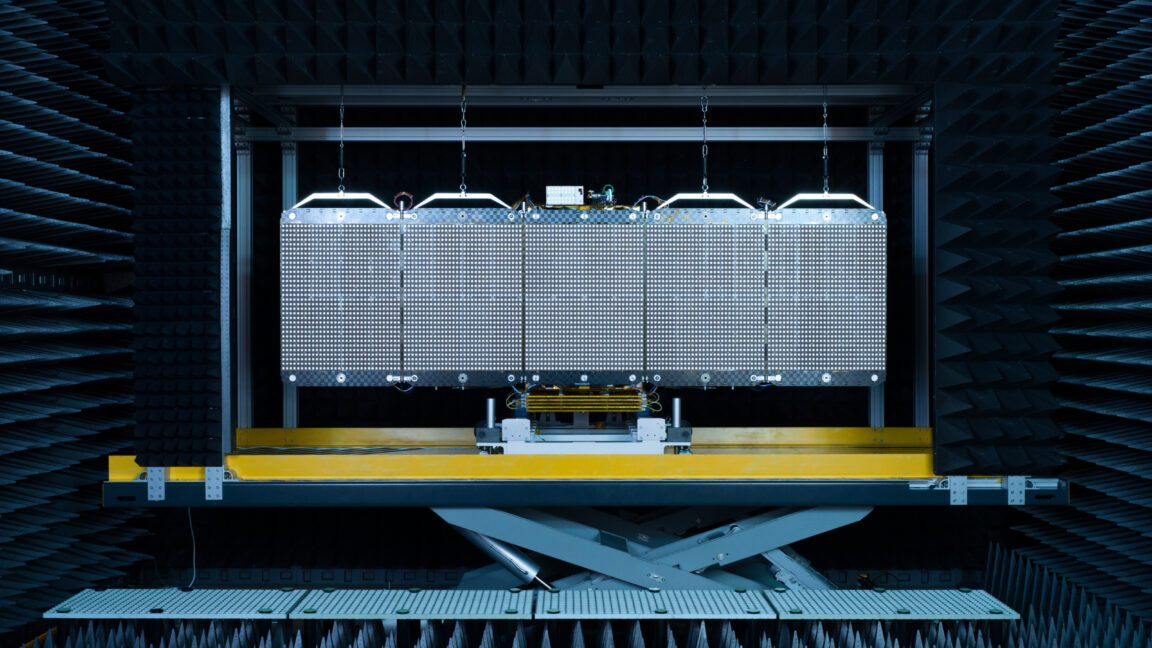
The upshot is that these four Russian satellites are now positioned to routinely pass near a commercial radar surveillance satellite operated by the Finnish-American company ICEYE. This imaging platform, named ICEYE-X36, is part of a fleet of satellites providing all-weather overhead radar images to the US military and European governments. ICEYE also provides imagery to Ukraine’s military in its fight against Russia. ICEYE’s co-founder and CEO, Rafal Modrzewski, met with Ukrainian President Volodymyr Zelenskyy last year.
According to Gillinger, the cross-track distances between the four Russian satellites and ICEYE-X36 now range between about 500 meters (1,640 feet) and 22 kilometers (13.7 miles). All of this is taking place in polar orbit at an altitude of approximately 340 miles (547 kilometers).