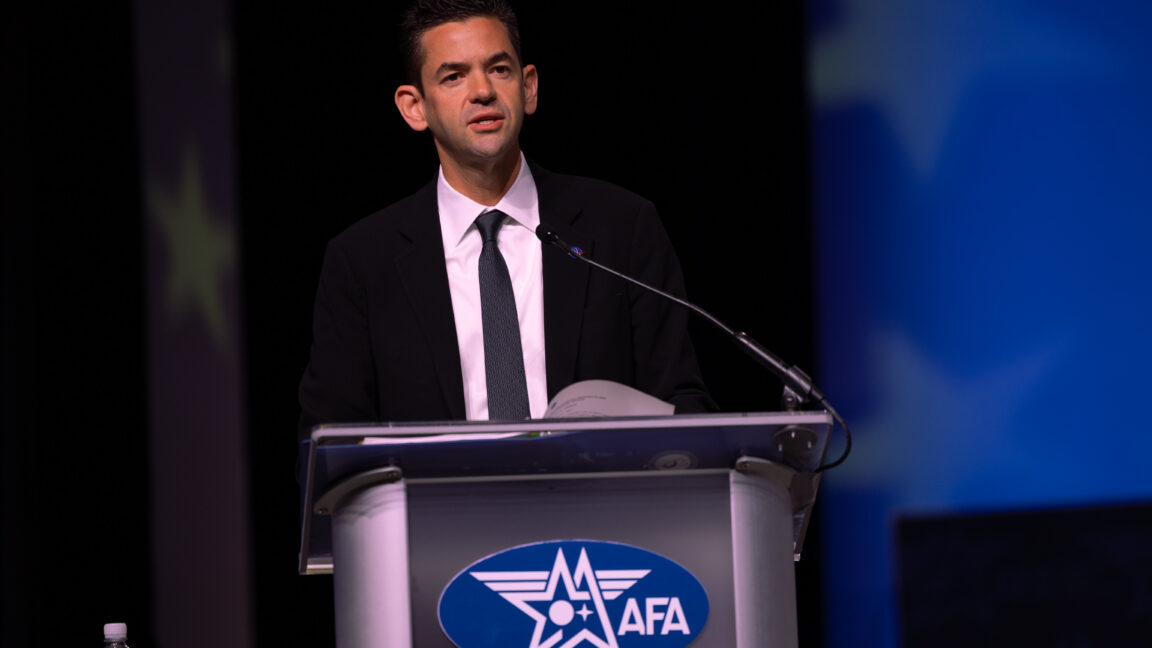
NASA chief: I'm only interested in "good deals" from international partners
NASA must be more selective in the way it forges international partnerships as the race to the Moon transforms from a battle for national prestige between the United States and China into a high-stakes competition for extraterrestrial real estate and resources, the agency's administrator said. Jared Isaacman, now in his 10th month at the helm of the world's largest civilian space agency, told a gathering of military leaders and defense contractors last week near Washington, DC, that the 21st century race to the Moon is more than a battle of ideologies. The sweet spot for a Moon base, Isaacman said, is a relatively small region near the lunar south pole, and there are tangible implications for who gets there first. The Moon's south pole harbors substantial quantities of water ice concentrated on the floors of craters away from the reach of sublimating rays of sunlight. The ice inside these eternally dark craters could be used to supply water, air, and rocket fuel for a Moon base, supporting a permanent settlement and providing a springboard for future expeditions to Mars. Read full article Comments
NASA must be more selective in the way it forges international partnerships as the race to the Moon transforms from a battle for national prestige between the United States and China into a high-stakes competition for extraterrestrial real estate and resources, the agency's administrator said.
“There was absolutely a time where we were trying to make everyone happy.”
“It’s a big Moon, with the surface area of Africa,” Isaacman said Wednesday at the Air & Space Forces Association’s Air, Space & Cyber Conference. “The south pole is more akin to Washington, DC, when there are only so many roads and so many good parking spots that you’re going to want to occupy.”
The best parking spots aren’t just those close to the Moon’s water ice bound up in deep craters. A few select crater ridges extending high above the ice deposits provide access to near-continuous sunlight for power generation.