Ice Age dice show early Native Americans may have understood probability
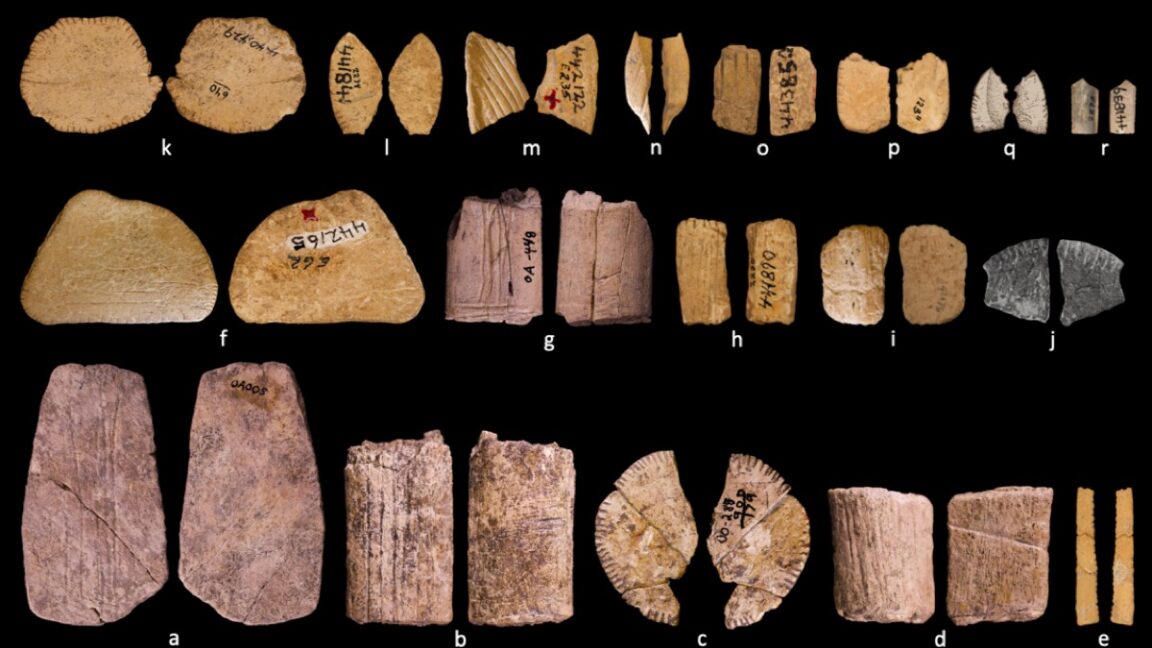
Native Americans have been playing with dice in games of chance for more than 12,000 years, according to a new paper published in the journal American Antiquity. And the oldest examples of Native American dice predate the earliest currently known dice in the Old World by millennia. “Historians have traditionally treated dice and probability as Old World innovations,” said author Robert Madden , a graduate student at Colorado State University. “What the archaeological record shows is that ancient Native American groups were deliberately making objects designed to produce random outcomes, and using those outcomes in structured games, thousands of years earlier than previously recognized.” Madden's interest in Native American gaming started with Maya ballgames and then expanded to include Native American dice and games of chance. These were rudimentary dice with just two sides, rather than the six sides of modern dice, typically described as "binary lots." And Madden found they were common to virtually every Native American tribe. Archaeologists had traced the use of such dice back 2,000 years, but most were hesitant to conclude that dice-like artifacts older than that were, in fact, dice. Read full article Comments
Native Americans have been playing with dice in games of chance for more than 12,000 years, according to a new paper published in the journal American Antiquity. And the oldest examples of Native American dice predate the earliest currently known dice in the Old World by millennia.
Ice Age hunter-gatherer “were intentionally relying on random outcomes in repeatable, rule-based ways.”
“We always have that problem with archeology, which is you find something, and you say, well, what is this, how was it used?” Madden said in a CSU podcast. “One of the things we often rely on is something called ethnographic analogy, which is, do we have some kind of historic record of people using things like this, hopefully in the same area and hopefully with a cultural connection. If we see that, then we can make an inference that maybe the same object made in the way was used for the same purpose.”
The most comprehensive study of Native American dice, gambling, and games of chance dates back to 1907, with the publication of ethnographer Robert Stewart Culin ‘s 809-page report, “Games of the North American Indians .” Culin began by delving into the collection maintained at the Field Columbian Museum of Chicago, including the field notes and manuscripts written by curator George A. Dorsey, an anthropologist. Dorsey introduced Culin to various Native tribes, where Culin collected even more information about Native American games and gaming artifacts. Culin also consulted with other scholars and collectors to produce his final report 14 years later, which includes over 1,100 illustrations and descriptions of 239 sets of dice from 130 different tribes.