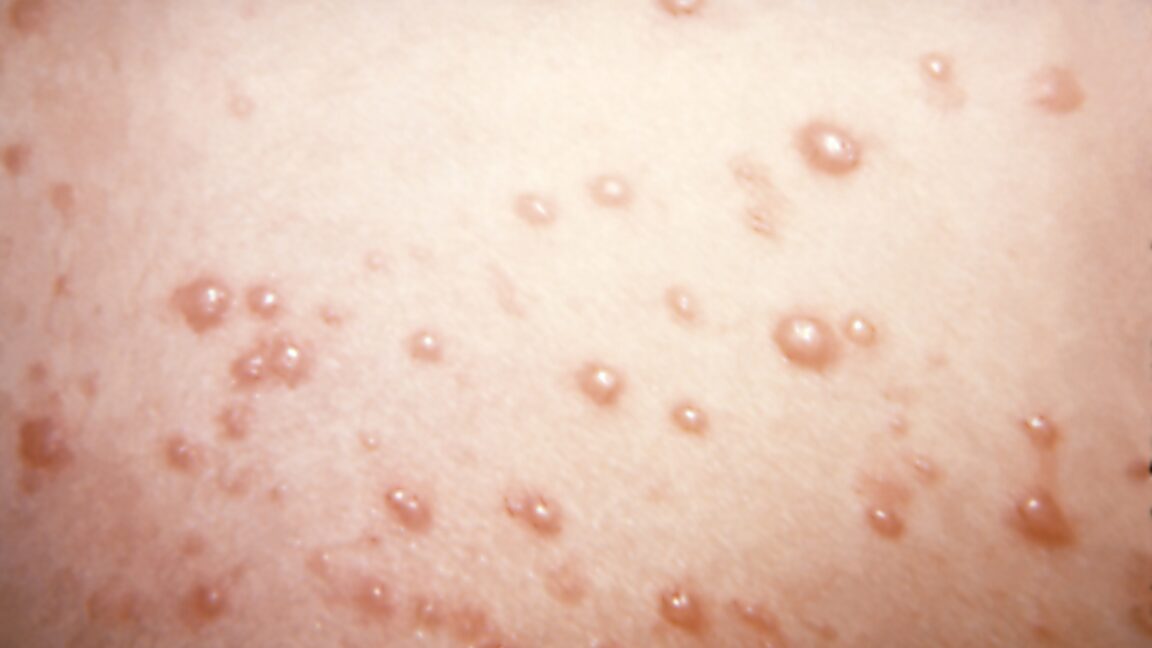
In rare chickenpox case, itchy blisters mushroom into large, rubbery nodules
Those who suffered through chickenpox as kids likely remember the agony of its itchy rash. Oven mitts or snow gloves may have been used to prevent you from inadvertently clawing your skin off, while dips in oatmeal may have offered some temporary relief. But in the end, you just had to endure the full cycle of the rash—from the breakout of the first raised, itchy papules that inflate into fluid-filled blisters that then break and leak, to the scabs that form over the crusty remains. More papules emerge as blisters burst, prolonging the torment. For one 15-year-old in Nepal, the misery continued long after the blisters burst. After some of her crusty scabs began to form scars, they mushroomed into large, uncontrolled skin growths, which were also painful and itchy—and permanent. One on her chest, the largest, measured 4 by 4 cm (about 1.6 by 1.6 inches). These rubbery, firm nodules are called keloids, which are poorly understood skin growths that result from wound healing that goes awry and expands beyond the borders of the original wound. In the teen's case, five large keloids abruptly burst from her chickenpox scars, breaking out in different places on her body—on her right jaw, chest, abdomen, and right flank. The simultaneous emergence of the growths aligns with the diagnosis of "eruptive keloids," an ultra-rare outcome of a chickenpox infection. Only five such cases appear to exist in the scientific literature. Her case , marking the sixth, was published this week in the journal Clinical Case Reports. Read full article Comments
Treatment options are tricky. The teen opted to live with the masses.
Her doctors noted that the teen was otherwise healthy after recovering from the chickenpox several weeks prior. She had been seen at a clinic for the infection, where her chickenpox (varicella) case was confirmed, and she was treated with the anti-viral medication acyclovir. It’s unclear why keloids erupted in the teen—or why they form in any patient. But it’s clear something was going wrong in her healing rashes.
Healing from wounds has three main phases. The first is an inflammatory phase that prevents or limits further damage. There’s a proliferative phase during which new tissue is formed. Among the many things that occur in this phase, specialized cells called fibroblasts produce collagen that helps create structural suppors for new tissue. This proliferative phase isn’t discreet; it can go on in the background throughout the healing process. Last, there’s a maturation phase when the new tissue settles into its final form and gains maximum strength.