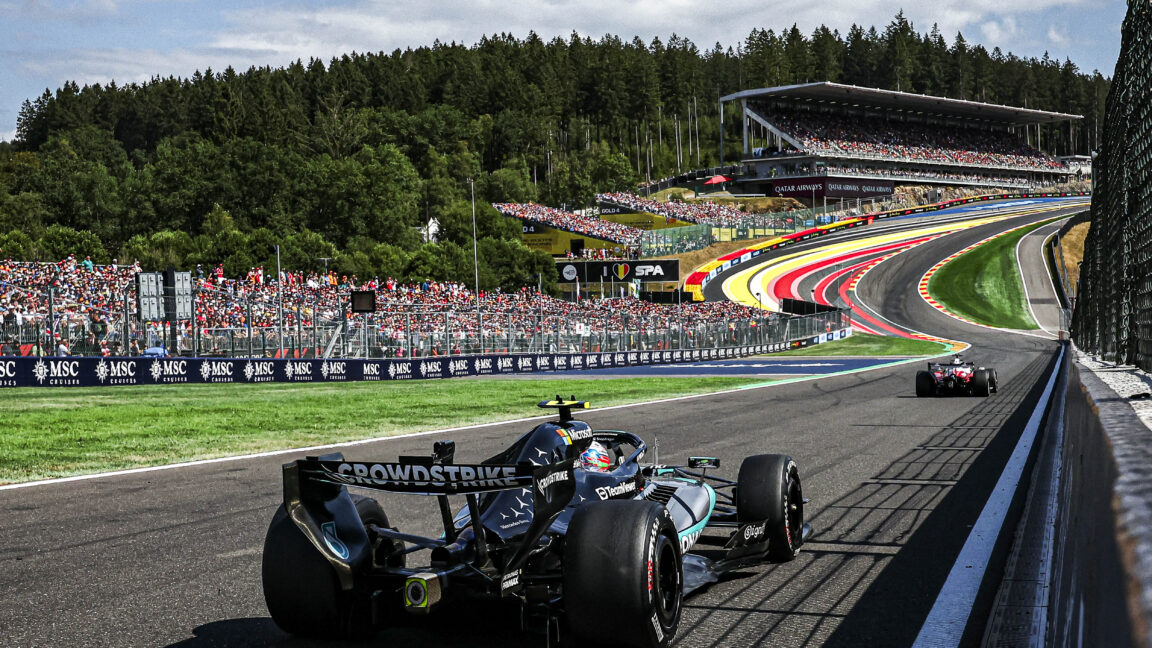
F1 in Belgium: The 2026 cars look pathetic on all the best racetracks
Formula 1 returned to the Spa-Francorchamps circuit for the Belgium Grand Prix this weekend. This ribbon of tarmac in the Ardennes is one of the sport's historic venues, featuring in the first F1 season way back in 1950. But as yesterday's race showed, the current F1 machinery is utterly ill-suited to this dramatic venue. As we saw at Suzuka in Japan earlier this year, a 2026 F1 battery is able to power the race car's electric motor for only a few seconds a lap; for much of the rest of the lap, the energy-starved cars have less power going to their rear wheels than in the junior F2 feeder series. The best race track in the world For many, including much of the current F1 grid, Spa is considered perhaps the planet's greatest race track. In fact, both Spa and the Belgian Grand Prix predate the F1 world championship, with its first race held in 1922. Back then, the circuit was a 9-mile loop of public roads, taking in the towns of Malmedy and Stavelot before returning to Francorchamps. In the postwar years, the layout shrank slightly to 8.7 miles (14.1 km) and was ferociously fast, with average lap speeds of up to 150 mph (240 km/h)—and ferociously dangerous, given cars with huge amounts of power and minimal concessions to safety. Read full article Comments
Formula 1 returned to the Spa-Francorchamps circuit for the Belgium Grand Prix this weekend. This ribbon of tarmac in the Ardennes is one of the sport's historic venues, featuring in the first F1 season way back in 1950. But as yesterday's race showed, the current F1 machinery is utterly ill-suited to this dramatic venue.
Many will say Spa is the best racetrack on earth, but not for these F1 cars.
The Spa we know and love today was reconfigured in 1979, cutting out about half of the original layout, though at 4.3 miles (6.9 km), it’s still the longest track on the F1 calendar. Interestingly, some of the circuit remained as public roads until 2000, when it became a dedicated race track only. Eau Rouge and Raidillon are its two most famous corners—a quick left, then right, that climbs 77 feet (24 m) of steep hill. But in the era of high downforce race cars, other corners like Pouhon have become greater tests of skill.
Not this year. As I’ve detailed more than a few times now, the current breed of F1 car is not at all suited to tracks with high-speed corners. Because the hybrid side of the new power units provides such little energy, going flat out all the time is not the fastest way to complete a lap. Corners that once required a driver’s commitment and maybe a little bravery to drive at the limit are now coasted into to allow the engine to divert some of its power to recharge the battery. Obviously, the drivers aren’t thrilled.