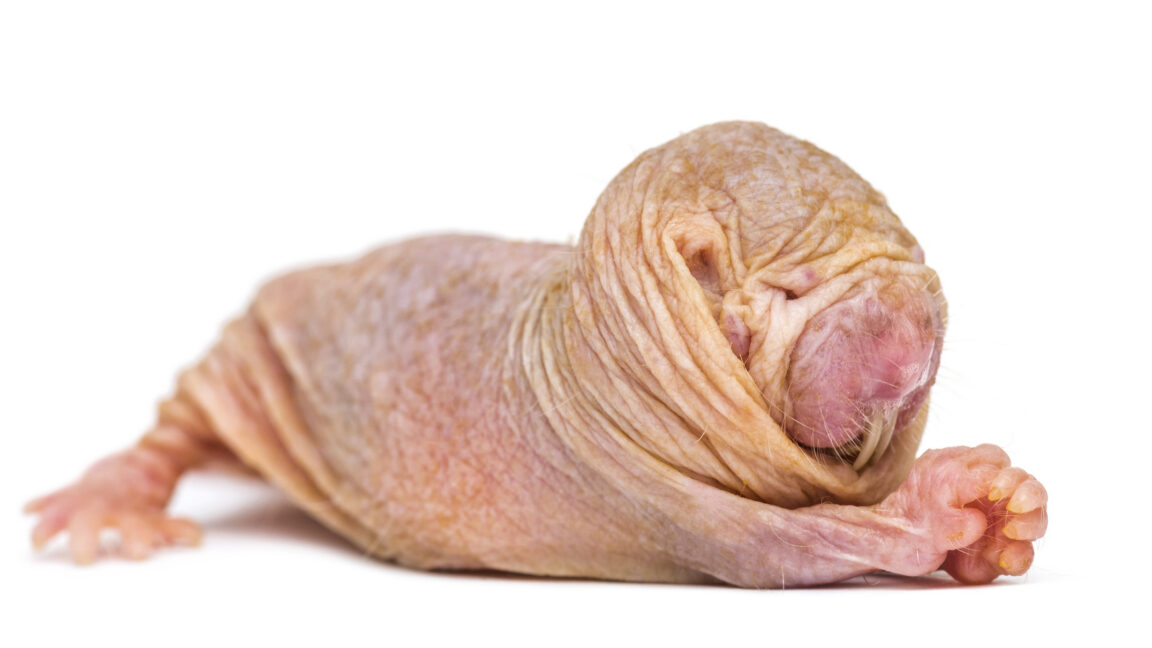
Naked mole-rat queens use a chemical signal to suppress fertility in rivals
Naked mole rats are weird. They spend their lives almost entirely underground, are largely insensitive to some kinds of pain, can persist without oxygen for a long time, rarely develop cancer, and can live past 30 years, which is decades longer than similarly sized rodents. They are also eusocial, like ants, bees, or termites—in a colony that can hold more than a hundred animals, only one female, the queen, breeds. We didn’t know how exactly naked mole-rat queens stop other females from breeding. For a long time, our leading hypothesis was bullying and violence, but that may be a bit impractical, given their kingdoms are vast networks of tunnels that can stretch for up to three kilometers. But now a team of Lewin Lab scientists at Max Delbrück Center for Molecular Medicine in Berlin discovered it’s actually just one part of a sophisticated olfactory signaling program. Running on smell "It's very clear that mole rats actually have quite big noses and smell a lot," says Gary Lewin, a neurobiologist at the Max Delbrück Center for Molecular Medicine and senior author of the study. Naked mole rats have around 1200 olfactory receptor genes, more than mice (which have roughly 1,000 of them) and way more than the few hundred in humans. They're also blind. "They have to be able to navigate and move around without vision, so smell is one of those things that’s enhanced," Lewin said. Read full article Comments
A single chemical made by mole-rat queens enforces the social order.
To find out how heavily mole rats rely on smell, the team collected odor bouquets from individual animals. Scientists held an absorbent plastic tube near a mole rat for about half an hour to pick up the volatile molecules coming off its body. Then, they analyzed these scents in a mass spectrometer, which separated the components of the scent into around 100 distinct chemical compounds.
Based on analyzing samples taken from hundreds of different mole rats, the team learned members of each colony carried a distinguishable chemical signature. When mole rats from different colonies were placed together, they sniffed each other for about 40 seconds to decide if they were dealing with their nestmate or a stranger. When they sniffed a stranger, they attacked, often with lethal intent. “Naked mole rats are like humans in the sense that they’re very xenophobic,” Lewin said.