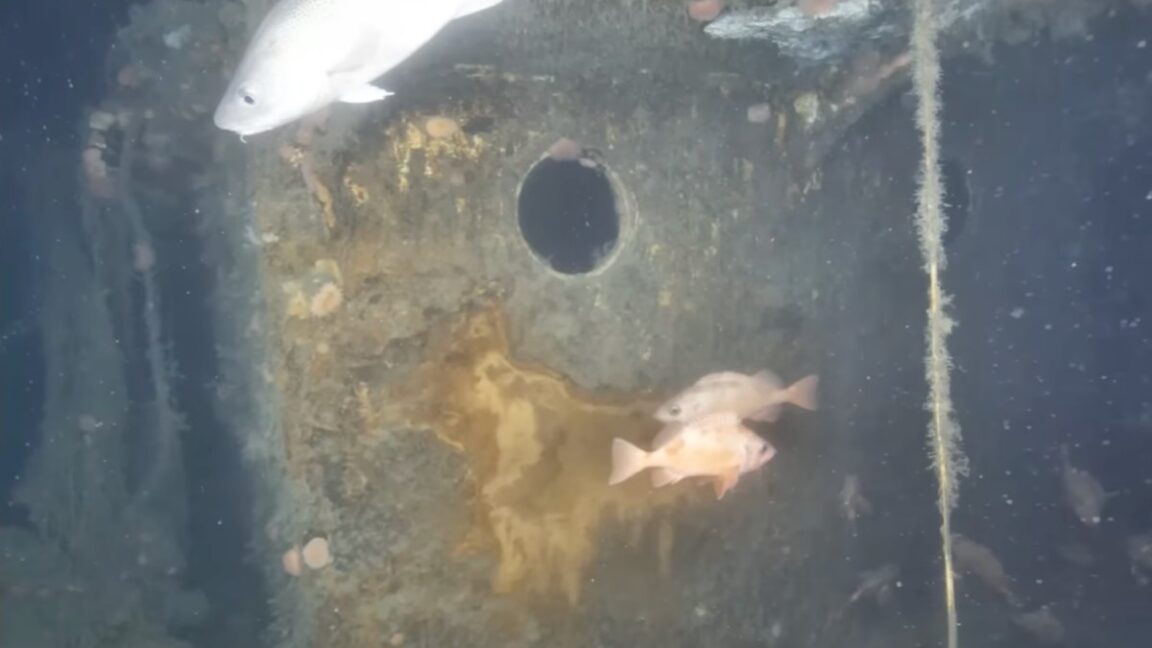
Check out the first images of Quest shipwreck
Back in 2024, we reported on the discovery of the Quest shipwreck, the polar exploration vessel that served Arctic explorer Sir Ernest Shackleton on his last voyage.
The Quest shipwreck is in worse shape than expected, but it has turned into a thriving marine ecosystem.
Shackleton, of course, is most famous for his ill-fated voyage on the Endurance, which became trapped in sea ice in 1914 and sank. Shackleton and his crew defied the odds and survived. (The Endurance shipwreck was finally found in 2022.) By the time Shackleton returned to England, the country was embroiled in World War I, and many of his men enlisted. Shackleton was considered too old for active service. He was also deeply in debt from the Endurance expedition, earning a living on the lecture circuit. But he still dreamed of making another expedition to the Arctic Ocean north of Alaska to explore the Beaufort Sea. He got funding from an old school chum, John Quillier Rowett .
Shackleton purchased a wooden Norwegian whaler, Foca I , which his wife Emily renamed Quest . When the Canadian government withdrew its support, the mission shifted back to the Antarctic, and the Quest received an extensive retrofit. The improvements included a new deckhouse, a heated crow’s nest, a wireless set, and an odograph for tracing and charting the route automatically, as well as a Lucas deep-sea sounding machine, a large and pricey collection of cameras and photographic equipment, and even a small airplane.
The Quest expedition to Antarctica set sail in 1921. Shackleton never reached the planned destination, falling ill in late December just as the ship was about to leave Rio de Janeiro, Brazil. He had begun drinking heavily to “deaden the pain,” despite not usually allowing alcohol while at sea. The Quest reached south Georgia on January 4, 1922, and Shackleton made his final diary entry before retiring to bed.
By 2 am, he was complaining of back pain and requesting painkillers. Ship physician Alexander Macklin suggested Shackleton might try leading a more normal life. Shackleton asked what Macklin thought he should give up. “Chiefly alcohol, boss, I don’t think it agrees with you,” the physician replied. Then Shackleton “had a very severe paroxysm” and died. The official recorded cause of death was coronary thrombosis. His body was buried in a Norwegian cemetery in Grytviken, the grave marked by a rough cross (later replaced by a granite column).