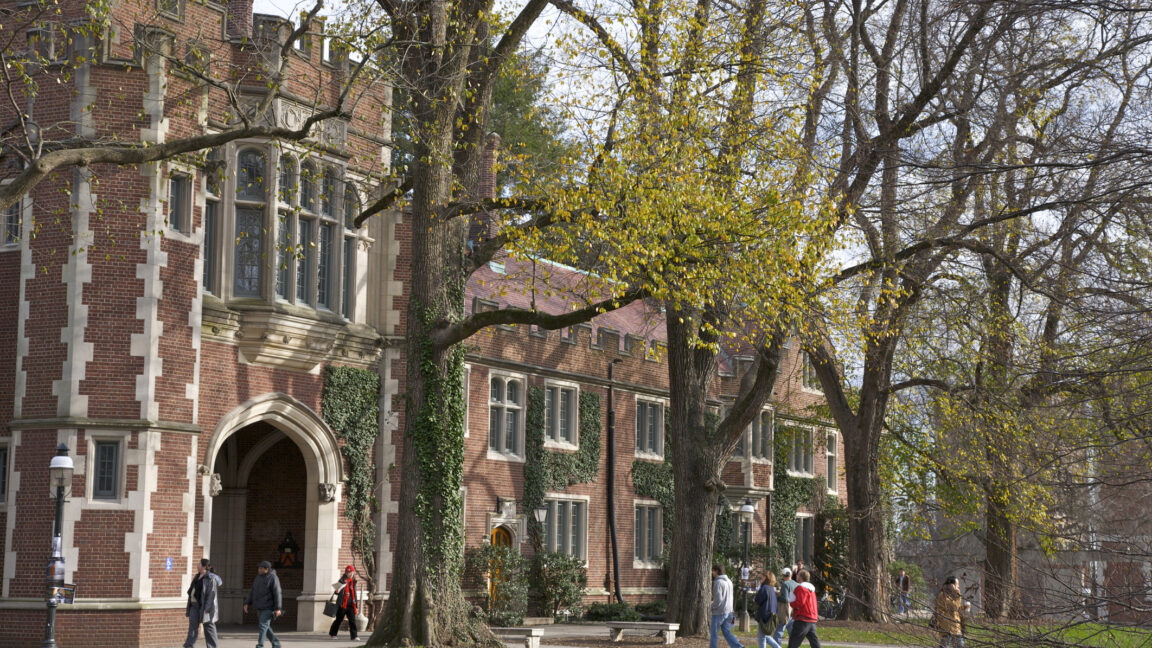
AI invades Princeton, where 30% of students cheat—but peers won't snitch
Pity poor Princeton. The ultra-elite university has a mere $38 billion in endowment money. Many of its dorms lack air conditioning . And it's in New Jersey. I kid about New Jersey, of course. Despite not being allowed to pump one's own gas there, the "Garden State" grew on me during three years spent in the Princeton area. I still keep up with its goings-on, which led me to this week's article in the Daily Princetonian on how AI was disrupting the university's long-running traditions. Read full article Comments
Pity poor Princeton.
The ultra-elite university has a mere $38 billion in endowment money. Many of its dorms lack air conditioning . And it's in New Jersey.
Old “honor code” systems are under strain.
Although a beautiful place, Princeton is also extremely competitive; before one heads up to New York to become a captain of finance, one needs to succeed in the classroom. And when everyone else in the classroom is a genius, cheating becomes a real option to stay ahead, especially in the sciences.
In a 2025 survey of Princeton seniors , 29.9 percent of students admitted to cheating on at least one assignment or exam. (This skews differently by degree. Students seeking a bachelor of science in engineering [BSE] degree admitted to cheating 40.8 percent of the time, compared to “only” 26.4 percent of bachelor of arts [BA] students.)
And according to the data, most of this cheating is done with generative AI.