Beyond grep: The case for a context-rich AI coding harness
There are a lot of AI coding applications out there, and as impressive as large language models and the agents they enable have become, many of the most recent developments in AI-assisted development have been in the software that manages those models, not just the models themselves. Earlier this summer, I spoke with the head of product for Claude Code, Anthropic's Cat Wu, about that company's approach to building that software. Read full article Comments
There are a lot of AI coding applications out there, and as impressive as large language models and the agents they enable have become, many of the most recent developments in AI-assisted development have been in the software that manages those models, not just the models themselves.
Earlier this summer, I spoke with the head of product for Claude Code, Anthropic's Cat Wu, about that company's approach to building that software.
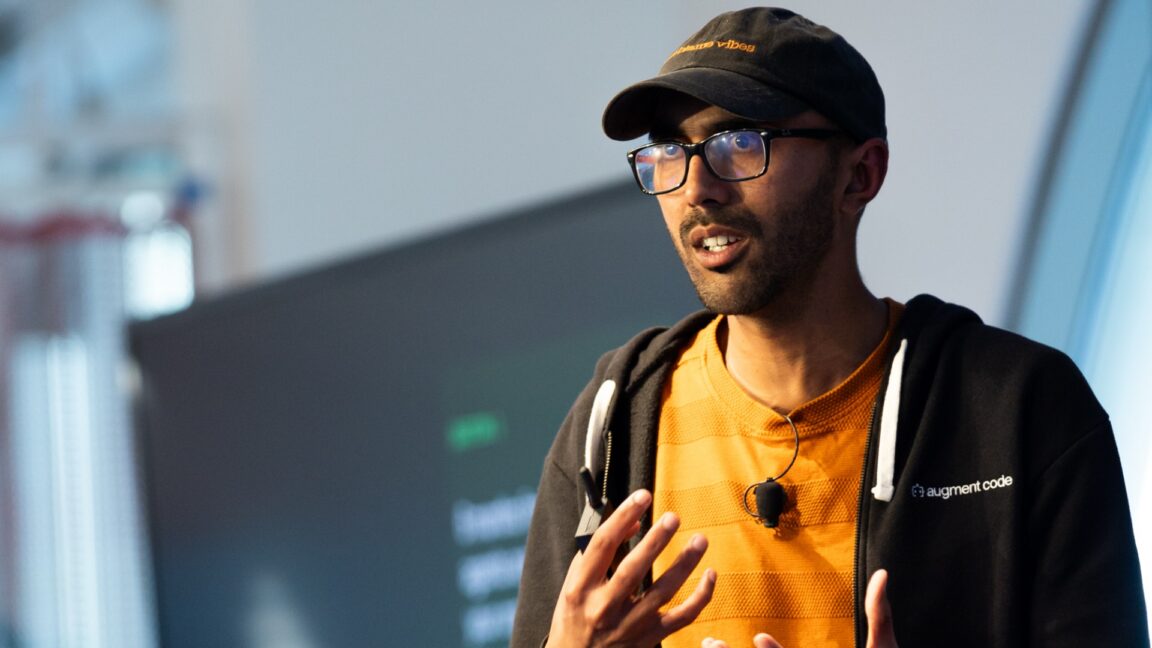
Augment Code’s Vinay Perneti talks models, harnesses, and context.
Wu repeatedly came back to the same point in our conversation: Anthropic’s models (and those of its direct competitors) are improving so quickly that it makes little sense to plan too far ahead or to build opinionated or limiting features around them. Rather, the Claude Code product team attempts to maintain what they call a lean harness.
A harness is the software built around one or more AI models that determines how they are used. It decides what the models see, what actions they can take, and how they interact with the code base. Think of it like a layer between a model and the developer’s actual project.
It’s not that Claude Code as an application and harness has no opinionated features or design choices, but its product team does seem to err on the side of trusting where the models will take them over the next year.